How Otokar Built an Armoured Vehicle Export Business on Four Continents

Otokar started in 1963 as a bus builder working under a German licence. Sixty-odd years later, its armoured vehicles sit in the inventories of armies in Europe, the Gulf, Africa and Latin America, and in 2026 the company bought a factory inside an EU and NATO country to build its own vehicles there.
By the company’s own count, more than 33,000 Otokar military vehicles are in service in nearly 50 countries, with over 80 end users. Those are self-reported figures and worth treating as such, but the contracts behind them are public enough to sketch a picture. This article walks through what Otokar builds, who buys it, and how the Romanian deal changed the way the firm does business.
What Is Otokar, in Brief?
| Item | Detail |
|---|---|
| Full name | Otokar Otomotiv ve Savunma Sanayi A.Ş. |
| Founded | 1963 |
| Group | Koç Group; shares trade on Borsa Istanbul under OTKAR |
| Main plant | Arifiye, Sakarya (production moved there in 1997) |
| Overseas plant | Mediaș, Romania (Automecanica S.A., 96.77% acquired for about EUR 85 million) |
| General manager | Aykut Özüner |
| Main land systems | COBRA II 4×4, ARMA 6×6 and 8×8, TULPAR tracked family, turrets, unmanned ground vehicles |
| Civil business | Buses and commercial vehicles |
| Website | defense.otokar.com.tr |
Otokar is unusual among Turkish defence firms. It is privately run inside a large conglomerate, sells buses alongside armour, and has financed major vehicle developments from its own pocket rather than waiting for a state requirement.
How Did a Bus Maker Become an Armour Exporter?
The armoured side began in the mid-1980s, when Otokar took a licence from Land Rover and built military utility vehicles for the Turkish Armed Forces. In the early 1990s it produced its own design, the COBRA, described as Türkiye’s first 4×4 light armoured tactical wheeled vehicle. That vehicle found buyers abroad quickly. It has been operated in places as different as Georgia, Nigeria and Rwanda, and it gave Otokar a reference list before most Turkish rivals had one.
Two things followed. First, the firm learned to sell on delivery speed and low risk rather than on cutting-edge features. Second, it kept a bus and commercial-vehicle business running next to the defence lines, which spreads fixed costs. The company is still adding civil work, and it recently announced production of the Mercedes-Benz Conecto city bus.
The heavier end of the catalogue came later. Otokar designed the prototype of the ALTAY main battle tank; series production of that tank is now a separate story, covered in our ALTAY programme report. What stayed with Otokar is the engineering culture that produced TULPAR, ARMA and a family of Mızrak and other turrets.
Why Did COBRA II Become the Export Workhorse?
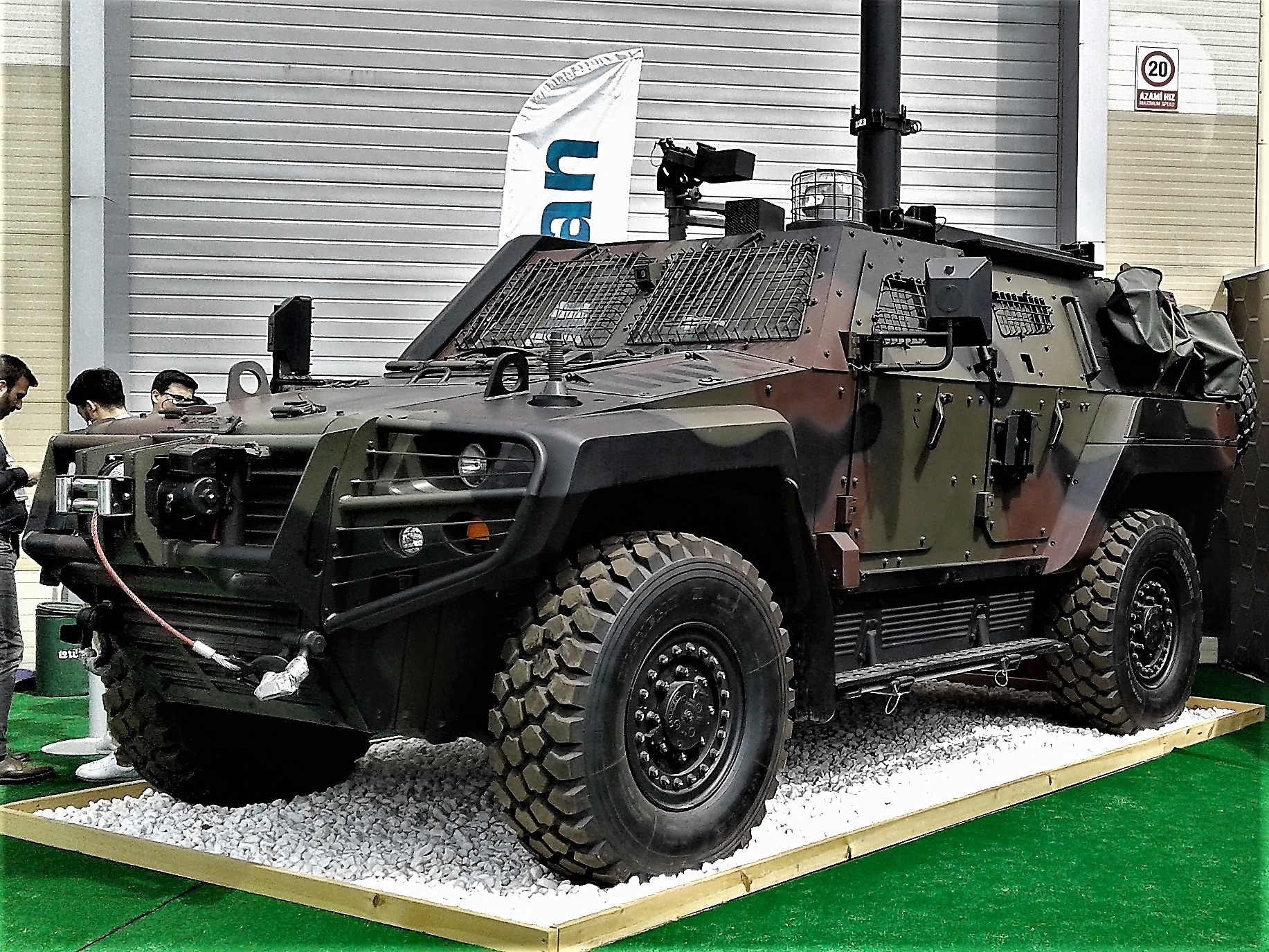
The COBRA II, first shown at IDEF in 2013, is a mine-resistant 4×4 that carries up to ten people including driver and commander and runs on a 6.7-litre turbodiesel. Otokar says it has developed more than 30 variants and that the vehicle serves with more than 20 users in 13 countries.
The home market paid for the early production. Turkish orders in 2015 and 2016 were reported at around 52 million dollars for 82 vehicles, followed by a further order valued at about 120.8 million dollars. With that base, Otokar could point to a fielded, battle-worn product when it went abroad.
Users include Bangladesh and Ukraine, where COBRA II vehicles have been seen in service, and the vehicle has served in several United Nations and African Union peacekeeping missions, according to Otokar. In 2025 Otokar announced an 83.6 million dollar export order for COBRA II with delivery planned within the year; it did not name the buyer. A fuller technical and programme history is in our COBRA II MRAP report.
What Did Romania Actually Buy?
The Romanian programme is the reason Otokar’s export story looks different now. Otokar submitted its bid on 20 March 2024 to Romtehnica, the state company acting for the defence ministry. It was told on 4 October 2024 that it had won, and on 27 November 2024 it signed a contract for 1,059 COBRA II vehicles worth about 4.26 billion lei, roughly 857 million euros excluding VAT.
The split matters more than the headline. The first 278 vehicles are built in Türkiye. Everything after that, more than 780 vehicles, is built in Romania over about five years, with deliveries starting in the last quarter of 2025. Romanian variants were reportedly adapted to a weight limit of under 10,500 kg, which is far below the heaviest COBRA II configurations.
From joint venture to owned factory
Otokar first formed a 50-50 joint venture with Automecanica of Mediaș to handle local production, engineering and after-sales. Then, on 29 April 2026, it announced an agreement to buy 96.77 percent of Automecanica for about 85 million euros, and it later said the deal closed after regulatory approvals. The plant covers roughly 140,000 square metres. Otokar said it employed more than 250 workers and technical staff at the time of the purchase and now has over 300 on the production side.
The first Romanian-built COBRA II was shown at the Black Sea Defense and Aerospace show in Bucharest on 13 to 15 May 2026. According to the Romanian defence ministry, the first 12 Romanian-built vehicles were accepted on 30 July 2026. When Romania’s defence minister visited Mediaș, Otokar said 290 vehicles had been delivered to the armed forces in total. That number sits neatly with 278 Türkiye-built vehicles plus the first 12 from Mediaș, though Otokar did not break it down.
Otokar calls the plant a hub for its European business. That claim is worth watching, because it means the next European tender may be answered from Mediaș rather than from Sakarya.
Who Buys the ARMA Family?
ARMA is Otokar’s heavier wheeled line. Development began in 2007 as a company-funded project for home and export markets, and the 6×6 and 8×8 versions were first shown at Eurosatory in 2010. Nobody ordered it at the start, which is unusual, and it explains why Otokar has been able to tailor it freely.
- Bahrain bought 73 ARMA 6×6 vehicles in 2010 and has used them in the Yemen campaign.
- United Arab Emirates. Otokar worked with Al Jasoor, a joint company with Tawazun Holdings, on the Rabdan, an 8×8 variant built on the ARMA. Reported plans run to 700 vehicles, with about 400 delivered.
- Estonia signed in October 2023 for ARMA 6×6 personnel carriers under a contract the Estonian Centre for Defence Investment valued at around 130 million euros including maintenance equipment and training. Estonia picked Otokar and Nurol Makina out of nine bidders, citing delivery time and price.
- Kazakhstan. Reports of an order for hundreds of ARMA vehicles have circulated, and ARMA 8×8 vehicles appeared in a 2025 parade, but no confirmed figure exists.
The newest member, the ARMA II 8×8, was unveiled on 31 January 2023. It is a bigger, heavier vehicle in the 40-tonne class, and Otokar says it can take weapons up to 120 mm. There is no announced production customer yet. We looked at the vehicle in detail in our ARMA II 8×8 report.
Where Does TULPAR Fit?
TULPAR is the tracked family. It was unveiled at IDEF in 2013 and is built around a common chassis that Otokar offers as an infantry fighting vehicle, a medium tank, an air defence carrier, a mortar carrier, a command vehicle and more. The company quotes engine power between 700 and 1,100 horsepower and says the platform can carry weapons from 7.62 mm up to 120 mm.
In September Otokar and Leonardo announced that they had completed integration and live-fire trials of TULPAR with Leonardo’s HITFACT MkII 120 mm turret at Nettuno in Italy. Neither company published rounds fired, accuracy results or a launch customer. Otokar has shown the combination to Brazilian Army officials at LAAD 2025, but no contract has been announced. The test campaign is covered in our TULPAR and HITFACT report.
TULPAR is the family with the thinnest export record, since we have found no publicly announced foreign contract for it. That is why the Italian turret matters to the company’s plans.
What Else Is in the Catalogue?
The three vehicle families are only part of the range. Otokar also builds the AKREP II, a 4×4 special-purpose vehicle with an electric-drive variant, and the ALPAR, a heavy-class armoured unmanned ground vehicle that the company showed alongside ARMA II at international exhibitions. At BSDA 2026 it displayed a next-generation UGV next to the Romanian-built COBRA II and a TULPAR, a sign that unmanned ground systems are now part of its pitch to European buyers.
Partnerships fill other gaps. Otokar signed a strategic cooperation agreement with the Slovenian training and simulation company Guardiaris at SIDEC 2025, and it uses foreign turrets where it makes sense, as the Leonardo trials show. The company also spends on development. Its management has said it allocated about 7 percent of revenue to research, development and testing over a decade.
Which Continents Are in the Order Book?
Otokar said in 2023 that its vehicles were used on five continents. Public contracts and deliveries make the case for at least four.
| Region | Documented examples | Platform |
|---|---|---|
| Europe | Romania (1,059 vehicles ordered), Estonia (ARMA 6×6). Otokar says it exports to nine European countries. | COBRA II, ARMA |
| Middle East and Asia | Bahrain, United Arab Emirates (Rabdan), Bangladesh. Otokar showed COBRA II and ARMA 6×6 with Boustead at DSA 2026 in Kuala Lumpur to build its Asia-Pacific presence. | COBRA II, ARMA |
| Africa | COBRA II with peacekeeping forces; Nigeria and Rwanda are among listed operators. | COBRA, COBRA II |
| Latin America | Ecuador received 20 COBRA II vehicles in Quito in September 2023, part of a 35-vehicle purchase. Otokar pitched technology transfer at Expodefensa and LAAD. | COBRA II |
Operator lists on public reference sites are incomplete and sometimes out of date, so the table sticks to cases with a delivery, a contract or an official Otokar statement.
What Limits the Otokar Model?
Otokar’s own website says every export is subject to the relevant governments’ licence regulations, and several Otokar customers stay unnamed. The firm’s advantages are speed and a proven product, not a technology lead, which fits the pattern we described in why countries buy Turkish armoured vehicles.
The Romanian route also carries risk that a simple sale does not. Building more than 780 vehicles in a foreign plant over five years means supply chains, workforce training and quality control have to be proven at volume. Otokar says Mediaș now applies the same standards as its Turkish line. Only the deliveries to come will show whether that holds, and the answer will shape the way other Turkish makers approach similar deals, a pattern we track in Turkish defence factories abroad.
Three milestones will say most about where Otokar goes next: the pace of Romanian-built COBRA II deliveries through 2026 and beyond, whether the Malaysia approach with Boustead turns into a contract, and whether the TULPAR and HITFACT pairing finds a first customer.