Inside Meteksan, the Bilkent-Owned Firm Behind Türkiye’s Sonars and Drone Radars

Most people who follow Turkish defence know Baykar’s drones and ASELSAN’s radars. Fewer have heard of the company whose sonar sits under the hulls of the Navy’s ADA-class corvettes, whose drone-detection radar was ordered by the Presidency of Defence Industries, and whose synthetic aperture radar has flown on ANKA drones hunting drifting sea mines. That company is Meteksan Savunma, and its owner is not a conglomerate of the usual kind but a university.
| Company | Meteksan Savunma Sanayii A.Ş. |
|---|---|
| Headquarters | Bilkent Cyberpark, Ankara, Türkiye |
| Founded | 2006 |
| Ownership | Bilkent Holding group company |
| Employees | More than 350 (company figure, 2026) |
| General Manager | Adil Baktır |
| Other offices | Istanbul, Qatar, United Arab Emirates |
| Main activities | Radar, electronic warfare, underwater acoustics, laser and electro-optics, data links, training simulators |
| Key products | Retinar radars, KAPAN, MİLSAR, YAKAMOS sonar, MERT, HETS, DCSIM |
| Export reach | Products in service in close to 30 countries (company figure) |
| Website | meteksan.com |
Who Owns Meteksan Savunma, and Why Does It Exist?
Meteksan Savunma was set up in 2006 inside Bilkent Holding. The idea, as the company describes it, was to gather the defence-related projects of the holding’s high-technology firms under one roof and to build domestic, independent sensors and subsystems for the Turkish Armed Forces and other security forces.
The ownership matters for one unusual reason. According to the company, everything Meteksan earns is passed on to Bilkent University to fund scholarships and education. The board chairman listed on the company’s site is Prof. Dr. Ezhan Karaşan. Day-to-day management sits with General Manager Adil Baktır.
The business is built around subsystems rather than platforms. Meteksan does not build frigates or drones. It builds the radar, sonar, data link or simulator that goes inside them, which is why its name rarely reaches headlines while its products appear in many programmes. In its 20th-anniversary statement the company said it supplies data links, radar altimeters and anti-jam GNSS units to several ROKETSAN missiles, data links and radars to TUSAŞ unmanned aircraft, and the sonar on the MİLGEM corvettes. It also said it now holds more than 20 product families.
What Do the Retinar Radars Do?
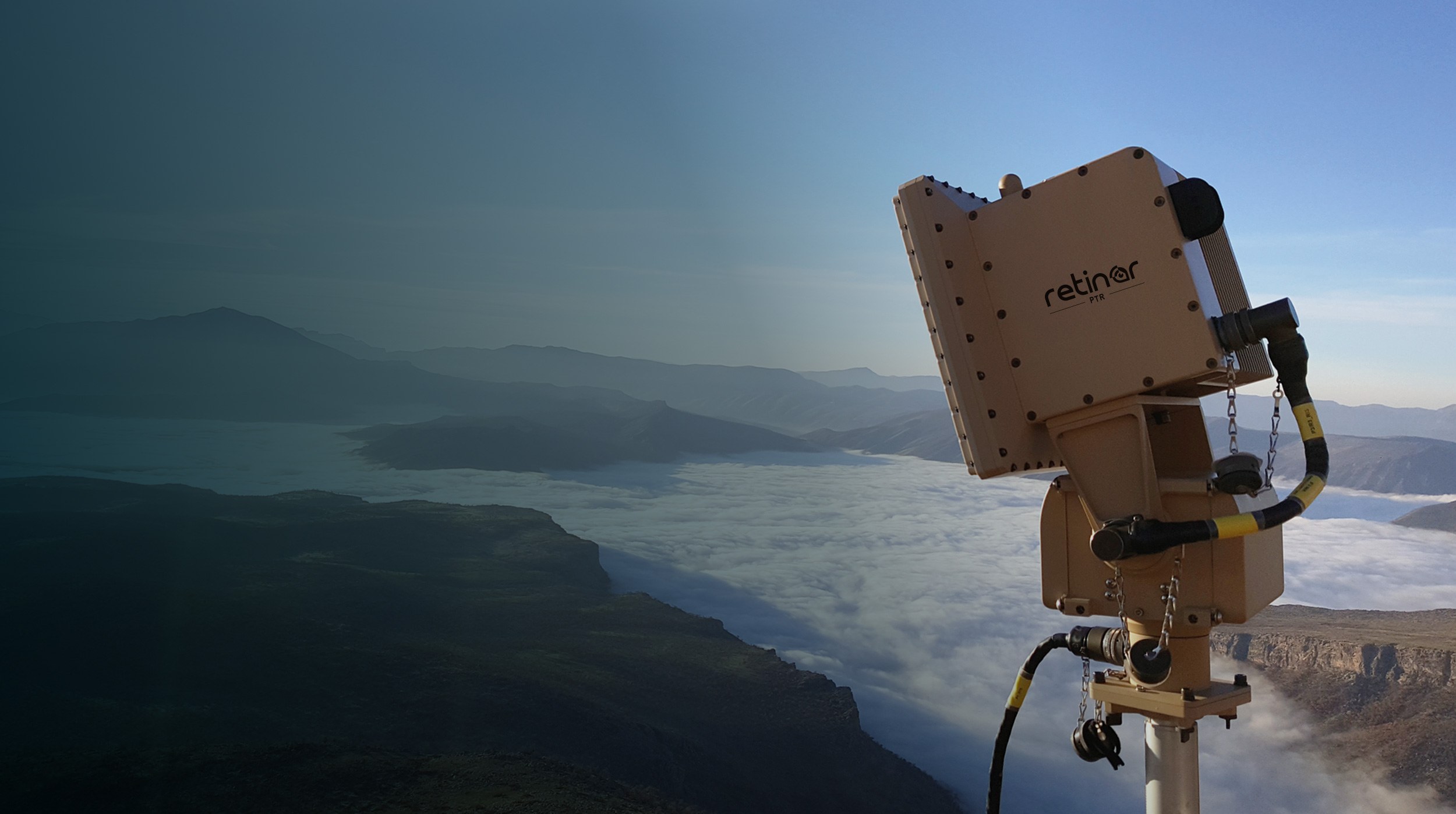
Retinar is Meteksan’s own family of surveillance radars, developed with company funds. The original Retinar PTR is a perimeter radar tuned to detect people, vehicles and animals on the ground. The company said Retinar customers included five end users in three countries by late 2019, and it showed a green camouflage version at the Defence & Security exhibition in Bangkok that year to court Southeast Asian buyers.
One domestic reference is Antalya Airport. Havelsan Teknoloji Radar (HTR), the prime contractor for the airport’s integrated security system, installed Retinar PTR-X units around the perimeter after a 2018 selection, and the radars passed their acceptance tests. Meteksan describes that as a first for the family in a Turkish airport, after an earlier installation at a European one. The PTR-X works fixed or vehicle-mounted and rotates between 2 and 16 rpm.
The more consequential variant came after a 2019 contract with the Presidency of Defence Industries (SSB) for a mini and micro UAV detection radar. Meteksan says it finished the Retinar FAR-AD in about eight months. It works in the Ku band at low transmit power, and its qualification tests included telling drones apart from birds and tracking commercial models such as the DJI Phantom. Deliveries followed those tests.
FAR-AD is the eyes of KAPAN, the company’s counter-drone system launched in 2018. Besides the radar, KAPAN carries a camera system to classify and track targets, a jammer to neutralise them, and command software that fuses sensor data into one air picture. A separate agreement with Roketsan, signed on the first day of SAHA EXPO, covers the purchase of FAR-AD radars and their integration into Roketsan’s ALKA directed-energy weapon, which combines electromagnetic and laser effects against close-range drone threats.
In 2023, at IDEF, Meteksan added Retinar AESA. The company says it uses an active electronically scanned, MIMO architecture, covers 90 by 90 degrees with a single panel and a hemisphere with four panels, and can follow small drones, kamikaze drones and tactical UAVs. Those are company claims from the launch, not figures from a fielded evaluation. For the wider story of how Turkish AESA technology developed, see our explainer on how Türkiye built its own AESA radars.
Why Is MİLSAR Such a Useful Radar for Drones?
MİLSAR is a synthetic aperture and ground moving target indicator (SAR/GMTI) radar for aircraft and drones. Radars of this type keep producing images through cloud, rain and darkness, when electro-optical cameras go blind. The usual problem is size. Meteksan says MİLSAR weighs under 30 kg, scans through 360 degrees, and shares the mechanical interface of a standard 15-inch EO/IR turret, so it can be bolted in where a camera ball would normally sit.
That drop-in design is the selling point. The company lists the Bayraktar TB2 and ANKA among tactical-class candidates and AKINCI and AKSUNGUR among strategic ones. MİLSAR was tested on a MALE-class drone in 2021, and the most visible result came when it was integrated on an ANKA of the Turkish Naval Forces Command. After drifting mines appeared in the Black Sea following the Russia-Ukraine war, the radar began detecting them on the sea surface, a capability SSB’s then president Prof. Dr. İsmail Demir announced publicly.
The export record is thinner but real. The company reports that in 2025 it completed MİLSAR integration on the GARMOOSHA unmanned aircraft under a contract with ADASI of the United Arab Emirates and delivered the radars within the year. It has also joined a European Commission-backed Horizon Europe project that uses MİLSAR imagery to watch critical infrastructure after natural disasters. To place these products among Türkiye’s other radar makers, read who builds Türkiye’s radars.
Elsewhere in the radar line, the company has a maritime search and weather radar for helicopters called HELRAD, introduced at SAHA EXPO 2024 for Coast Guard helicopters, which can track up to 200 contacts and match them against AIS data to flag suspicious ones. It also builds radar altimeters. A later contract with an Asian country, signed in September, was the second export for that product family, after a first sale to a Far Eastern country in 2017.
What Is YAKAMOS, and Why Does a Sonar Matter So Much?
Underwater acoustics may be the most strategic thing Meteksan does. In 2009 the SSB gave the company the job of becoming what the company calls Türkiye’s underwater acoustics centre of excellence, and sonar has been a core business ever since.
YAKAMOS is its hull-mounted sonar. It listens passively for noise from submarines and torpedoes and, in active mode, calculates bearing and distance from echoes. It can also look for mines and similar objects while a ship is in transit. The original version equips the anti-submarine MİLGEM ADA-class corvettes, including TCG Heybeliada, TCG Büyükada and TCG Burgazada. Meteksan says the critical components, down to the ceramics at the lowest level, are designed and produced in Türkiye. The wider class is covered in our page on the MİLGEM frigate programme.
The export break came on 31 July 2019. ASFAT and Meteksan signed a contract for YAKAMOS on the four corvettes planned for the Pakistan Navy under the Pakistan MİLGEM project. The company has since described YAKAMOS as Türkiye’s first exported hull-mounted sonar. ASFAT served as the prime contractor on the Turkish side.
The family has grown since then. YAKAMOS 2020 is a more compact, modular redesign with better power efficiency and, the company says, detection at longer ranges. YAKAMOS-RT, shown at IDEF 2023, is a retractable, higher-frequency sonar for patrol boats and unmanned surface vessels that cannot carry a fixed hull array. Meteksan calls it Türkiye’s first retractable sonar for anti-submarine warfare. The catalogue also lists an intercept passive sonar (IPS) for submarines and a side-array sonar.
Below the waterline, the company has delivered its MSH-01 hydrophones for the passive sonars of the Turkish Navy’s AY and PREVEZE class submarines. The hydrophone covers 1 Hz to 100 kHz and is rated to 400 metres, according to the company. In 2025 it added SUVDES, a submarine and underwater vehicle detection system, and said an integrated sonar suite for a submarine modernisation in an Asian country was exported the same year. Submarine context is in our piece on Türkiye’s submarine programmes.
Where Do the Lasers Fit In?
Laser work is real at Meteksan, but it is the least visible part of the catalogue. The company says it works on high-quality fiber laser sources, high-power beam-delivery structures and precise laser and electro-optical sensing, and its facilities list includes a dedicated laser research laboratory.
The clearest public product is HETS, a helicopter obstacle detection system built around a 1550 nm fiber laser. Under a 2019 SSB contract, the company finished development and showed HETS at IDEF 2021. It is a LIDAR. It scans twice a second across a 30 by 40 degree field of view with an instrumented range of 1,500 metres, and the company says it can pick out power lines as thin as 5 mm. The pilot gets visual and audible warnings, and the unit supports MIL-STD-1553, RS-422 and ARINC-429 interfaces. Wire strikes are a leading cause of low-level helicopter accidents, which is the gap HETS is designed to close.
Beyond HETS, publicly confirmed laser products are scarce. The ALKA link above is a Roketsan weapon that uses Meteksan radar, not a Meteksan laser weapon. Readers should treat the laser line as a developing competence rather than a mature product range.
What Else Is in the Portfolio?
Electronic warfare. The MERT portable electronic attack system, developed under an SSB project, has been delivered to the Turkish Armed Forces. It monitors its whole frequency band at once and jams with a reactive architecture, covering targets such as frequency-hopping military radios, navigation systems, mobile networks and drone control links. It can sit on a mast or ride on a vehicle. A separate SEYMEN navigation warfare project, signed at IDEF 2021, is meant to jam and deceive GPS-guided threats and to combine radar, electro-optics and electronic warfare in one shelter on a tactical vehicle.
Unmanned surface vessels. Meteksan co-developed the ULAQ armed unmanned surface vehicle with Antalya’s ARES Shipyard. In 2021, during the Sea Wolf naval exercise, two laser-guided CİRİT missiles fired from a ULAQ both hit their target. Qatar’s Ministry of Interior later ordered a ULAQ 11 PSV port security vessel at Milipol Qatar, presented as Türkiye’s first unmanned surface vessel export. More on the boat in our report on ULAQ entering service.
Training simulators. The DCSIM damage control simulator is a quiet export success. The company says it has won almost every open tender it entered in recent years, and South Korea’s new damage control simulator was announced as a Meteksan product. In 2025 the company grouped its simulators under a new brand, SIMETRAN.
What Does the Factory Floor Look Like?
The company runs its design and production infrastructure from Ankara. It lists a Class-10,000 clean room, a near-field antenna measurement system, an electronics design and test lab, a laser research lab and an underwater acoustic design lab. Sonar testing uses a pressurised acoustic test rig and a calibration pool, plus an open-water test and calibration site at Bilkent Göleti.
In 2025 Meteksan said it had commissioned a new production and integration facility, which it says significantly lifted its domestic output.
What Should Readers Watch Next?
Three threads are worth following. First, whether Retinar AESA and FAR-AD move from trials and deliveries into large multi-country orders as counter-drone demand rises. Second, whether YAKAMOS-RT finds a home on Turkish unmanned surface vessels, given the ULAQ family’s anti-submarine variant. Third, whether the laser and LIDAR work produces a second product after HETS. Meteksan’s own stated aim, made on its 20th anniversary, is to deepen its technology base and become a global brand. The numbers to verify will be export contracts, not exhibition launches.