ASELSAN Guided Munitions Hit Four for Four Before 15 Nations

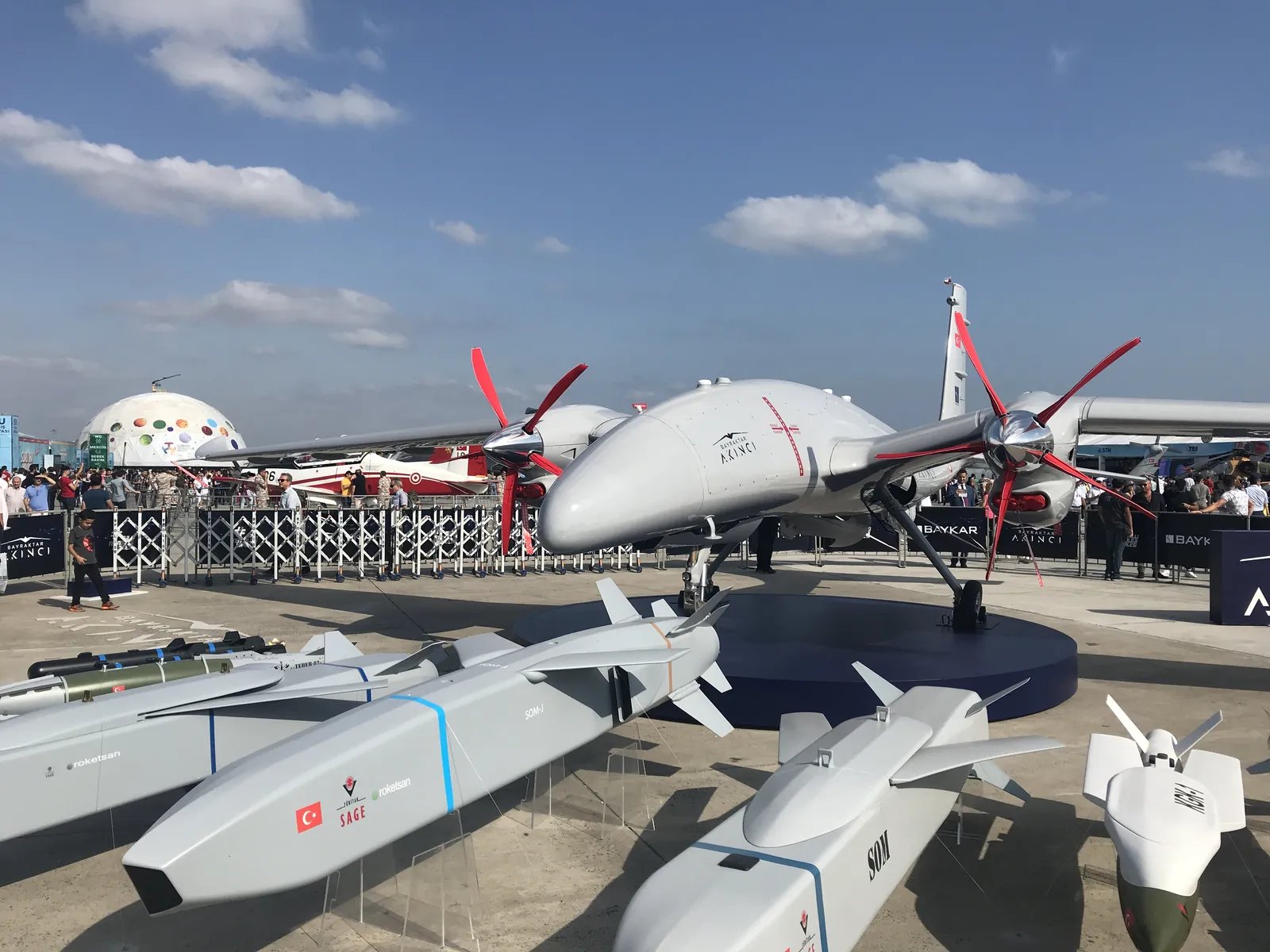
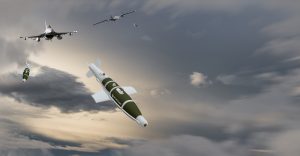
ASELSAN put four of its precision-guided munitions through a live-fire gauntlet at the Konya Karapınar Firing Test Range in front of military delegations from more than 15 countries, scoring direct hits on every shot fired from an F-16 and a Bayraktar AKINCI over two days of testing in early September.
The International Guidance Systems Demonstration, held on September 1 and 2, was the company’s most concentrated public showcase of its air-to-ground precision strike portfolio to date, running its TOLUN deep-strike family and its LGK/GÖZDE guidance kits back to back against stationary, hardened and moving targets. Anadolu Agency and several Turkish and international defence outlets reported the results on September 3 and 4.
Four shots, four hits
On the second day, an F-16 released two LGK-84 laser-guided kits: the first struck an armoured personnel carrier, the second a tank, both described by ASELSAN as fully disabling their targets. A Bayraktar AKINCI then launched an LGK-82 against a second armoured personnel carrier before firing GÖZDE, a guidance kit developed jointly with TÜBİTAK SAGE, at a target moving at 50 km/h. Both hit directly.
LGK-82 and LGK-84 are guidance kits that convert unguided free-fall bombs into precision-guided weapons, broadly the same concept as the US JDAM family, giving older bomb stocks GPS/INS-guided accuracy. GÖZDE adds a moving-target engagement capability that neither LGK kit is designed for, aimed at time-sensitive targets such as vehicles or air-defence launchers relocating under fire.
TOLUN family tests hardened and area targets
A day earlier, ASELSAN fired all three fielded variants of its TOLUN deep-strike munition from an AKINCI. TOLUN-I, carrying an impact fuze and fragmentation warhead, hit a container target directly. TOLUN-F, fitted with a proximity sensor, engaged an armoured personnel carrier. TOLUN-P, the penetrator variant, punched through two layers of concrete and destroyed a target ASELSAN had placed inside the designated layer, using a programmable time-delay fuze to control the depth of detonation.
ASELSAN declared TOLUN-P mission-ready in August 2026. According to the company’s published specifications, the penetrator variant weighs 136 kg with a 105 kg warhead, is 1,800 mm long and 164 mm in diameter, and is rated to defeat up to one metre of reinforced concrete with an accuracy of better than 10 metres CEP. It uses INS/GPS navigation with a four-channel CRPA anti-jam antenna and deployable diamond wings, giving it a stated range of up to 55 nautical miles (102 km) when released from a fighter at high altitude, or up to 31 nautical miles (57 km) from a UAV. For comparison, the US GBU-39/B Small Diameter Bomb — in service since 2005 and roughly 122 kg — is rated beyond 60 nautical miles and more than three feet of reinforced concrete; the figures are not directly comparable, since manufacturers test range, penetration and accuracy under different release conditions and target constructions, but they place TOLUN-P in the same weight and performance class as the weapon it is most often measured against.
TOLUN munitions are carried on ASELSAN’s SADAK-4T rack, a “smart” quad carriage rather than a simple bomb rack, which can release up to four TOLUN-P rounds against one or several targets in a single pass. ASELSAN lists integration across the AKINCI, F-16, TB3, ANKA-III and the internally-carried KIZILELMA, meaning the same munition family can, in principle, be flown from Türkiye’s crewed fighter fleet and from its expanding line of unmanned combat aircraft without separate weapon-integration programmes for each.
Why an audience of 15-plus countries matters
Neither ASELSAN nor SSB named the countries that sent observers, and no contract, letter of intent or export figure was announced around the demonstration — this was a qualification and showcase event, not a sales announcement. But live-fire demonstrations open to foreign military delegations are one of the ways Turkish manufacturers convert test data into export leads, and guided munitions are a lower-cost, faster-turnaround product than the platforms that carry them — part of why countries keep buying Turkish drones and the munitions that arm them. A country that has already bought Bayraktar TB2s, AKINCIs or F-16-compatible ordnance from other suppliers is a natural customer for a guidance kit priced to compete with Western equivalents.
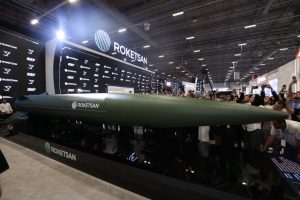
The event also underlines how much of Türkiye’s precision-strike capability now sits downstream of a single defence electronics company. ASELSAN’s guided-munitions line — LGK-82, LGK-84, GÖZDE and the TOLUN family — feeds into an ecosystem that includes Baykar’s AKINCI, TB3 and KIZILELMA, Turkish Aerospace’s F-16 fleet, and Roketsan’s own strike-munition catalogue, which was on show again this month when Roketsan test-fired its Çakır cruise missile from a ground launcher. The whole line is coordinated through SSB’s broader push for an indigenous precision-strike architecture, and comes as Turkish defence and aerospace exports keep climbing month over month. In July, Türkiye joined Denmark, France, Italy, Norway and the United Kingdom in a NATO Defence Industry Forum initiative on ground-based precision-strike capability, a reminder that Ankara is positioning this technology as a NATO-relevant industrial contribution and not solely a domestic procurement programme.
For now, the record is a clean one: four live launches, four direct hits, across two aircraft types and four distinct guidance and warhead configurations. Whether that translates into signed export contracts will depend on demonstrations like this one converting into the kind of deals SSB has been closing elsewhere in 2026 — and on ASELSAN, or a customer government, eventually naming names.