TEI to Build Its First Overseas Plant in Plovdiv, Bulgaria

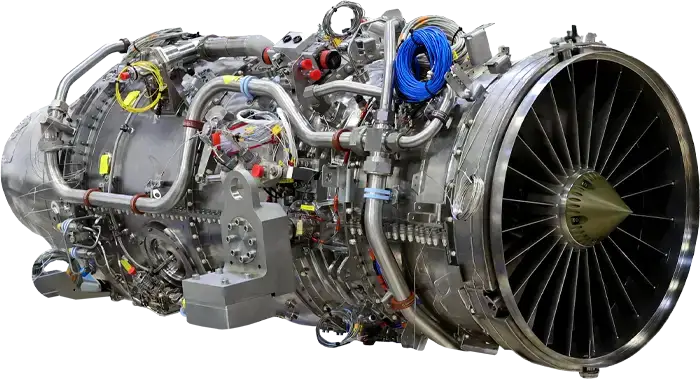
TUSAŞ Engine Industries (TEI) will build its first factory outside Türkiye, a precision-components plant in Plovdiv, Bulgaria, the company and Bulgarian officials announced on November 25. The project, valued at close to $100 million, marks the first time Türkiye’s aero-engine sector has put manufacturing capacity inside the European Union rather than exporting finished parts into it.
The announcement came at a press conference at Bulgaria’s Council of Ministers in Sofia, where Deputy Prime Minister and Economy Minister Alexander Pulev appeared alongside Türkiye’s ambassador to Sofia, Mehmet Sait Uyanık, and two TEI executive vice presidents, Murat Karamahmutoğlu and Ahmet Kain. Prime Minister Rumen Radev later received the Turkish delegation, calling the plant a link between Bulgaria and global aviation supply chains and a step toward higher-value manufacturing in the country.
What TEI Is Building, and Why Plovdiv
The plant will machine high-precision critical components for aircraft and helicopter engines, work that demands the kind of tight tolerances and specialised tooling TEI already runs at its home base in Eskişehir. According to Kain, Bulgaria was chosen over two unnamed competing countries for its proximity to Türkiye, its skilled engineering workforce and the incentive package Sofia put on the table. Pulev said negotiations had been running for roughly a year, since an Invest Bulgaria Agency visit by a TEI delegation led by chairman Fahrettin Öztürk in February, when the company was touring sites including the Trakia Economic Zone near Plovdiv.
Figures on the investment diverge slightly depending on the source. TEI puts its own commitment at “nearly $100 million,” while the Bulgarian government’s statement values the project at $90 million. Pulev gave a figure of 170 highly skilled jobs at the plant itself, with government messaging pointing to “hundreds” more over the longer term as the site matures; TEI’s own release does not commit to a headcount. Pulev also said production needs to start within 18 months, a target that came from the Bulgarian side rather than from TEI.
Those gaps between the Turkish and Bulgarian accounts are worth flagging rather than papering over: neither party has published a signed investment agreement, and the site within the Plovdiv area has not been formally named, even though the February visit took in the Trakia zone.
A Company Built on a Foreign Partnership, Now Looking West
TEI is not a purely national player to begin with. Founded in 1985, it is a joint venture between Turkish Aerospace, the Turkish Armed Forces Foundation, the Turkish Aeronautical Association and the American engine maker GE Aerospace, which Bulgarian officials named as a shareholder with a direct interest in the Plovdiv project. That GE link is one reason the move looks less like flag-planting and more like supply-chain logic: TEI already machines parts and modules for GE’s CFM LEAP, CFM56, GEnx, GE90 and GE9X engine families, commercial programmes that sit alongside its domestic military work. A plant inside the EU gives those commercial contracts a customs-free route to European airframers and financing that a Turkey-based line cannot offer on the same terms.
The move also lands at a point when TEI’s domestic workload is only getting heavier. In August, Türkiye folded the engine maker TRMOTOR into TEI as part of a wider reorganisation of the national engine sector, and in October the company reported progress on engines for the KIZILELMA unmanned fighter and the GÖKBEY utility helicopter, on top of continuing work on its indigenous TF6000 turbofan. Shifting lower-margin commercial component work to a new European site, as TurDef’s analysis of the announcement put it, is one way to free up engineering hours in Eskişehir for the harder problem of indigenous military engines, including the engine TUSAŞ eventually wants to put in KAAN.
Part of a Broader Turkish Push Into EU Manufacturing
Plovdiv is not an isolated case. Türkiye’s defence and aerospace firms have been opening or expanding production lines across the Balkans and wider EU for the past two years, partly as a hedge against “Buy European” preferences written into EU defence-procurement instruments that could otherwise squeeze out non-EU suppliers. ASELSAN’s European subsidiaries have made a similar argument publicly, betting that frontline states’ security needs will outweigh procedural barriers, and Türkiye has separately pushed to be treated as eligible under the EU’s SAFE defence-funding mechanism. A Bulgarian-based TEI plant, owned by a company that is itself part-American, sits awkwardly but usefully across that debate: it is Turkish capacity, built inside the EU, feeding programmes that are substantially American in origin.
It also continues a build-out of Turkish industrial presence in Bulgaria and the wider Balkans that has included drone sales, towed and self-propelled artillery, and ammunition production agreements in the region over the past year. For Sofia, landing an aerospace supplier that already ships into GE’s global engine supply chain is a genuine foothold in a sector Bulgaria has struggled to break into; for Ankara, it is a demonstration that Turkish aero-engine manufacturing has matured enough to export not just products, but production itself.
No construction timeline, hiring schedule or formal investment contract had been published by either government as of November 27. TEI and Bulgaria’s Council of Ministers are expected to provide further detail as the project moves from announcement to a signed agreement.
Sources: Defence Turkey, SSBülten, ShiftDelete.Net, and Bulgarian government statements reported by Novinite and Capital.bg.