HİSAR A+ Otonom Downs Target With New IIR-Seeker Missile

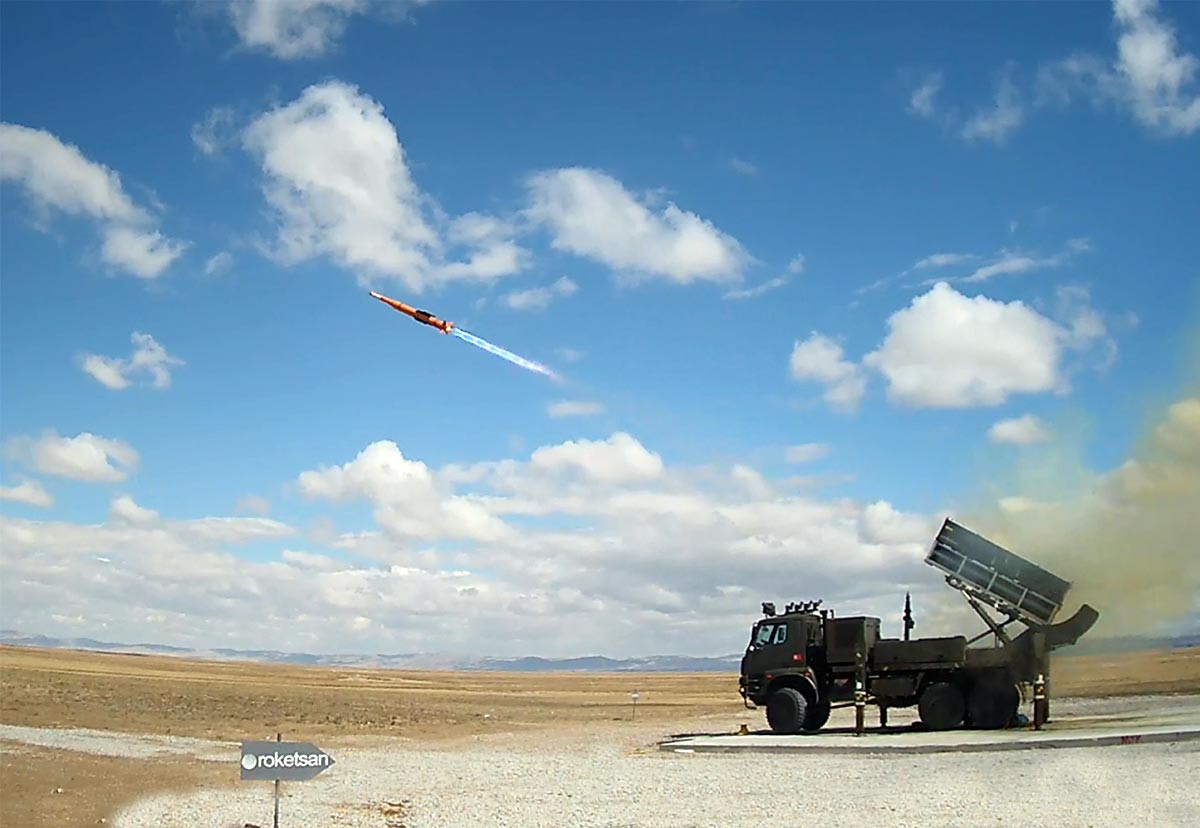
Türkiye’s HİSAR A+ Otonom air defence system destroyed a jet-powered target drone in a live-fire test using a new missile variant fitted with an imaging infrared (IIR) seeker, the Presidency of Defence Industries (SSB) announced on Nov. 7.
SSB President Haluk Görgün said the autonomous configuration “once again proved its effectiveness in the field” with the IIR-seeker missile, an upgrade over the radio-frequency and earlier infrared guidance fitted to previous HİSAR rounds. The test fell in the same week SSB marked the 41st anniversary of its founding, and Görgün tied the result to Türkiye’s push for a fully independent air-defence industrial base under President Recep Tayyip Erdoğan.
What the Autonomous Configuration Changes
HİSAR is Türkiye’s indigenous short- and medium-range air defence missile family, developed under SSB coordination with ASELSAN and ROKETSAN as prime contractors and TÜBİTAK SAGE supplying the warhead. More than 200 domestic subcontractors feed into the programme, according to the SSB.
ASELSAN builds the radar, command-and-control, fire-control and electro-optical systems and the missile seeker; ROKETSAN builds the missile itself, which combines a dual-pulse solid rocket motor with vertical launch capability. The HİSAR family comes in two configurations: a towed or vehicle-mounted launcher paired with a separate fire-control unit, and the “Otonom” (Autonomous) version, which folds detection, identification, tracking, firing and command-and-control into a single vehicle with no external fire-control unit required.
That single-vehicle design is what the SSB tested on Nov. 7: HİSAR A+ Otonom independently detected, tracked and engaged a high-speed, jet-powered target drone with no external cueing. Official figures put the system’s intercept range at more than 15 km and its engagement ceiling at 10 km, with a designed target set covering aircraft, drones, cruise missiles and air-to-ground missiles.
Part of a Layered, Largely Indigenous Shield
HİSAR sits in the short-to-medium layer of Türkiye’s integrated air and missile defence architecture, known as Çelik Kubbe (Steel Dome), below the longer-range SİPER system that completed its own live-fire qualification at Sinop last month. Where SİPER is built to intercept ballistic and high-altitude threats, HİSAR’s job is point and area defence for armoured and mechanized units and fixed installations closer to the front line — a segment where it competes conceptually with systems such as Norway’s NASAMS.
ROKETSAN has kept testing newer HİSAR-family rounds against harder targets, including high-speed drone intercepts earlier this year with its longer-range LEVENT interceptor. The programme has also expanded horizontally into derivative systems such as the GÜRZ gun-missile hybrid vehicle, which pairs a 35mm cannon with eight HİSAR-family missiles on a single chassis.
Why It Matters Beyond Türkiye
The SSB did not name an export customer for the IIR-seeker variant, and described the test as an inventory-qualification result rather than a sales pitch. But HİSAR’s track record feeds directly into how Turkish officials market the wider Çelik Kubbe architecture abroad, where ASELSAN alone disclosed more than $1.1 billion in new air-defence export contracts earlier this month. A seeker upgrade that lets the autonomous configuration engage faster targets without a separate radar vehicle is the kind of incremental capability gain Turkish officials point to when pitching the system to foreign buyers looking for an alternative to Western or Russian medium-range air defence.
Görgün also repeated a recurring SSB talking point: that domestic content in Turkish Armed Forces inventory has risen from roughly 20% to more than 80% over the past two decades, a shift he credits to a 2004 decision under then-Prime Minister Erdoğan to cancel several foreign procurement tenders in favour of indigenous development. HİSAR was one of the programmes that decision set in motion.
Sources: Presidency of Defence Industries (SSB); Türkiye Today.