Who Owns the Technology When You Buy a Turkish Weapon?

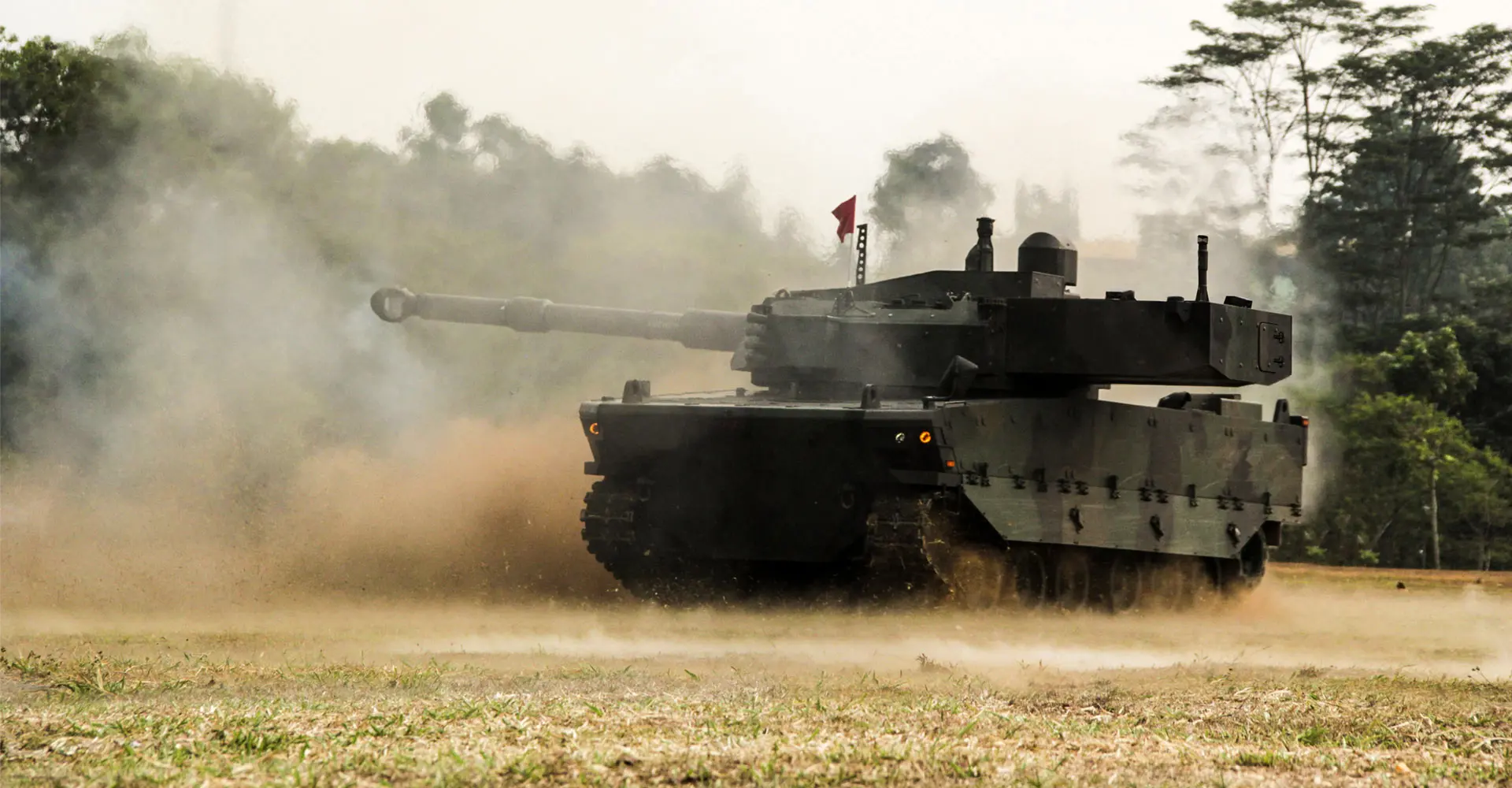
When a country buys a Turkish weapon, what it usually acquires is the right to build, maintain and adapt the system — not to own the design behind it. Across six export programmes where terms have been made public, only one gives a buyer joint ownership of a design: the FNSS–PT Pindad KAPLAN MT in Indonesia. Only one writes a buyer’s rights into public law: Spain’s Royal Decree 848/2025, and what it grants is a conversion right, not ownership. Everywhere else the ownership terms are simply not published — which is itself the most useful thing a procurement analyst can know before negotiating.
DEFENCETÜRKIYE DATA BOX
Question: What does a foreign buyer own after buying a Turkish defence system?
Primary documents examined: SSB Industrialization Guideline for Foreign Contractors (07/12/2022); SSB/SSM Industrial Participation–Offset Guideline SSM-YN-022 (April 2011); Spain’s Real Decreto 848/2025 (BOE, 23 September 2025)
Cases compared: Indonesia (KAPLAN MT), Pakistan (MİLGEM/Babur-class), Spain (ITS-C/HÜRJET), Kazakhstan (ANKA/TA-406), Ukraine (Baykar), Azerbaijan (AZROKSAN)
Strongest documented buyer right: joint design ownership, Indonesia — stated by both governments, contract text not public
Only right written into law: Spain — conversion of up to 45 aircraft to national configuration, performed in Spain
Almost never disclosed: equity splits, source-code access, third-country re-export consent rules
What a buyer can actually be handed
The vocabulary matters here, because sellers and buyers routinely use “technology transfer” to describe six different things with six different values. Türkiye’s own procurement agency has written the list down, which is a convenience nobody else in this market offers.
The Presidency of Defence Industries (SSB) — then the Undersecretariat for Defence Industries — published an Industrial Participation/Offset Guideline, reference SSM-YN-022, in April 2011. Its Industrialisation Plan template, section 9.2, requires a bidder to state how any new capability will be acquired, and lists the permitted methods: technical data package, production data package, training, technical support, licence transfer, and “other”.
Read that list again and notice what is absent. There is no line for ownership of the design. The most a bidder is asked to commit to is a production data package and a licence — the ability to build a thing, under terms someone else controls. That is the ceiling Türkiye set when it was the buyer, and it is a reasonable guide to the ceiling Turkish firms offer now that they are the seller.
This article is about ownership, not about work share. How much industrial participation a buyer’s companies get, and how offset credits are calculated, is a separate question covered in our guide to Turkish defence offsets and what a buyer actually gets. What follows is narrower: who holds the rights at the end.
What Türkiye demands as a buyer, and why it predicts what it gives
The current rulebook is the Industrialization Guideline for Foreign Contractors, dated 07/12/2022 and published in English by SSB. Two of its clauses are unusually revealing.
Article 4.4 sets the offset liability at “not being lower than 70% (seventy percent) of the Procurement Contract value”. That is a demanding figure by international standards, and it tells a foreign seller that selling into Türkiye means rebuilding a large part of the contract value inside the Turkish industrial base.
Article 6.8 is the one buyers should read twice:
“Technology acquisitions and investments realized within technological collaboration type of offset cannot be transferred to third-parties, cannot be withdrawn, cannot be made unavailable or the user rights of these items cannot be revoked without the approval of SSB.”
Türkiye, in other words, insists that technology it receives stays put and cannot be moved on without its consent. Article 6.7.3 goes further, refusing offset credit unless the Turkish company gains an ability that is “not related with the product/service that is planned to be exported and can be used in execution of other products/services” — a direct refusal to accept build-to-print support dressed up as capability transfer.
A buyer negotiating with a Turkish supplier should assume the same instincts apply in reverse. Turkish industry learned what a serious transfer clause looks like by writing one.
Indonesia: the only case where design ownership is shared on the record
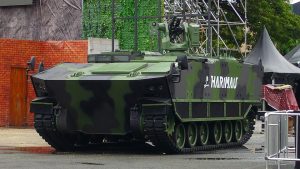
The KAPLAN MT, in Indonesian service the Harimau, is the clearest example of a Turkish programme in which a buyer ends up as a co-owner rather than a licensee. FNSS and PT Pindad developed the medium tank jointly under a 2015 cooperation agreement, and both sides have stated publicly that the intellectual property in the design is held jointly by the two countries. Pindad builds most vehicles in Indonesia under licence, and a serial production agreement for an initial 18 vehicles was signed at IDEF in 2019.
At the first-batch delivery, the Turkish side put the position plainly: Indonesia could produce the vehicle locally “with all IPs and components belonging to two countries without needing any third-country support”. The relationship has since extended to a KAPLAN APC/Harimau APC development and production agreement, shown at Indo Defence 2025.
What is still not public is the part a lawyer would want: whether a sale to a third country requires joint consent, and how licence revenue is divided. Reporting indicates a marketing split — Pindad pursuing Asia-Pacific, FNSS elsewhere — but that is a commercial arrangement described by secondary sources, not a published consent mechanism. Our profile of how the KAPLAN MT became the Indonesian Army’s Harimau covers the programme itself in more detail.
Pakistan: the broadest claim in the record
Pakistan’s MİLGEM deal carries the most expansive public language of any Turkish export. When the Ministry of Defence Production contracted ASFAT in 2018 for four ships, it announced that Pakistan would receive complete transfer of technology and the transfer of intellectual proprietary rights for the design. Two ships were built at Istanbul Naval Shipyard, two at Karachi Shipyard & Engineering Works.
Two cautions belong with that sentence. First, it is a government announcement, repeated in secondary reporting; the contract text is not public and we were unable to locate the ministry’s original release. Second, experienced analysts of the programme have argued the practical content is design expertise — the knowledge and tools to integrate Pakistan’s own subsystems and weapons — rather than an unrestricted title to the Ada-class design.
The more concrete outcome is the follow-on. Under the technology transfer arrangement, ASFAT’s design office has worked with the Pakistan Navy’s Platform Design Wing on the Jinnah-class frigate, with the intellectual property in that new design reported as shared. That is a meaningful distinction: Pakistan’s clearest ownership claim attaches to a ship it helped design, not to the one it bought. PNS Babur and PNS Khaibar have been commissioned; the programme is covered in our pieces on how the MİLGEM corvette design found export customers and on which Turkish warships Pakistan operates.
Spain: the one buyer right written into law
Spain’s arrangement is the only case in this set where a buyer’s rights appear in a published legal instrument. Real Decreto 848/2025, approved on 23 September 2025 and published in the Boletín Oficial del Estado, governs interest-free direct loans from the Ministry of Industry and Tourism to pre-finance six Special Modernisation Programmes in the air domain, totalling €3,680 million and disbursed between 2025 and 2030 without competitive tender.
The relevant line is ITS-C: €1,040,000,000 to Airbus Defence and Space SAU, for a programme the decree’s preamble describes as “basada en la plataforma Hürjet desarrollada por Turkish Aerospace (TA)”. Annex II states the financing passes to a joint venture formed by TA and Airbus DS España, covers up to 45 aircraft produced at TA’s facilities, and specifies that conversion to the Spanish configuration “será realizada por Airbus DS España” — carried out in Spain, by the Spanish company. It adds that national industry will improve native systems, opening future development of the platform “de manera soberana y autónoma”.
Read precisely, the decree grants no ownership of the aircraft and no intellectual property rights in the design. What it secures is an industrial right: aircraft arrive from Türkiye and are converted in Spain, and Spanish suppliers hold the systems work that makes later upgrades possible without returning to Ankara. For many buyers that is the right worth more than a title deed — and it is the model most likely to be copied. The programme’s market context is covered in our analysis of where HÜRJET fits in the advanced jet trainer market.
Kazakhstan, Ukraine and Azerbaijan: production abroad without ownership
A third pattern is now the most common: a plant on the buyer’s soil that the Turkish company owns or controls.
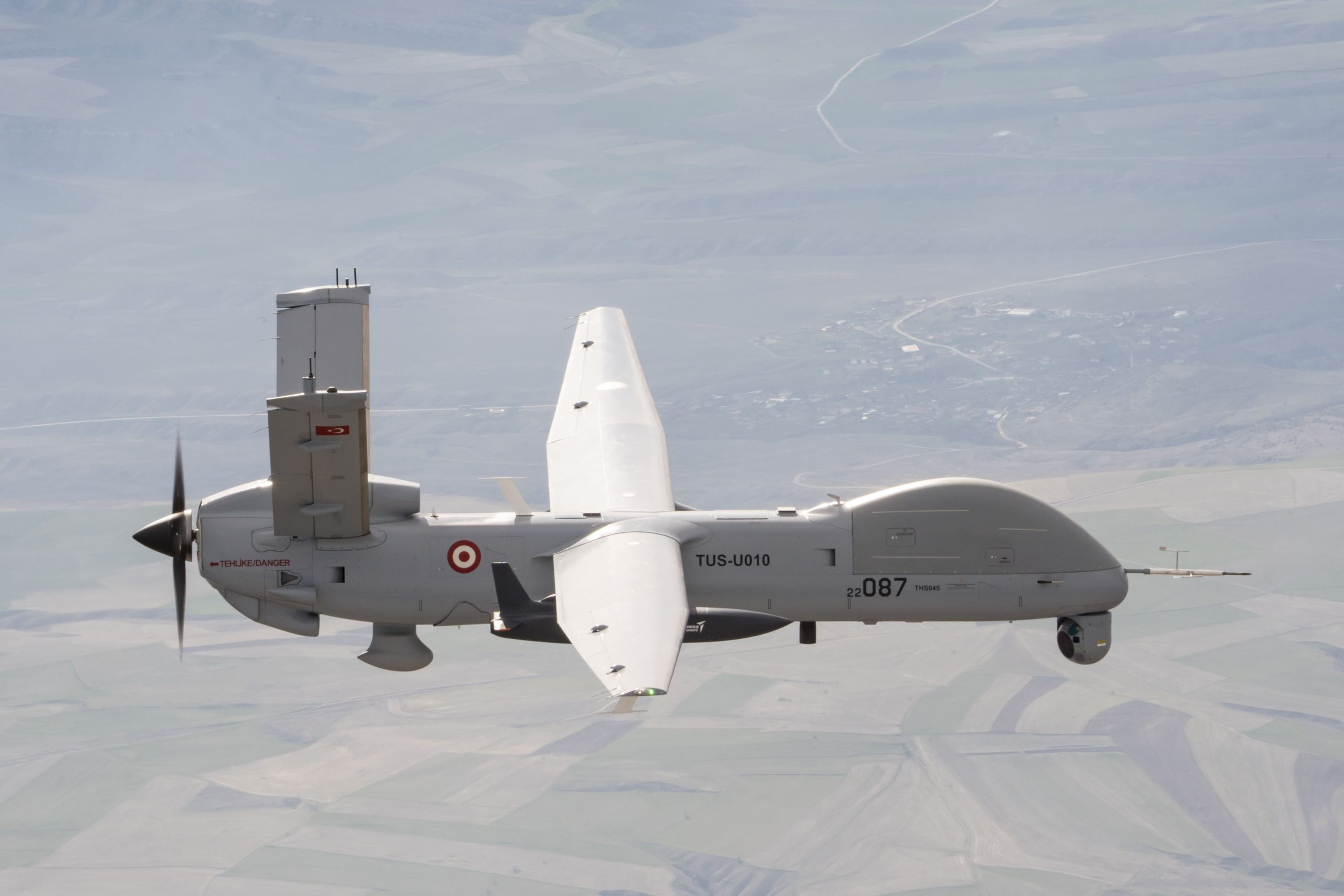
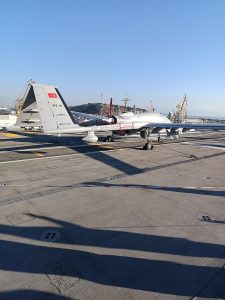
In Kazakhstan, TUSAŞ signed a joint venture agreement in Astana on 14 May 2026, during President Erdoğan’s visit, to produce and maintain ANKA — the first planned ANKA production base outside Türkiye. The venture has been reported as TA-406, partnering an aircraft repair plant in Aktöbe; Envanter Medya’s Turkish-language account of the TA-406 partnership and why ANKA is to be built in Kazakhstan sets out the industrial background. Investment value, production site, timeline and equity split have not been disclosed by either party, and a 2022 memorandum on the same subject did not lead to production.
In Ukraine, Baykar established a Ukrainian entity, Avia Ventures LLC, in 2019, acquired a site and received Turkish government licences in June 2023 to manufacture TB2 and Akıncı there. Reported investment figures range from about $95.5 million to $100 million, with roughly 500 staff and about 120 aircraft a year planned. The plant has been reported as struck during the war and its current operating status is not confirmed; what is clear structurally is that the facility belongs to a Baykar subsidiary. Ukraine gets production on its territory, not ownership of the company or the design.
In Azerbaijan, AZROKSAN — described as a ROKETSAN affiliate — is preparing production of the TR-122 rocket and the TEBER guidance kit alongside the Azerbaijani firm STP. The shareholding has not been published. Our overview of where Türkiye builds defence products abroad tracks these facilities as they are announced.
The six cases side by side
| Customer / programme | Signed | Built locally | Buyer right on the record | Not published |
|---|---|---|---|---|
| Indonesia — KAPLAN MT / Harimau (FNSS–Pindad) | 2015 co-op; 2019 serial production | Yes, most vehicles by Pindad under licence | Joint ownership of the design, stated by both sides | Third-country consent rules; revenue split |
| Pakistan — MİLGEM / Babur-class (ASFAT) | 2018 | Yes, two of four ships at Karachi | Design IP transfer announced by Pakistan’s MoDP; shared IP on Jinnah-class | Contract text; scope limits of the IP claim |
| Spain — ITS-C, HÜRJET-based (TA–Airbus DS España) | RD 848/2025, 23 Sep 2025 | No — built at TA, converted in Spain | Conversion of up to 45 aircraft in Spain; national systems work | Any design rights — the decree grants none |
| Kazakhstan — ANKA, TA-406 (TUSAŞ) | 14 May 2026 | Planned; not yet in production | Production and maintenance of ANKA in-country | Equity split, value, timeline, IP terms |
| Ukraine — TB2 / Akıncı (Baykar) | Entity 2019; Turkish licences Jun 2023 | Plant built; status unconfirmed | Manufacture on Ukrainian territory | None needed — plant is a Baykar subsidiary |
| Azerbaijan — TR-122 / TEBER, AZROKSAN (ROKETSAN) | Line installation under way | In preparation | Local production of rockets and guidance kits | Shareholding of the joint company |
DefenceTürkiye analysis, compiled from SSB guidelines, Spain’s Real Decreto 848/2025 and official statements by the parties. Where terms are marked “not published”, no primary document stating them could be located.
WHY IT MATTERS
Turkish industry is now winning the kind of contracts where ownership questions decide the price: licence production, co-development, and fleets a buyer expects to upgrade for thirty years. The pattern across six programmes is that Turkish firms are willing to put factories, data packages and joint design work on the table, and reluctant to put design titles there. Buyers who negotiate for the industrial right — conversion, systems integration, local upgrade authority, as Spain did — appear to get more than buyers who negotiate for the word “ownership”.
What is almost never in the public record
Three categories of term are missing from essentially every case above, and a buyer should plan to negotiate each one explicitly rather than assume it.
- Source code and mission-system access. No Turkish export contract in the public record specifies what level of software access a customer receives. This is the single largest cost driver in later upgrades.
- Third-country re-export consent. Even where design IP is shared, as in Indonesia, no published mechanism states who must agree to an onward sale. Türkiye’s own export control regime sits on top of any commercial term — a separate question covered in who approves a Turkish arms export and who can stop it.
- Equity in joint ventures. AZROKSAN and TA-406 are both described as partnerships without a published shareholding. A buyer financing a plant it does not control should establish this before signing, not after.
BUYER VIEW
Open-source editorial analysis, not procurement advice. On the evidence above, the questions worth putting in writing early are: which of the six SSB-recognised transfer forms is actually being offered — data package, production package, training, technical support, licence, or something else; whether the licence is time-limited or quantity-limited; who signs off a third-country sale; what happens to the rights if the Turkish parent is sanctioned or the programme is cancelled; and whether local “production” means assembly of delivered kits or manufacture from a production data package.
Spain’s decree is worth reading in full as a drafting model, because it secures a conversion and upgrade right without contesting ownership. Sustainment terms — spares, repair authority, obsolescence — are a related negotiation covered in our piece on who supports Turkish weapons after the sale.
What comes next
Three developments would change this picture, and each is answerable from open sources when it happens. The first is the Indonesian KAAN programme: 48 aircraft, with assembly and maintenance facilities announced for Indonesia, is by far the largest transfer Turkish industry has attempted, and whatever ownership terms are eventually disclosed will become the reference point for every later negotiation. The second is the first third-country sale of a jointly owned design — a Harimau export would reveal the consent mechanism that no document currently describes. The third is whether TA-406 publishes an equity structure, which would show whether Türkiye’s joint ventures abroad are genuine partnerships or wholly controlled subsidiaries with a local address.
FAQ
Does Türkiye transfer technology with its weapons exports?
Yes, in several documented programmes — but “technology transfer” covers a range. SSB’s own guideline recognises six distinct forms: technical data package, production data package, training, technical support, licence transfer, and other. Most Turkish export arrangements sit at the licence-and-production-data end rather than at design ownership.
Which country has the strongest ownership claim over a Turkish design?
Indonesia, for the KAPLAN MT/Harimau, where both sides state the design’s intellectual property is jointly held. Pakistan’s 2018 MİLGEM announcement claimed a broader transfer of design IP, but the contract is not public and analysts dispute its practical scope.
Can a buyer re-export a Turkish-designed system to a third country?
Not unilaterally, on current evidence. No published Turkish export contract sets out a re-export consent mechanism, and Türkiye’s national export licensing regime applies regardless of commercial terms.
Does Spain own the HÜRJET design it is buying?
No. Real Decreto 848/2025 grants no ownership or intellectual property rights in the aircraft. It finances up to 45 aircraft produced at Turkish Aerospace facilities and converted to Spanish configuration by Airbus DS España in Spain, with Spanish industry taking the systems work that enables later national upgrades.
Who owns Baykar’s plant in Ukraine?
Baykar. The facility is operated through Avia Ventures LLC, a Baykar entity registered in Ukraine in 2019. Turkish government licences to manufacture TB2 and Akıncı there were issued in June 2023. Its current operating status has not been confirmed.
Is source code included when a country buys Turkish mission systems?
No public contract specifies it. Software access is not addressed in any of the documents examined here, which makes it a term to negotiate explicitly rather than assume.
Sources
- Presidency of Defence Industries (SSB), Industrialization Guideline for Foreign Contractors, 07/12/2022 — articles 4.4, 6.7.3 and 6.8 quoted above.
- Undersecretariat for Defence Industries (SSM), Sanayi Katılımı/Offset Rehberi, SSM-YN-022, April 2011 — Industrialisation Plan section 9.2, technology and capability acquisition methods.
- Boletín Oficial del Estado, Real Decreto 848/2025, de 23 de septiembre — ITS-C financing, article 3 and Annex II.
- Statements by Turkey’s FNSS and Indonesia’s PT Pindad on joint intellectual property in the KAPLAN MT/Harimau, and the 2019 IDEF serial production agreement.
- Pakistan Ministry of Defence Production announcement of the 2018 ASFAT MİLGEM contract, as reported at the time; ASFAT–Pakistan Navy Platform Design Wing cooperation on the Jinnah-class.
- Envanter Medya, a Turkish-language explainer on how SSB structures its naval programmes and built the warship ecosystem.