Are Turkish Weapons NATO-Interoperable? What Buyers Get


Mostly yes — and in several areas NATO itself is now the customer. Turkish equipment is designed to NATO standards, Turkish suppliers are numbered inside NATO’s own logistics system through a full member bureau, and in January 2026 the NATO Support and Procurement Agency placed a three-year framework with ASELSAN for Mode 5 identification equipment intended for use across member states. The qualification matters as much as the answer: interoperability is not a property a weapon has. It is a set of deliverables a buyer specifies, pays for and tests. The layer where Turkish equipment still depends on somebody else’s permission is secure tactical data links.
DefenceTürkiye Data Box
Subject · NATO interoperability of Turkish defence equipment
Türkiye’s NATO status · Member since 1952; full member of the NATO Codification System
National Codification Bureau · Bureau 27; NCAGE codes in the format T***#
National codification tool · DOKU, interfaced with Turkish Armed Forces logistics information systems
Identification standard · ASELSAN IDENTIFFY family declared compliant with NATO STANAG 4193 Edition 3
NATO as customer · NSPA three-year Mode 5 IFF framework (announced January 2026, value undisclosed); NCIA contract to CTech for SATCOM ground-segment protection
Interoperability testing · CWIX 2026, 6–26 June 2026, Poland; HAVELSAN entered 16 systems across 12 capability focus areas
Main open gap · Link 16 terminals and crypto release for export customers
Why the question keeps being asked the wrong way
“Is it NATO-compatible?” is the first question most procurement officers ask about Turkish equipment, and it is almost always too blunt to be useful. It bundles together four separate things that are governed by different rules, cost different amounts and fail in different ways. A rifle that fires NATO-calibre ammunition tells you nothing about whether its parent company’s radar can push a track into your air picture. A combat management system that has passed NATO testing tells you nothing about whether you will be allowed to put a Link 16 terminal on the ship it runs on.
Splitting the question into layers makes it answerable. It also explains a pattern that looks contradictory from the outside: Türkiye scores very well at the bottom of the stack, where standards are public and compliance is a design decision, and runs into friction at the top, where access is controlled by other governments rather than by engineering.
The four layers, from easiest to hardest
DefenceTürkiye analysis. Bar width indicates how much of each layer is settled by engineering rather than by another government’s approval.
Layer one: Türkiye is bureau 27
The least glamorous layer is the one buyers underestimate. Before a spare part can enter an allied supply chain it needs a NATO Stock Number, and those are issued by national codification bureaux working to the alliance’s ACodP-1 rules. NATO’s own AC/135 portal, run by the NATO Support and Procurement Agency, lists Türkiye as country code TUR with bureau number 27 and NCAGE commercial codes in the format T***#, in the category reserved for member nations.
That classification does real work. The same NATO list places Ukraine (bureau 61), Qatar and the United Arab Emirates (bureau 71) in the Tier 2 sponsored category, and Thailand (bureau 35) in Tier 1. A sponsored country participates in the codification system through an arrangement; a member nation operates inside it by right. For a buyer, the practical consequence is that a Turkish supplier’s items are codified by a bureau that sits at the same table as the American, British and German ones, and the resulting stock numbers behave like any other allied stock numbers in a logistics system.
NATO’s national-tools table adds the mechanics: Türkiye codifies using a system called DOKU, described on the same portal as interfacing with Turkish Armed Forces logistics information systems and as database-independent. That is a modest technical detail, but it is the reason a Turkish vehicle delivered to a NATO army can be sustained without inventing a parallel parts catalogue.
The same logic runs through ammunition. Türkiye has been building to alliance calibres since the 1950s, which is why the 155 mm/52-calibre barrel on a Fırtına howitzer takes the same family of rounds as its European neighbours — a point we set out in more detail in our survey of Türkiye’s artillery and shell supply.
One caution, because it is routinely misstated in marketing material: codification is a supply-numbering process, not a quality or performance approval. An NSN says the alliance knows how to order the item. It does not say the alliance has endorsed it.
Layer two: designing to the STANAG
Above logistics sits standards compliance. NATO Standardization Agreements cover everything from fuel couplings to cryptographic waveforms, and Turkish manufacturers design to them as a matter of course because their primary customer is a NATO military. Envanter Medya has published a Turkish-language explainer on what STANAGs are and how they shape defence production, which is the clearest introduction to the underlying framework if you read Turkish.
The awkward part is verification. In most cases STANAG compliance is declared by the manufacturer rather than certified by NATO, and there is no public alliance registry a buyer can consult to check. The one cross-border mechanism that does travel is government quality assurance under the AQAP series, which we examine separately in our piece on who certifies Turkish weapons and whether it counts abroad. For interoperability specifically, a compliance statement in a brochure is a starting point for a conversation, not evidence.
Layer three: identification, and the crypto inside it
This is where the Turkish position becomes genuinely unusual. Identification Friend or Foe is the system that stops an air defence crew shooting at its own side, and the current NATO standard, Mode 5, is encrypted. Encryption is the problem: historically the crypto that makes Mode 5 work has been supplied under tightly controlled release arrangements, which gives the releasing government a veto over who can field it.
ASELSAN states that its IDENTIFFY family — long-range and short/medium-range interrogators, combined interrogator/transponder units, man-portable systems and naval cabinet configurations — is fully compliant with NATO STANAG 4193 Edition 3 and supports Modes 1, 2, 3/A, C, S and encrypted Mode 5 at Levels 1 and 2. The company also says it has developed its own Mode 5 crypto applique, the M5K-II, and describes this as putting Türkiye among a very small number of countries with sovereign Mode 5 crypto capability. That characterisation is ASELSAN’s own and has not been independently audited in public, but the existence of an indigenous applique is a documented product claim rather than an aspiration.
What turned the claim into evidence was a purchase. In January 2026 the NATO Support and Procurement Agency awarded ASELSAN a three-year framework agreement for Mode 5-capable IFF interrogators for man-portable air defence teams, to be supplied across member states. The award was first reported by Anadolu Agency and subsequently carried by The Defense Post and Army Recognition, with ASELSAN’s statement dated 26 January 2026. Neither the value nor the quantities have been disclosed, and no NSPA statement of its own has been published in the sources we reviewed. Treat the scale as unknown.
The significance is not the money. It is that the alliance chose a Turkish supplier for the one piece of equipment whose entire purpose is to let allied units recognise each other.
Layer four: networks, where the claims get tested
The hardest layer is command-and-control software and tactical data links, and it is also the only layer with a public, repeatable test.
CWIX — the Coalition Warrior Interoperability eXercise, run annually in Poland by NATO Allied Command Transformation — is where systems are made to talk to each other under observation. The 2026 edition ran from 6 to 26 June and, according to the figures published around it, brought together more than 3,000 personnel, 780 systems and 46 countries across 20 capability focus areas.
HAVELSAN has taken part since 2012. For CWIX 2026 the company says it sent 43 personnel and entered 16 systems across twelve capability focus areas covering MIP, tactical data links, multi-domain command and control, decision management, communications, geospatial and meteorological services, CBRN, federated mission network core services, air, maritime, modelling and simulation, and cyber. Its press release of 23 July 2026 reports that capabilities including DOOB-HQ, KAPI and an embedded NONC2 ATA DLP completed Assurance Verification and Validation testing against Federated Mission Networking Spiral 4 specifications — which the company describes as a prerequisite for participation in NATO missions run between 2025 and 2027. General Manager Dr Mehmet Akif Nacar said the results reinforced the company’s “long-standing expertise in developing NATO-compliant systems”.
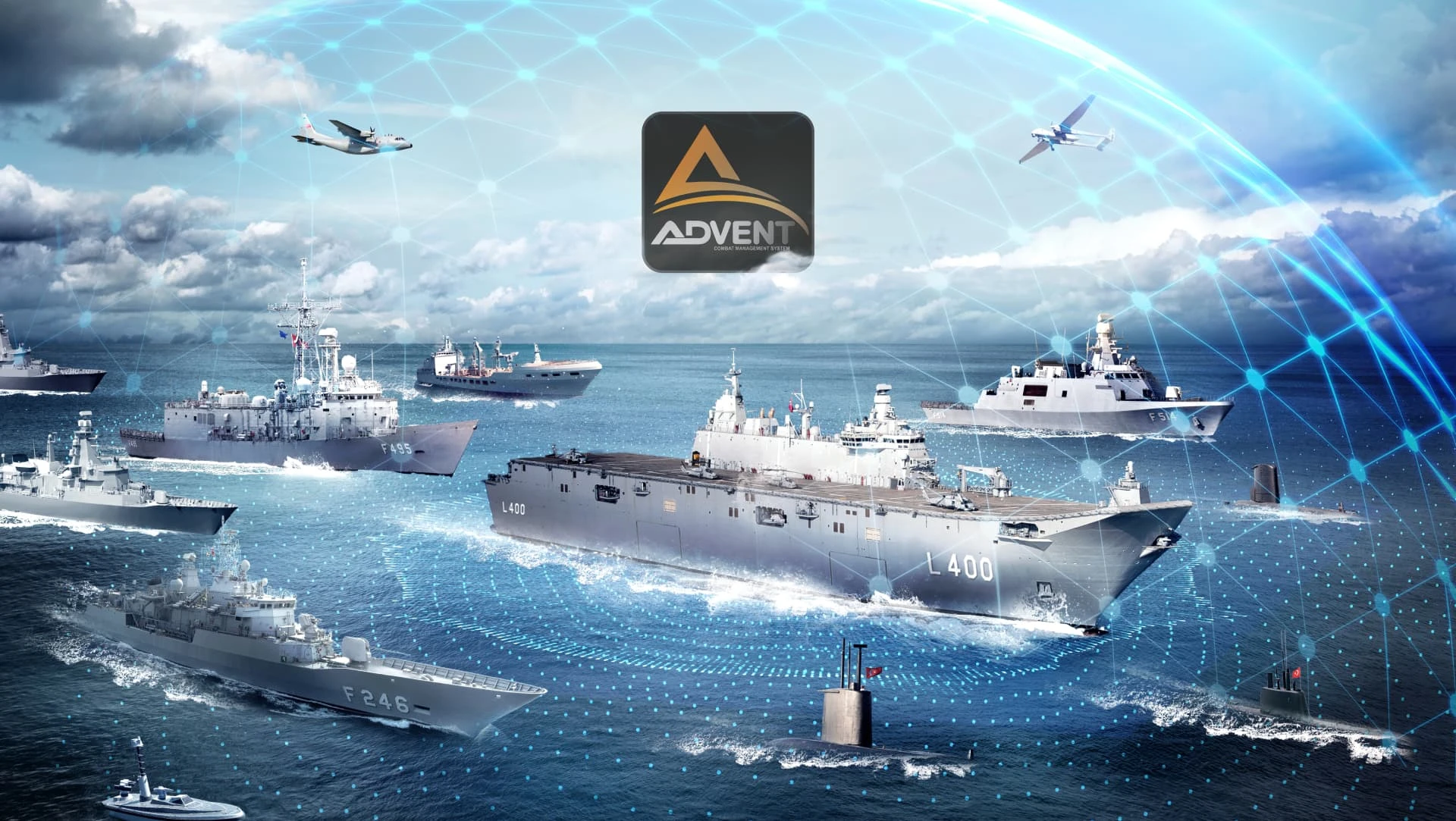
A note on sourcing, because the detail is inconsistent across outlets: several reports describe four HAVELSAN capabilities clearing testing, while the release itself names three, and at least one account substitutes LYNX for one of them. We have used the three named in the release. HAVELSAN’s wider software portfolio, including the ADVENT combat management system, is covered in our HAVELSAN company profile and in our look at the Turkish command software few people ever see.
HAVELSAN is not alone. CTech, a Turkish Aerospace subsidiary, has a contract from the NATO Communications and Information Agency to supply electronic protective measure systems for the alliance’s SATCOM ground segment, and had its SecureARX anti-jam modem — built to STANAG 4606 — validated at the same CWIX 2026 event. That story is told in full in our CTech company profile.
Where the credentials actually sit
| Layer | Mechanism | Turkish evidence | Date | What it does not prove |
|---|---|---|---|---|
| Logistics | NATO codification, AC/135 | Bureau 27, NCAGE format T***#, member category; DOKU tool | Standing | That any item has been assessed for quality or performance |
| Standards | STANAG compliance | ASELSAN IDENTIFFY declared to STANAG 4193 Ed. 3; CTech SecureARX to STANAG 4606 | 2025–2026 | Manufacturer declaration; no public NATO registry confirms it |
| Identification | NSPA procurement | Three-year framework to ASELSAN for Mode 5 IFF interrogators for MANPADS | Jan 2026 | Scale — value and quantities undisclosed |
| Networks | CWIX AV&V against FMN Spiral 4 | HAVELSAN: 16 systems, 12 focus areas; DOOB-HQ, KAPI, embedded NONC2 ATA DLP cleared | Jun–Jul 2026 | That a buyer gets the same result on its own national network |
| Networks | NCIA procurement | CTech electronic protective measures for NATO SATCOM ground segment | Reported 2026 | Contract value not published |
Table compiled by DefenceTürkiye from NATO AC/135 portal data, manufacturer statements and reporting cited below. Scroll horizontally on mobile.
Why It Matters
For a European or Gulf buyer weighing a Turkish bid against a Western incumbent, interoperability has usually been treated as the decisive unknown. The 2026 record narrows it considerably: NATO agencies are themselves buying Turkish identification and communications equipment, and Turkish command software is being put through the alliance’s own annual interoperability testing alongside everyone else’s. What has not changed is that the top of the stack still runs on third-country release decisions, which no amount of Turkish engineering can settle on its own.
Where it still breaks down
Link 16 is not Türkiye’s to give. Terminals and their cryptographic material are release-controlled, and a buyer of a Turkish platform who wants Link 16 on it is negotiating with a third government as well as with Ankara. This is the single most common integration cost that gets discovered late. It is also why Türkiye has been building national alternatives in parallel; we mapped the resulting patchwork in Türkiye’s four different tactical data links. A national link solves sovereignty and does nothing for coalition operations.
Crypto key management is not the same as crypto hardware. ASELSAN building its own Mode 5 applique is a real capability. It does not follow that a Turkish system can be keyed into an allied Mode 5 network without that alliance’s key management participating. The public record does not describe how this is handled for export customers, and buyers should assume it is a negotiated item.
There is no public scoreboard. CWIX results are published selectively by the participants themselves. Codification tells you nothing about performance. STANAG compliance is self-declared. A buyer who wants assurance has to write the tests into the contract and attend them.
Türkiye’s own history cuts both ways. The S-400 purchase and the resulting removal from the F-35 programme is the clearest case anywhere of a NATO member acquiring a system that could not be integrated into allied air defence, and it still shapes how some capitals read Turkish intentions. We cover the current state of that argument in our piece on Türkiye’s stalled fighter question. Separately, every export still passes through Ankara’s own licensing system, described in who approves a Turkish arms export.
Buyer View
Open-source editorial analysis for procurement readers. DefenceTürkiye does not advise governments.
- Specify the layer, not the slogan. “NATO-interoperable” in a tender response means nothing. Name the STANAGs, the data links, the identification mode and the message standards.
- Ask which CWIX years the system entered and in which focus areas. Participation history is verifiable and is the closest thing to an independent credential.
- Separate what the Turkish supplier controls from what it does not. IFF hardware and C2 software: largely Turkish. Link 16 terminals and keys: not.
- Budget integration separately from the platform. Network integration is where Turkish price advantage is most often eroded.
- Check the industrial half of the deal. What transfers with the system is a different negotiation again — see our analysis of Turkish defence offsets.
- Confirm codification early. Ask for NSNs and the NCAGE code; it costs nothing to verify and prevents sustainment surprises.
What comes next
Two things are worth watching. The first is whether the NSPA framework with ASELSAN converts into visible deliveries across member states, because a framework agreement is an authorisation to order rather than an order. The second is whether Turkish systems start appearing in NATO’s Federated Mission Networking affiliation lists in their own right rather than through national entries — that would be the point at which interoperability stops being argued and starts being assumed.
A third, slower question sits underneath both: whether Türkiye’s investment in sovereign cryptography ends up reinforcing its position inside the alliance or quietly building a parallel stack beside it. The honest answer today is that it is doing a little of each.
FAQ
Are Turkish weapons NATO-compatible?
At the logistics and standards layers, yes. Türkiye has been a NATO member since 1952, builds to alliance calibres and STANAGs, and operates a full national codification bureau. At the secure-network layer, compatibility depends on release decisions taken outside Türkiye, and should be treated as a contract item rather than an assumption.
Does NATO itself buy Turkish equipment?
Yes. The NATO Support and Procurement Agency awarded ASELSAN a three-year framework for Mode 5 IFF interrogators for man-portable air defence teams in January 2026, and the NATO Communications and Information Agency has contracted CTech for electronic protective measures in the alliance’s SATCOM ground segment. Neither contract value has been published.
What is CWIX and why does it matter for Turkish systems?
CWIX is NATO’s annual Coalition Warrior Interoperability eXercise, held in Poland and led by Allied Command Transformation. It is where systems are tested against each other and against alliance specifications. The 2026 edition ran 6–26 June with more than 3,000 personnel, 780 systems and 46 countries. HAVELSAN has participated since 2012 and entered 16 systems in 2026.
Can a buyer get Link 16 on a Turkish platform?
Sometimes, but not from Türkiye alone. Link 16 terminals and their cryptographic material are controlled by the releasing government, so the buyer negotiates that element separately. Türkiye has developed national data links partly in response, but a national link does not substitute for Link 16 in coalition operations.
Is Türkiye a full member of the NATO Codification System?
Yes. NATO’s AC/135 portal lists Türkiye as country code TUR, National Codification Bureau 27, with NCAGE codes in the format T***#, in the member category rather than the Tier 1 or Tier 2 sponsored categories used for partner states.
Does STANAG compliance mean NATO has approved the product?
No. In most cases compliance with a Standardization Agreement is declared by the manufacturer. NATO does not maintain a public registry a buyer can check, which is why demonstrated results — CWIX testing, an NSPA or NCIA contract — carry more weight than a compliance line in a brochure.
Which Turkish companies have the strongest NATO interoperability record?
On the public evidence, ASELSAN in identification, HAVELSAN in command-and-control software and CTech in protected satellite communications. Other Turkish firms make interoperability claims; these three have contracts or test results attached to them.
Sources
- NATO Support and Procurement Agency, AC/135 portal, NCS country code list and national codification tools tables (bureau numbers, NCAGE formats, DOKU).
- ASELSAN, “Future of Identification: ASELSAN’s Mode 5/S IFF Solutions”, company blog, 29 August 2025 (STANAG 4193 Edition 3, IDENTIFFY family, M5K-II crypto applique).
- HAVELSAN press release, Ankara, 23 July 2026, on CWIX 2026 AV&V results (via Joint Forces News).
- The Defense Post, “NATO Taps Turkey’s Aselsan for Air Defense IFF Tech”, 28 January 2026, citing Anadolu Agency.
- Army Recognition, report on the NSPA framework award, January 2026.
- Envanter Medya, “NATO Standartları Nedir? STANAG’ların Savunma Üretimine Etkisi” (Turkish-language background on STANAGs); and its explainer on how Identification Friend or Foe works.
- EDR Magazine reporting on CTech’s NATO Communications and Information Agency contract, as cited in our CTech company profile.