Türkiye’s 2027 Budget Proposes 229% Jump in Defence Procurement Spending

Türkiye’s parliament has opened debate on a 2027 budget bill that would raise the Ministry of National Defence’s own appropriation by more than 86 percent and, according to figures the government itself has put forward, lift spending earmarked specifically for weapons, ammunition and military vehicle purchases by 229 percent. It is one of the clearest signals yet of how far Ankara intends to keep pushing domestic defence procurement even as its export order book fills up.
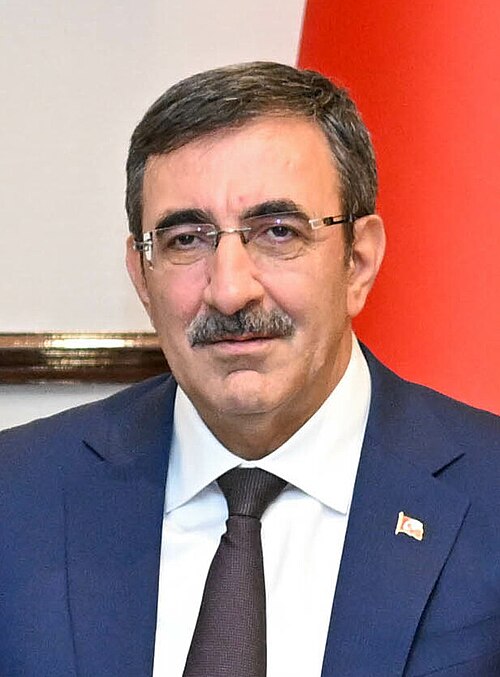
The 2027 Central Government Budget Law proposal was submitted to the Grand National Assembly (TBMM) on October 16 under President Recep Tayyip Erdoğan’s signature. Vice President Cevdet Yılmaz presented the government’s macro budget framework to the TBMM Plan and Budget Committee on October 21, and committee hearings on the bill itself opened on October 27. They are scheduled to run until November 27, after which the bill moves to a General Assembly vote expected in December.
What the numbers actually cover
Two sets of figures are circulating, and they are not measuring the same thing, so it is worth separating them.
The first comes from the government’s own 2027 Budget Justification (Bütçe Gerekçesi), published by the Presidency of Strategy and Budget. It puts the Ministry of National Defence’s (MSB) own 2027 appropriation at 1.5326 trillion Turkish lira, up from 822.9 billion lira in 2026 — an increase of 86.2 percent in lira terms. That makes MSB the fifth-largest single appropriation in the entire central government budget, behind only the Treasury and Finance Ministry, National Education, Labour and Social Security, and Health.
The second figure, reported by Breaking Defense from remarks attributed to Yılmaz at an Ankara budget ceremony, is more specific and more striking: spending on “weapons, ammunition, weapons systems, and other defense equipment” — the procurement line within the defence budget, as distinct from personnel, operations or maintenance costs — is proposed to rise 229 percent. Breaking Defense put total proposed Turkish defence spending for 2027 at $44.5 billion, with a separate $25.2 billion allocated to internal security. Neither the lira baseline behind that 229 percent figure nor a breakdown by programme was disclosed in that reporting, and Breaking Defense did not name any specific contractor or platform tied to the increase.
It is worth noting that $44.5 billion falls in roughly the same range as the 1.53 trillion lira MSB figure from the official budget justification, though Türkiye’s currency has moved enough during 2026 that converting between the two isn’t exact, and the two figures come from different officials describing the budget at different moments. Separately, some Turkish outlets have reported a far larger combined “defence and security” total of over 2.2 trillion lira, and others a figure above 3.4 trillion lira for “total defence spending” in the bill. Those broader tallies appear to fold in additional institutions — the Gendarmerie, the Coast Guard, intelligence and fuel-supply bodies — alongside MSB itself, which is presumably why they run higher. None of the Turkish-language reporting reviewed for this article reconciled the different totals against a single line-by-line table, so readers should treat MSB’s own 86.2 percent figure, sourced directly to the budget justification, as the most defensible single number, and the 229 percent procurement figure as a government-stated but unverified subset of it.
Where the committee process goes next
The TBMM Plan and Budget Committee’s published calendar sets MSB’s own budget hearing for November 18. The Presidency of Defence Industries (SSB), reviewed alongside the Presidency of Strategy and Budget, is scheduled for November 27, the final day before the bill moves to the floor. Those hearings are where line-item detail typically surfaces in Turkish budget debates — committee members routinely press ministry and agency heads for platform-level breakdowns that don’t appear in the justification document itself. Until then, the 229 percent procurement figure stands as a government talking point rather than an audited line item.
Why a bigger order book matters beyond Türkiye
For readers outside Türkiye, the budget bill matters less for its own sake than for what it implies about the demand side of a defence industry that has spent 2026 chasing export headlines. SSB chairman Haluk Görgün has said Turkish firms signed roughly $15 billion in new contracts through October 2026, with a $20 billion year-end target, and the government’s own 2027 Presidential Annual Program separately targets $11.5 billion in defence and aerospace exports next year. A domestic order book growing at anywhere near the rate the budget documents imply would give manufacturers like ASELSAN, Roketsan, TUSAŞ and Otokar steadier production runs to amortize against, which is generally what allows an exporter to quote competitive delivery timelines to foreign customers rather than making them wait behind the home-market queue.
The timing also lines up with a specific regional backdrop. Turkish officials have pointed to Gulf states’ growing interest in Turkish air-defence platforms following Houthi missile and drone attacks on Saudi Arabia, including one that struck near Riyadh’s airport, and against the broader aftermath of the Iran-Israel-U.S. war earlier in the year. Ankara has also just moved its Mecca Pact mutual-defence agreement with Saudi Arabia and Pakistan through a parliamentary committee this same budget season, and signed defence-industrial cooperation agreements with Qatar, Pakistan and Indonesia in October. A larger home procurement budget does not, on its own, prove any of that regional activity is driving the 2027 numbers, but Turkish officials have repeatedly framed the budget increase in that context.
What’s already funded, and what isn’t specified
Turkish officials have in recent weeks pointed to specific programmes that illustrate where procurement money is already flowing: the first 20-aircraft KAAN fighter production contract signed in May 2026, continued rollout of the layered Çelik Kubbe (“Steel Dome”) air-defence architecture — including ASELSAN’s €523 million air and missile defence contract with SSB signed in late October — and an expanding artillery and guided-rocket programme spanning multiple manufacturers. None of those contracts has been publicly tied to the 2027 budget’s 229 percent procurement line by any official source reviewed for this article, and readers should not assume a direct causal link until SSB or MSB officials draw one explicitly, which may happen at the November hearings.
What is confirmed is more modest than the headline percentage suggests: a budget bill has been submitted, a committee calendar is set, and senior officials have stated an 86 percent rise in the defence ministry’s own appropriation and a 229 percent rise in a procurement sub-category, without yet publishing the itemized breakdown that would let outside analysts verify either number against specific programmes. Türkiye’s budget process, like its defence-industry financing more broadly, routes money through more than one channel, and the full picture for 2027 will not be settled until the TBMM General Assembly votes in December.