Italy’s Air Force to Order Six Baykar-Derived Combat Drones

Italy’s air force is preparing to become the first NATO air arm to fly a combat drone built on a Baykar design, and it wants to arm that drone with a mix of Turkish and European weapons.
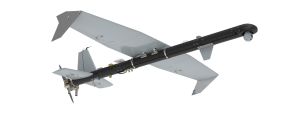
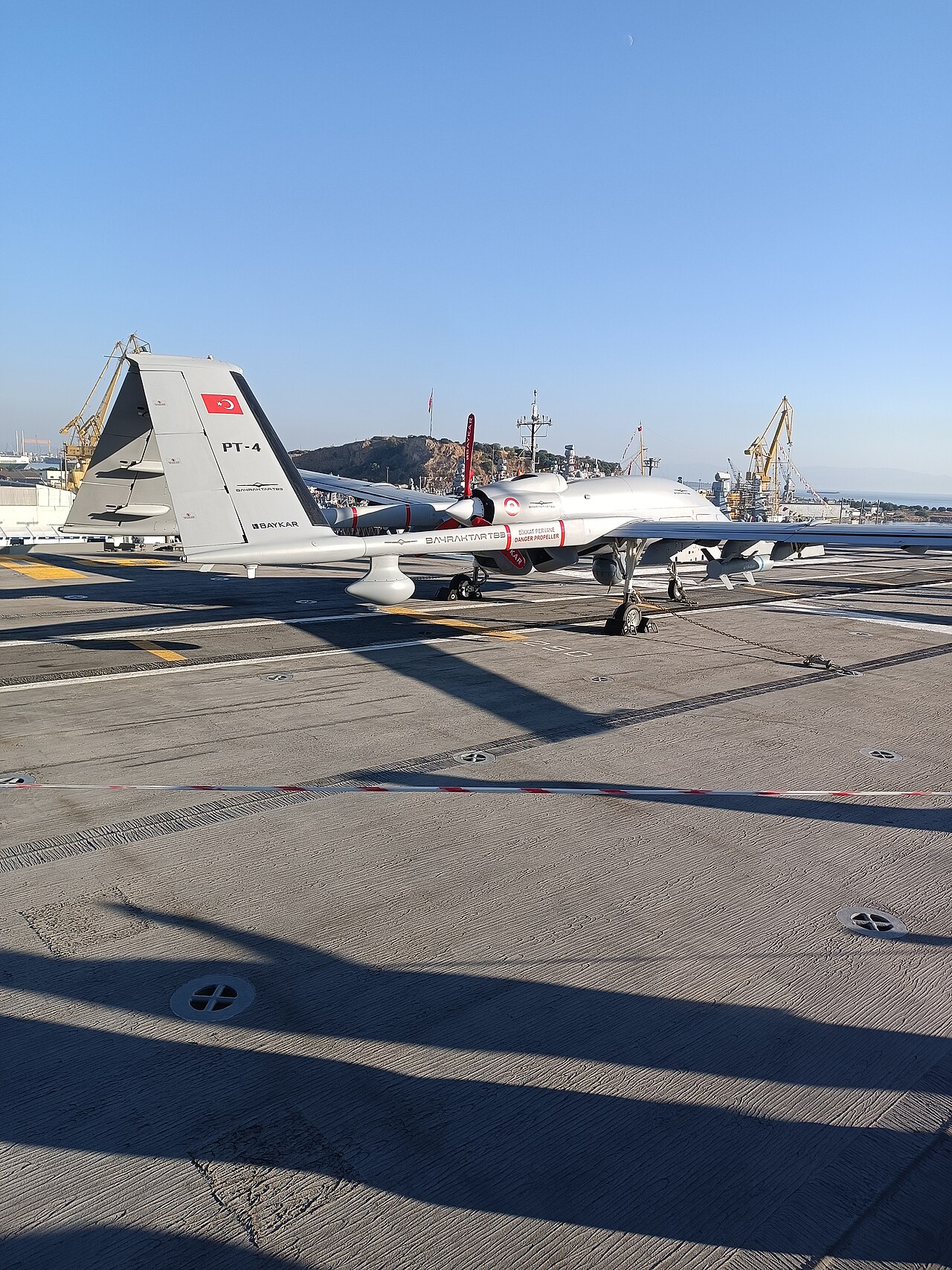
Gen. Antonio Conserva, who oversees Italian Air Force procurement, said the service is due to acquire six Astore Levante unmanned combat aerial vehicles, a carrier-capable derivative of Baykar’s Bayraktar TB3 built by LBA Systems, the joint venture between Baykar and Leonardo. The initial order covers three systems, each comprising two aircraft, Conserva told Defense News. “We will see if we go on to expand the capability,” he said.
The aircraft is meant to replace the Italian Air Force’s aging General Atomics MQ-1 Predators, flying intelligence, surveillance and reconnaissance missions, providing armed support to ground troops, and training a new generation of drone pilots.
A Turkish Airframe, an Italian Assembly Line
LBA Systems unveiled the Astore Levante at the Farnborough International Airshow in July 2026, presenting it as a European-built variant of the Bayraktar TB3, the folding-wing UCAV that Baykar designed to operate from Türkiye’s amphibious assault ship TCG Anadolu. Leonardo supplies mission systems and sensors, and the companies say the first production batch is being assembled at Leonardo facilities in Italy, with deliveries to an Italian end user expected before the end of 2026.
Italy’s government gave conditional approval to the Baykar-Leonardo venture under its “Golden Power” screening process, which Turkish and Italian reporting says restricts onward export of the aircraft to NATO and EU-aligned customers. That condition matters for Baykar, which has spent the past two years trying to convert its battlefield reputation, built mostly on the Bayraktar TB2‘s use in Ukraine, Libya and the Caucasus, into a presence inside NATO’s own air forces rather than only those of partner states.
The Italian Navy has separately said it is weighing the TB3 for its carrier Cavour, and the TB3 already flies from TCG Anadolu. Indonesia, which bought the former Italian carrier Garibaldi, is expected to operate TB3s from that ship as well once its own order moves forward. The Astore Levante programme gives Baykar a second route into NATO air fleets alongside those naval applications, this time through a fixed-wing air force procurement rather than a carrier air wing.
An Open Question Over Weapons
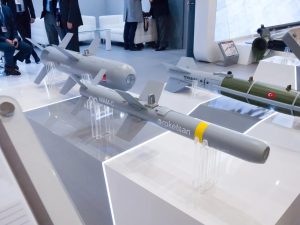
What the Astore Levante will actually carry is still unsettled. Conserva said Italy is testing MBDA armaments on the airframe but has made no final choice, adding that “the natural armament is Turkish.” At Farnborough, LBA Systems displayed the aircraft alongside Roketsan’s MAM-series guided glide bombs and Baykar’s KEMANKES-1 mini cruise missile, both already integrated on Baykar’s existing UCAV fleet in Türkiye. Conserva also said Italy is working with “small Italian industrial groups” on the weapons question, without naming them.
The choice carries weight beyond one aircraft type. If Rome settles on Turkish munitions for an Italian Air Force platform, it would be the first time NATO-standard Roketsan or Baykar weapons are integrated and operated by an alliance member’s air force rather than sold as an export package to a non-NATO buyer. If MBDA wins the integration instead, the Astore Levante becomes a case study in a NATO country using a Turkish airframe as a carrier for Western weapons, a hybrid approach that could appeal to other European air forces wary of buying an all-Turkish weapons package but still drawn to the aircraft’s price and availability.
Certification of the Astore Levante under European airworthiness rules is expected by the end of 2026 or in early 2027. That step is a prerequisite for selling the aircraft more broadly in Europe, and Conserva’s comments suggest Italy sees itself as the launch customer that unlocks that wider market rather than simply a one-off buyer.
Why It Matters Beyond Rome
Baykar has built its export business on exactly the countries that could least access Western drone technology: Ukraine, Azerbaijan, Pakistan and a long list of states in Africa, Central Asia and the Gulf. NATO and EU airframe sales have been rarer and more contested, usually involving the smaller, cheaper TB2 rather than a larger combat-capable design. Poland, Romania and the Baltic states have bought TB2s for reconnaissance; none has yet put a Baykar-derived UCAV into frontline squadron service alongside crewed fighters.
An Italian Air Force order, even a modest one of six aircraft, changes that picture. It gives Baykar a validated foothold inside a G7 air force, a European assembly line that sidesteps some of the political sensitivity around buying finished aircraft from Türkiye, and a live test of whether a Turkish airframe can carry a Western missile package and pass NATO interoperability requirements. For Leonardo, the deal extends a European defense group’s push to offer an alternative to American MALE and HALE drones without building an airframe from scratch, at a moment when European governments are under pressure to show they can field unmanned systems faster than their own national programmes allow.
None of this is a signed contract yet in the conventional sense. Conserva’s language, Italy “is due to acquire” the drones and “will initially order” three systems, describes an active procurement plan rather than a completed sale, and the weapons integration decision remains open. But for an aircraft that only appeared in public three months ago, the distance from a Farnborough unveiling to a named launch customer inside a NATO air force has been unusually short.
Background: From TB3 to Astore Levante
- The Bayraktar TB3 is Baykar’s folding-wing UCAV, designed to operate from Türkiye’s short-deck amphibious ship TCG Anadolu and already carrying Roketsan and Aselsan munitions in Turkish service.
- LBA Systems, the Leonardo-Baykar joint venture, received conditional Italian government clearance in 2024 to proceed, after Baykar’s acquisition of the Italian manufacturer Piaggio Aerospace.
- The Astore Levante was publicly unveiled at Farnborough in July 2026 as the venture’s first product, built around the TB3 airframe with Leonardo sensors and mission systems.
- Italy’s Golden Power approval reportedly limits re-export of the aircraft to NATO and EU-aligned states, a restriction that shapes how far Baykar can use the Italian line to reach other European customers, which already include several production sites Türkiye has set up abroad.
Baykar’s other UCAV, the jet-powered Bayraktar KIZILELMA, remains a separate, higher-end programme aimed at air-to-air roles; the Astore Levante sits firmly in the TB3’s ISR-and-strike lane.
Sources: Defense News, Naval News.