How Much Can Türkiye’s Defence Industry Actually Build?

Türkiye’s defence manufacturers advertise more annual production capacity than they currently use. Baykar says it can build 250 Bayraktar TB2s and 50 AKINCIs a year; it has delivered about 110 AKINCIs in total since 2021. Turkish Aerospace runs a fighter line rated at six to nine KAANs a year and is building a plant for 24 more aircraft annually, before serial production has begun. ROKETSAN has spent roughly $1bn of a $3bn expansion that it expects to multiply national solid-propellant output fivefold. The capacity is real, mostly new, and largely unproven at rate.
DEFENCETÜRKIYE DATA BOX
Subject: Production capacity of the Turkish defence industry
Sector turnover: $20.2bn (2024), against $1.1bn in 2002
Exports: $7.15bn (2024), $10.05bn (2025)
Direct employment: about 100,000; 2028 target 158,000
Companies in the ecosystem: 3,500-plus, with 1,400-plus active projects
Largest single capacity claim: Baykar, 250 Bayraktar TB2 airframes a year
Largest current industrial investment: ASELSAN Oğulbey, about $1.5bn, due 2028
Status: capacity expanding faster than demonstrated output in every sector except armoured vehicles and small munitions
What “capacity” means in a Turkish defence announcement
Almost every capacity figure that circulates about Turkish defence production is a company statement of what a facility could produce if it ran at full tilt against full order books. Very few are statements of what rolled out of the door last year. The distinction matters more in Türkiye than in most arms-exporting countries, because the Turkish industry’s physical plant has been rebuilt so recently that most of it has never been tested at its rated rate.
No Turkish manufacturer publishes audited annual unit output. Neither the Presidency of Defence Industries (SSB) nor the Ministry of National Defence publishes production rates by platform. What exists in the public record is a mix of three things: capacity claims made by executives at interviews and exhibitions, cumulative delivery totals announced at milestones, and investment values disclosed when a plant opens. Anyone estimating Turkish output is working from those three sources, and so is this analysis.
The numbers, sector by sector
Drones
Baykar is the clearest case because its founders talk about capacity openly. Chief executive Haluk Bayraktar said in June 2025 that the company can produce 250 Bayraktar TB2s and 50 AKINCIs a year, and has described an ambition to reach 500 TB2s annually. In September 2022 the same figure for the TB2 was 200 a year, so the stated ceiling has moved up by a quarter in under three years.
Set that against delivery announcements. In January 2026, Halil Akar, who leads Baykar’s flight training and test centre at Çorlu, said 110 AKINCIs had been delivered at home and abroad and that the total would rise further during the year. The AKINCI entered service in August 2021. Roughly 110 aircraft in about four and a half years averages around 24 a year — close to half the stated annual capacity. For the TB2, no audited cumulative total exists at all; published estimates cluster around 600 aircraft since 2014, which would average well under a quarter of the claimed line rate.
That gap is not evidence of a company exaggerating. It is evidence that Baykar’s capacity is sized for surge, and that output tracks orders rather than factory limits. For a buyer, that is the more useful reading: the constraint on a Turkish drone order is unlikely to be the factory.
Combat aircraft
Turkish Aerospace is the opposite case — a company whose capacity is genuinely the binding constraint, and which has said so. Uğur Zengin, deputy general manager, told Anadolu Agency in May 2026 that the existing assembly line can produce six to nine KAAN fighters a year, and that a newly designed plant will add capacity for 24 aircraft annually. The company’s Ankara complex covers five to six million square metres and includes Europe’s second-largest subsonic wind tunnel.
Six to nine aircraft a year is a serious number for a first-generation indigenous fighter programme, and it is also a long way from the volumes implied by Türkiye’s own order intentions and by the Indonesian contract. The new plant is the answer, and it does not exist yet. Our analysis of the KAAN programme’s status, orders and engine timeline sets out why the aircraft’s schedule is governed by engine availability and export control rather than by assembly space.
Missiles and rocket motors
ROKETSAN’s expansion is the single most consequential capacity story in Turkish defence, because it addresses the input that constrains everything else. On 7 April 2026 the company inaugurated three facilities: a solid-fuel production complex at Kırıkkale costing about $450m, with 83 structures and roughly 750 staff; a warhead facility at Lalahan costing about $350m, described by Janes as the largest warhead manufacturing installation in Europe; and a $100m research and engineering centre. ROKETSAN put the total programme at $3bn, of which roughly $1bn was complete at the time of the opening.
The Kırıkkale plant is expected to raise national solid-fuel output fivefold once fully operational. Read that claim backwards and it tells you what the previous ceiling was. Türkiye was not missile-design-limited or integration-limited; it was propellant-limited. Every guided rocket, air-defence interceptor and cruise missile in the Turkish catalogue draws on the same energetic-materials base, and until April 2026 that base was sized for a much smaller industry. Envanter Medya’s Turkish-language survey of ROKETSAN’s Elmadağ, Lalahan and Kırıkkale production sites maps where each stage of that work now sits.
Defence electronics
ASELSAN has committed to doubling overall production capacity. It opened 14 new facilities on 27 August 2025 — among them a radar production and integration building, an electro-optic infrared systems plant, a guided-munitions design and integration facility and an avionics hangar — and broke ground the same day on Oğulbey, a roughly $1.5bn technology base with 735,000 square metres of enclosed space inside a 6.5 million square metre site, due to open in 2028 and intended largely for the Çelik Kubbe (“Steel Dome”) air and missile defence architecture. A separate $280m programme at Gölbaşı is expected to lift capacity there by 40%.
The infrared plant is the detail worth noticing. Thermal detectors are a classic bottleneck in guided weapons: they are slow to make, hard to buy under export control, and every seeker and sighting system competes for the same supply. Building detector capacity is what a company does when detectors are what it runs out of.
Armoured vehicles
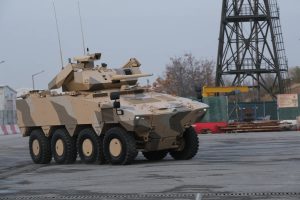
Land systems is the one sector where Turkish capacity comfortably exceeds demonstrated demand. Otokar’s own annual report puts the Arifiye plant in Sakarya at 700 tactical armoured vehicles a year across 552,000 square metres with more than 2,000 employees, and the company says more than 30,000 of its military vehicles are in service in over 30 countries. We could not re-confirm the 700 figure directly during this analysis because otokar.com.tr was unreachable; it is the company’s published number, not an independent estimate.
Compare that with the largest armoured-vehicle export contract Otokar has disclosed: the $1.47bn award announced to the Turkish stock exchange on 1 October 2026, with deliveries beginning in 2027 and completing in batches over three years. Several hundred vehicles a year, spread over three years, against a line rated at 700 a year. Our guide to how Otokar built an armoured vehicle export business across four continents traces how that order book was assembled.
Warships
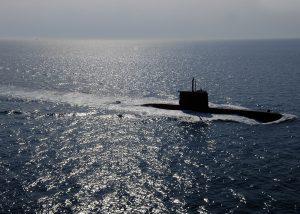
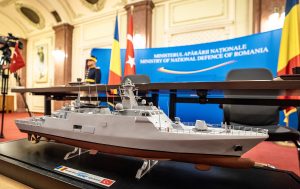
Naval capacity is measured in slipways, not units per year. As of January 2025, European Security & Defence counted 31 warships in various stages of construction across nine Turkish naval programmes. The İstif-class frigate programme alone is split across four yards — Istanbul Naval Shipyard for the lead ship, with further hulls at Anadolu, Sefine and Sedef — which is a deliberate way of buying parallel capacity rather than serial speed. The trade-off is well understood in shipbuilding: four yards building two hulls each learn less than one yard building eight. Our survey of which shipyards build Türkiye’s warships sets out who does what.
Ammunition
MKE, the state ammunition and weapons producer, has a $1.5bn investment programme covering energetic materials, ammunition, weapon systems, guided rocket technologies and aircraft bombs. It does not publish annual round counts for any calibre. That silence is the single largest gap in the public picture, and it matters because ammunition is where European buyers are shortest. Envanter Medya’s tracking of Europe’s own 155mm ammunition production capacity, producer by producer shows the scale against which any Turkish contribution would be judged — and Türkiye does not appear in it. We examined the rules and the politics in our analysis of whether Türkiye can supply Europe’s ammunition.
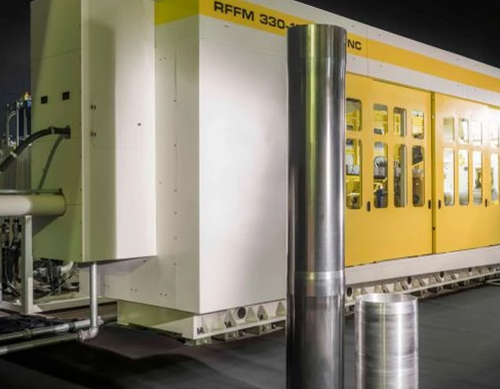
Stated capacity against known output
| Producer | Product | Stated annual capacity | What is publicly known about output | Where the constraint sits |
|---|---|---|---|---|
| Baykar | Bayraktar TB2 | 250 aircraft (2025 statement); 200 in 2022; 500 aspiration | No audited total published; estimates around 600 since 2014 | Orders, not the factory |
| Baykar | Bayraktar AKINCI | 50 aircraft | 110 delivered as of January 2026, from August 2021 | Orders; roughly half of rated rate |
| Turkish Aerospace | KAAN fighter | 6-9 on the current line; +24 aircraft from a new plant | Prototype flying; serial production not begun | Engines and export control, then floor space |
| ROKETSAN | Missiles and rocket motors | National solid-fuel output expected to rise fivefold | No unit figures published for any missile type | Solid propellant, until April 2026 |
| ASELSAN | Radars, EO/IR, guided munitions | Plan to double overall capacity; +40% at Gölbaşı | No unit figures; 14 new facilities opened August 2025 | Infrared detectors and cleanroom space |
| Otokar | Tactical armoured vehicles | 700 vehicles (company annual report) | 30,000-plus vehicles in service in 30-plus countries | Demand; capacity is ahead of orders |
| Shipyards | Frigates, corvettes, OPVs | Measured in parallel slipways, not units per year | 31 warships under construction across nine programmes, January 2025 | Skilled labour and serial learning |
| MKE | Ammunition and energetics | Not published; $1.5bn investment programme | Monthly delivery announcements by type, never by quantity | Unknown from open sources |
Compiled by DefenceTürkiye from company statements, Janes, Anadolu Agency, Breaking Defense, European Security & Defence and stock-exchange disclosures. Capacity figures are manufacturers’ own claims; output columns are the most recent published totals, not audited production data.
WHY IT MATTERS
Turkish defence exports rose from $7.15bn in 2024 to $10.05bn in 2025, and the industry is being asked by European governments whether it can help fill shortfalls in ammunition, air defence and armoured vehicles. That question is no longer about design competence. It is about rate.
The honest answer from open sources is that Türkiye has just finished building the capacity, and has not yet had to prove it. The plants opened in 2025 and 2026 are the evidence that the old ceiling was real — and the reason the next three years will settle the argument.
Where the constraints actually sit
Four inputs, not factory floor space, govern how fast Türkiye can deliver.
Propellant and energetics. The fivefold claim at Kırıkkale is an admission that solid fuel was the ceiling on missile output. It is also the fastest-moving of the four constraints, because the fix is now built.
Engines. Türkiye’s rate limits in aviation are set by powerplants. The first T625 GÖKBEY fitted with TEI’s indigenous TS1400 turboshaft was handed to the Turkish Land Forces Command on 30 April 2026, against an order for 57 helicopters placed in July 2025 for the armed forces, gendarmerie and coast guard. A single delivery nine months after a 57-aircraft order is not an airframe problem. We set out who makes what in our breakdown of Türkiye’s aircraft engine industry.
Detectors and seekers. ASELSAN’s new infrared production facility and its cleanroom expansion at Gölbaşı are capacity investments in components, not products. Guided munitions scale at the speed of their seekers.
People. Direct employment in the sector is around 100,000. Türkiye’s 12th Development Plan targets 158,000 by 2028 — a 58% increase in the workforce in four years, alongside a turnover target of $26bn. Hiring and qualifying 58,000 defence engineers and technicians is a harder constraint to relieve than pouring concrete, and it is the one least discussed in capacity announcements.
What a foreign buyer should take from this
BUYER VIEW
Lead times: no Turkish manufacturer publishes standard lead times. Dates in Turkish contracts come from the contract, not from a catalogue, and the Otokar disclosure — deliveries starting a year after signature and running in batches over three years — is a reasonable template for a large land-systems order.
Surge: drones and armoured vehicles have genuine headroom above current output. Missiles have headroom only from 2026 onwards. Fighters, helicopters and warships do not.
Queue position: Turkish forces are themselves large customers of every line listed here, and domestic air-defence and missile programmes have first call on the same propellant and seekers an export order would need.
Local production: where capacity is tight, licensed or joint production abroad is more likely to be offered — and is already how several customers have been served. See our guide to what a buyer actually gets from Turkish offsets.
Verification: ask for the production schedule and the subsystem supply plan, not the plant’s rated capacity. This is open-source editorial analysis, not procurement advice.
What is not published, and why that matters
Three categories of number simply do not exist in the open record. No Turkish manufacturer publishes annual unit output by platform. No Turkish manufacturer publishes order-to-delivery lead times. And no Turkish manufacturer or customer ministry publishes fleet availability data, which is the figure that would show whether delivered volume is being sustained.
That is a statement about the evidence after targeted searching, not proof that such figures are absent internally. Buyers with signed contracts see schedules; analysts outside the process do not. Any confident public claim about how many missiles or vehicles Türkiye builds per year should be treated as an estimate, and whoever is making it should be named. The same applies to the arithmetic in this article: the AKINCI rate of roughly 24 aircraft a year is our calculation from Baykar’s own delivery statement and the type’s service-entry date, not a company figure.
What comes next
The three-year test is already scheduled. ASELSAN’s Oğulbey base is due to open in 2028, the same year Türkiye’s development plan targets $26bn in sector turnover, $11bn in exports and 158,000 jobs. ROKETSAN’s remaining $2bn of investment runs across the same window. Turkish Aerospace’s additional 24-aircraft capacity has to arrive before KAAN serial production can mean anything at volume.
If export orders keep growing at the rate seen between 2024 and 2025, these facilities will be tested at close to their rated output for the first time, and the public record will finally contain delivery data rather than capacity claims. If orders plateau, the capacity will remain a strategic option rather than a demonstrated capability — which, for a country whose main export argument is that it delivers faster than its competitors, is not the worst position to hold. What happens after delivery is a separate question, and we covered it in our analysis of who supports a Turkish system once it has been sold.
FAQ
How many drones can Türkiye produce per year?
Baykar has stated capacity for 250 Bayraktar TB2s and 50 AKINCIs a year, with an ambition to reach 500 TB2s. Actual output is lower and tracks orders: the company reported 110 AKINCIs delivered in total as of January 2026, from a type that entered service in August 2021. Other Turkish producers, including Turkish Aerospace with the ANKA family, add further capacity that is not publicly quantified.
How many KAAN fighters can Turkish Aerospace build a year?
Six to nine on the existing assembly line, according to deputy general manager Uğur Zengin in May 2026. A newly designed plant is intended to add capacity for 24 aircraft a year. Serial production had not begun at the time of writing.
Is Türkiye’s missile production capacity increasing?
Yes. ROKETSAN inaugurated a $450m solid-fuel complex at Kırıkkale and a $350m warhead facility at Lalahan on 7 April 2026, part of a $3bn programme of which about $1bn was then complete. The company expects national solid-fuel output to rise fivefold once Kırıkkale is fully operational.
Can Türkiye supply ammunition to Europe at scale?
MKE has a $1.5bn investment programme covering ammunition and energetic materials, but publishes no annual round counts, so no open-source answer is possible on volume. The regulatory question is separate from the industrial one, and Türkiye’s status outside the EU shapes which European funding instruments it can access.
What limits Turkish defence production the most?
On the published evidence: solid propellant (now being addressed), aero-engines, infrared detectors and seekers, and qualified people. Factory space is the constraint being removed fastest; the workforce target of 158,000 by 2028 is the one with the least slack.
Does the Turkish defence industry publish production figures?
No. Sector-level turnover, export and employment figures are published annually through the SSB, the Turkish Exporters Assembly and industry associations, but unit production rates by platform are not published by any Turkish manufacturer or by the Ministry of National Defence.
Sources
- Janes, ROKETSAN opens new missile production facilities, April 2026
- Janes, ASELSAN plans to double production capacity
- Breaking Defense, Turkey’s ROKETSAN opens new production facilities, 8 April 2026
- Anadolu Agency, Turkish Aerospace plans to boost annual aircraft production capacity by 24 units, 7 May 2026
- Türkiye Today, Baykar CEO reveals drone production capacity, June 2025
- Türkiye Today, 110 AKINCI UCAVs delivered, January 2026
- Janes, First GÖKBEY helicopter delivered to Turkish Land Forces Command, 30 April 2026
- European Security & Defence, Turkish naval programmes: status report, May 2025
- C4Defence, MKE defence production and exports, July 2026
- Defence Turkey, General assessment of the Turkish defence and aerospace industry in 2025 and targets for 2026