
How a Turkish Navy Corvette Design Found Customers in Pakistan and Ukraine

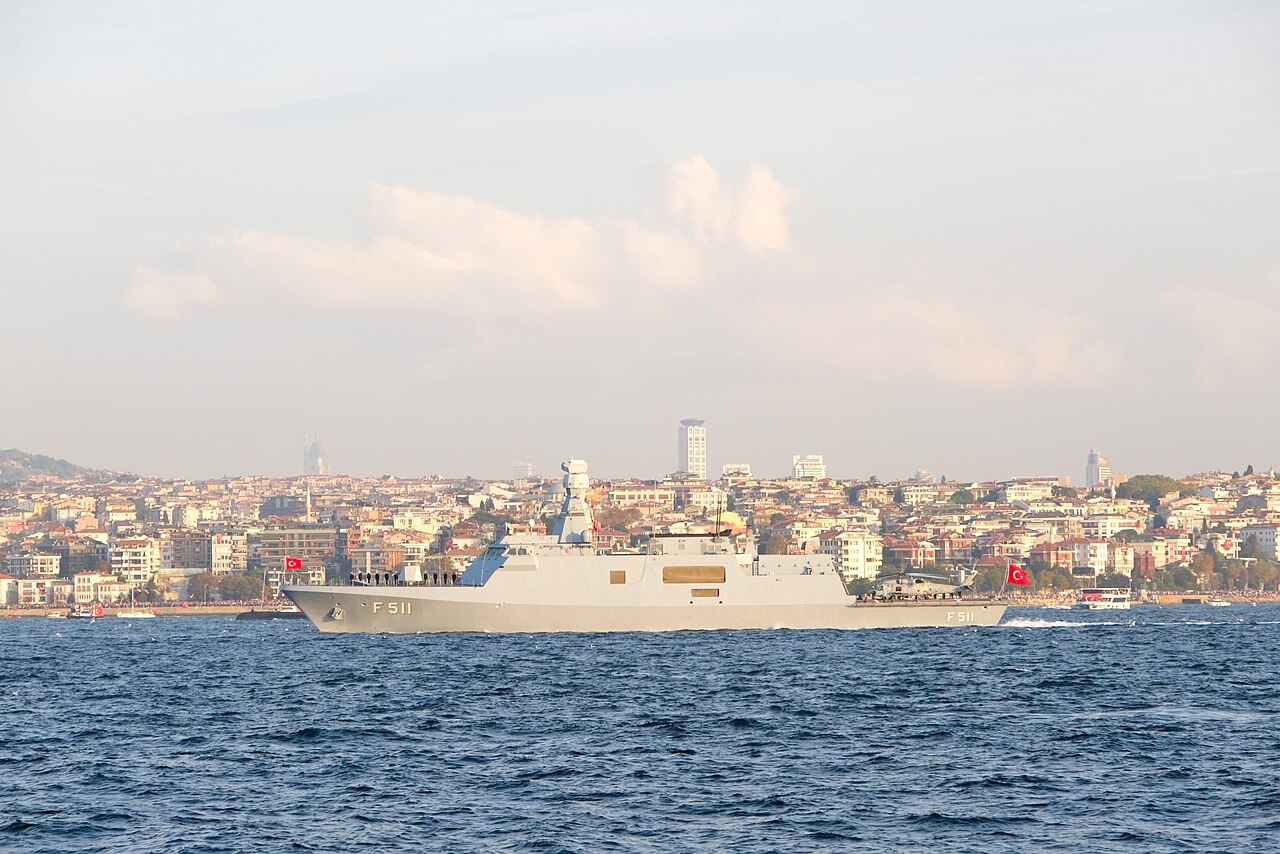
A warship design becomes an export product only when someone outside the home navy accepts it as it is built, taught and supported. For MİLGEM, the Turkish “national ship” project, that moment came in two stages: a 2018 contract with Pakistan, and a December 2020 agreement with Ukraine. The two orders look similar on paper, since both are corvettes derived from the Ada-class. In practice each customer pulled the design in a different direction.
What did MİLGEM have to prove before anyone bought it?
The programme began as a Turkish Navy requirement, not a sales pitch. The lead ship, TCG Heybeliada (F-511), was started in 2005 and entered service in September 2011. Four Ada-class corvettes, Heybeliada, Büyükada, Burgazada and Kınalıada, joined the fleet between 2011 and 2019, according to public records. Roughly 2,400 tonnes and just under 100 metres long, they were built around anti-submarine warfare and patrol work, with a low-observable hull.
That fleet service is the real sales credential. Buyers could inspect ships that had been at sea for years, with locally developed sensors and combat management software rather than a paper design. For the full Turkish Navy story, see our MILGEM I-Class frigate programme guide.
| Item | Ada-class (Turkish Navy) | Babur-class (Pakistan) | Hetman Ivan Mazepa class (Ukraine) |
|---|---|---|---|
| Contract | Domestic programme, first ship in service 2011 | September 2018, four ships | December 2020, two ships |
| Builders | Turkish yards | Istanbul Naval Shipyard and Karachi Shipyard (two each) | RMK Marine, Tuzla (reported) |
| Size (approx.) | 2,400 t, 99.6 m | about 108 m, close to 3,000 t full load (sources vary) | about 2,400 t, 99.5 m (reported) |
| Combat management | GENESIS | Havelsan ADVENT (reported) | GENESIS (reported) |
| Delivery status | Four in service | Two delivered, two in trials (reported) | Neither delivered (reported) |
How did Pakistan turn a design into a technology-transfer deal?
Pakistan’s order was the first export, and it was structured as an industrial partnership rather than a simple purchase. The contract, signed in September 2018, covers four corvettes. The prime contractor is ASFAT, a company owned by the Turkish Ministry of National Defence that was created in January 2018 to support exports of this kind. Two ships are built at the Istanbul Naval Shipyard and two at Karachi Shipyard and Engineering Works (KSEW), with a technology-transfer agreement attached.
The Babur-class is a larger, reworked version of the Ada. Published specifications put it at about 108 metres, and it carries a different weapon fit, including MBDA’s Albatros NG air defence system, an Aselsan GÖKDENİZ 35 mm close-in weapon, Leonardo’s 76 mm Super Rapido gun and Aselsan sensors. Pakistan also reportedly kept an option to integrate its own Harbah cruise missile. Havelsan’s ADVENT combat management system runs the ship.
The reported value is large. Defence press has cited about 1.5 billion dollars for the programme, though neither government has published a breakdown, so treat that figure with care.
The delivery record so far:
- PNS Babur was launched in August 2021 and delivered in September 2023.
- PNS Khaibar was commissioned at the Istanbul Naval Shipyard in December 2025, with President Erdoğan attending.
- PNS Badr and PNS Tariq, the two Karachi-built ships, were reported to be in sea trials in spring 2026, with handovers expected later.
The Karachi half is the important one. Building ships at KSEW, with Turkish engineers and crew familiarisation alongside, is what separates this from selling hulls. Pakistan has since moved to a follow-on design, the Jinnah-class frigate, which Quwa reports was contracted to KSEW in November 2025 with delivery expected in 2027 to 2028. Our companion piece on Pakistan’s Turkish-built warships covers the wider fleet.
What changed when Ukraine ordered two corvettes?
Ukraine’s deal differed in almost every respect except the hull form. The framework agreement was signed in December 2020, before the full-scale invasion, and covered two Ada-class corvettes with Ukrainian local content in mind. Keel laying for the first ship, Hetman Ivan Mazepa (F-211), took place on 7 September 2021, and RMK Marine in Tuzla launched her on 2 October 2022. The second, Hetman Ivan Vyhovsky, was launched in August 2024.
The weapon choices leaned Western. According to published reporting, the first ship was to carry Harpoon anti-ship missiles, VL MICA-M air-defence missiles, MU90 torpedoes and an OTO Melara 76 mm gun, while the Turkish-made GÖKDENİZ 35 mm gun and Aselsan electronic-warfare equipment remained. The combat management system is Havelsan’s GENESIS. Ukraine reportedly weighed its own Neptune and Turkey’s ATMACA before settling on Harpoon.
Cost has been a point of domestic criticism. Ukrainian outlets have cited roughly seven to eight billion hryvnia per hull, and critics questioned whether a deep-water corvette suits a navy that had shifted toward uncrewed craft. Those numbers are press estimates, not an official price list.
Pakistan and Ukraine also differ in what they wanted from the ships. Pakistan, a larger navy with long Indian Ocean patrol lines, needed more endurance and a heavier air-defence outfit, so the design grew. Ukraine wanted a flagship that could be completed under the pressure of a looming conflict, so the platform stayed close to the Turkish Navy original.
Why has Ukraine’s first corvette not reached Ukraine?
The obstacle is geography and treaty law. Under Article 19 of the Montreux Convention, warships of belligerent states cannot transit the Turkish Straits unless returning to a home port, which in practice keeps the ships out of the Black Sea while the war continues. Reports from early 2026 described Hetman Ivan Mazepa as about 70 percent complete, with equipment still being installed, and the second ship expected to be handed over around the first quarter of 2027. Treat those dates as reported rather than confirmed.
The result is odd but instructive. Ukraine has a contract and launched hulls, yet no operational ship. It also shows that MİLGEM’s export credibility does not hinge on one customer’s war. The wider context is in our analysis of Turkish drones, corvettes and engines in Ukraine.
Which parts of the ship stay Turkish in both deals?
Strip away the weapon differences and a common core remains. The Ada-class baseline uses Aselsan’s SMART-S Mk2 three-dimensional radar and a hull-mounted sonar developed in Türkiye, and the Babur-class sensor list repeats that pattern: SMART-S Mk2, Aselsan’s ARES-2N electronic support system and a Meteksan sonar, as listed by EDR Magazine. Ukraine’s ship is reported to carry the same radar and electronic-warfare family. In other words, the electronics and software are what the customer inherits, whichever missiles go in the launchers.
This matters commercially. A Western-supplied weapon needs export approval from its own government, and each customer’s missile choice therefore adds a separate approval step. The Turkish-made core avoids that step. Meteksan, the Bilkent-owned company behind the sonar, is profiled in our company piece on Meteksan.
What did each customer actually buy?
It helps to separate the three things a navy can purchase from a shipbuilding programme:
- A finished ship, delivered ready for service. Pakistan receives this for the Istanbul-built hulls.
- Building capacity. Pakistan’s Karachi hulls come with transferred know-how, which is why the Jinnah-class frigate became thinkable.
- A customised weapon package on a known hull. Ukraine’s order is the clearest example, with Western missiles on a Turkish-built platform.
The two contracts together show that the same programme can serve a customer that wants to build ships at home and one that wants a ready warship quickly. Whether a third buyer follows the same path is not something the public record can answer yet; no further MİLGEM-type export contract has been confirmed in the sources reviewed for this article.
How does MİLGEM compare with a French competitor?
Corvette buyers usually compare MİLGEM with Naval Group’s Gowind family. The two overlap in size but not in sales approach, and we examined where they diverge in Where Gowind and MİLGEM Meet, and Where They Never Do. In short, Turkey’s pitch rests on a proven domestic fleet, local equipment from Aselsan, Havelsan and STM, and a willingness to transfer building skills.
What comes after the corvettes?
The next candidate is the larger İstif-class frigate, which is moving into serial production for the Turkish Navy. Our İstif-class serial production report tracks the hulls and its first export order. Whether it follows the Pakistan model, with local assembly abroad, or the Ukraine model, with a customer-specific weapons package, will be the next test of the approach Turkey tried first with the Ada.
The pattern so far is consistent. Turkey sells a proven hull, lets the customer reshape the weapon fit, and keeps much of the electronics and combat system in Turkish hands. That is a narrower export model than a full design handover, and it explains why the same corvette can look quite different in Karachi and Istanbul.


