Anadolu Shipyard Built Türkiye’s Tank Landing Ships and Is Now Building Altay-Capable Landing Craft

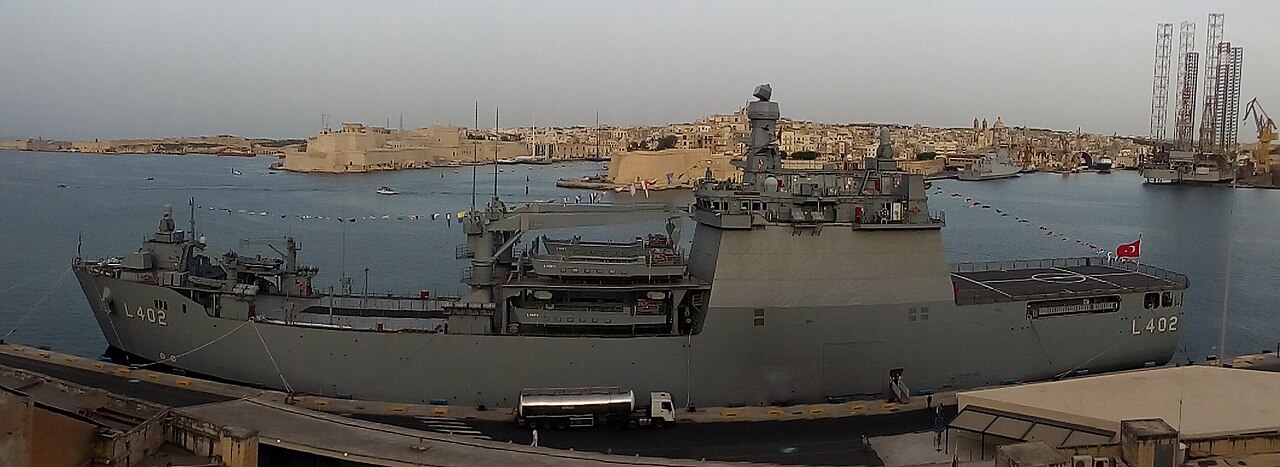
When people talk about Turkish naval construction, the conversation usually starts with frigates and corvettes. Landing ships get less attention, yet one private yard in Tuzla, Istanbul, has built the Turkish Navy’s own tank landing ships and a long line of landing craft. That yard is Anadolu Shipyard, known by its Turkish abbreviation ADİK.
Its record is a useful test of how far a mid-sized private builder can go with a state customer: from small landing craft to a 138-metre tank landing ship designed, built and integrated by the same company. It also shows where the story gets less tidy, because delivery dates for those ships were not all met.
What Is Anadolu Shipyard and Where Does It Build?
Anadolu Shipyard is a privately held company based in the Tuzla shipbuilding zone on the eastern side of Istanbul. Its full Turkish name is Anadolu Deniz İnşaat Kızakları San. ve Tic. A.Ş. Wikipedia dates the company to the early 1950s and says it moved to its current site in 1982; those dates come from a secondary source and should be read that way.
| Field | Detail |
|---|---|
| Company | Anadolu Shipyard (ADİK) |
| Location | Tuzla, Istanbul, Türkiye |
| Ownership | Privately held |
| Main activity | Amphibious warfare ships, landing craft, training vessels, patrol craft |
| Known customers | Turkish Navy, Qatari Emiri Naval Forces |
| Reported facilities | Two shipways (137.5 m x 25 m and 92.5 m x 20 m), reported capacity for hulls up to about 165 m |
The yard sits close to better-known neighbours. Sedef Shipyard, also in Tuzla, built the large assault ship TCG Anadolu with Navantia’s design support. That ship shares its name with the shipyard, which regularly causes confusion. They are separate projects: TCG Anadolu is a Sedef-built ship, while ADİK’s landing ships are the Bayraktar class.
How Did ADİK Win the Tank Landing Ship Contract?
Türkiye’s procurement agency, then called SSM and now SSB, awarded Anadolu Shipyard a contract in June 2011 for two landing ship tanks (LST). The company was responsible for design, construction, system integration, testing and delivery, according to the class history compiled on Wikipedia and by Naval Technology. Army Recognition’s 2017 coverage adds that the original contract carried options for two more hulls.
Before that, ADİK had already delivered a group of landing craft tank (LCT) for the navy, which gave it a track record in amphibious vessels, if at smaller scale. The LST was a bigger step. A ship of this size has to combine a beaching bow ramp, a large vehicle deck, pontoon systems, accommodation for hundreds of troops and a combat suite, all in one hull with very shallow draught.
What Are the Bayraktar-Class Ships Like?
The two ships are TCG Bayraktar (L-402) and TCG Sancaktar (L-403). The class name follows Turkish naval naming practice and should not be confused with the drone maker Baykar’s Bayraktar product line.
| Parameter | Reported value |
|---|---|
| Builder | Anadolu Shipyard (ADİK), Tuzla |
| Type | Tank landing ship (LST) |
| Length / beam | 138.75 m / 19.60 m |
| Displacement | About 7,125 t (7,254 long tons full load in some listings) |
| Cargo capacity | About 1,200 t (1,180 t in Naval Technology) |
| Vehicles | Designed for about 24 main battle tanks |
| Troops | 486 personnel in Turkish accounts; Naval Technology lists 367 marines |
| Propulsion | Four 2,880 kW diesel engines |
| Speed / range | About 18 knots / reported 6,000 nautical miles at 15 knots |
| Armament | Two OTO Melara 40 mm guns, two Phalanx CIWS, two ASELSAN STAMP 12.7 mm remote weapon stations |
| Sensors | Thales Smart-S Mk2 3D radar, ASELSAN Alper X-band radar, electro-optical director |
| Boats | Four LCVPs and two motorised pontoons |
The shallow draught, reported at under 2 m forward when fully loaded, is what lets a ship of this displacement approach a beach. Daily Sabah, reporting on the 2018 handover, also mentions a helicopter platform rated for aircraft up to 15 tonnes, ballistic protection and a full CBRN protection system.
The mix of equipment is worth a look. The close-in weapons are Western-origin (Phalanx), the main radar is Thales, while the remote weapon stations and the Alper radar come from Turkish industry. Later Turkish ships have a domestic option in the close-in role, the GÖKDENİZ 35 mm CIWS. Turkish officials cited a domestic-content share of more than 70 percent for the LST project, a figure repeated in secondary reporting rather than one we could confirm from a primary document.
Were the Landing Ships Delivered on Time?
Partly. The picture is more nuanced than a clean schedule.
TCG Bayraktar was launched in October 2015 and entered Turkish Navy service in April 2017. TCG Sancaktar, launched on 17 July 2016, was handed over in early April 2018 at a ceremony attended by the head of the procurement agency, İsmail Demir, according to Daily Sabah. Army Recognition’s 2017 piece, by contrast, had pointed to a second delivery in October 2017. So Sancaktar reached the navy roughly half a year after that earlier projection.
That is not unusual for a first-of-type ship of this complexity. It is still worth stating plainly rather than describing the programme as a flawless run. What the record does show is that both ships were completed and commissioned within about seven years of contract award, with design and integration handled by one contractor.
For context on how other Turkish yards handle larger programmes, the overview Who Builds Türkiye’s Warships maps the main builders.
What Has ADİK Built for Export?
The yard’s best-documented export customer is Qatar. On 6 July 2022, according to Janes, the Qatari Emiri Naval Forces received an 80-metre landing ship tank, Fuwairit (QL 80), along with two 40-metre landing craft mechanised (Ishat and Broog) and a 15.7-metre landing craft vehicle and personnel (Al-Aaliya) in a ceremony at ADİK’s Tuzla facility. The vessels went through about six weeks of tactical shakedown training before moving to Qatar.
Fuwairit carries two 30 mm ASELSAN remote weapon stations on either side of its ramp and two 12.7 mm stations on either side of the bridge, per Janes. For the product line, see the report on ASELSAN’s SMASH naval remote weapon station. Janes also reports that two training ships had been delivered to Qatar earlier, in 2021.
Other private yards work in the same space. Dearsan’s record in Turkmenistan is one example of a Turkish builder winning foreign navy orders.
What Is the New Landing Craft Programme?
ADİK’s current headline project is the New Type Landing Craft Tank, known as YLCT. According to Naval News, the first of eight vessels was launched in February 2025, following a contract signed in April 2024.
The reported figures for each craft: 79.9 m long, 11.7 m beam, about 1,166 t displacement, 20 knots top speed and a 420 t load. The vessel can carry three ALTAY main battle tanks, or 260 marines in the standard layout, with a reported capacity of seven tanks in a pier-to-pier configuration. Armament is two 12.7 mm stabilised guns and two 25 mm remote-controlled guns, both from ASELSAN.
Naval News also reported that the first vessel was expected to enter service in November 2025 and the last in May 2027. Those are announced targets, not delivery results, and readers should check current SSB statements before treating the remaining dates as fixed. We could not find official confirmation of the delivery of the first craft.
Wikipedia’s Bayraktar-class page also lists two further LST-HD ships proposed for around 2026. We could not verify that a contract exists, so treat those hulls as a proposal only.
Why Does a Private Landing-Ship Yard Matter for Türkiye?
The Turkish Navy needs amphibious lift at several scales: a large assault ship for the carrier-like role, tank landing ships for heavy vehicles, and many smaller craft for beach work. ADİK fills the middle and lower tiers, which leaves the large hull programmes to other yards and keeps competition inside the domestic base.
For export buyers, the yard offers something specific: a design in service with the navy, delivered to a foreign customer from the same slipway. Qatar is the clearest case so far. Whether the YLCT craft and a possible follow-on LST order widen that list will depend on how the first craft perform in service.