Gulf Capitals Stopped Buying Turkish Drones and Started Building Them

The Gulf is not Türkiye’s biggest defence market. It is the one where the sales pitch has changed the most. A decade ago Gulf capitals bought a handful of drones or armoured vehicles from Ankara to see what they would get. Today they are signing for co-production lines, local assembly and shared ownership of Turkish factories.
Türkiye’s defence and aviation exports reached a record $10.05 billion in 2025, up 48 percent on the year, according to figures announced by the Presidency of Defence Industries (SSB). Of that, about $4.3 billion went to Europe and $1.6 billion to the Middle East. The Gulf is therefore a fraction of the total, but the contracts signed there carry unusual weight because they often include production and training commitments that run for years.
How Big Is the Gulf in Türkiye’s Export Book?
Smaller than Europe, and for now smaller than the headlines suggest. About $5.6 billion of 2025 exports, or 56 percent, went to EU and NATO countries and the United States. The Middle East figure of $1.6 billion covers the whole region, not only the six Gulf Cooperation Council states.
Order books tell a different story from shipments. SSB reported $17.8 billion in new contracts signed in 2025, 78 percent more than the year before, and armed drone contracts with Gulf and African buyers were cited among the drivers. Gulf deals tend to be signed in one year and delivered over several, so today’s export statistics lag the contracts that Gulf governments have already placed.
Momentum has continued. The Gulf business publication AGBI reported that Turkish defence exports rose 12 percent to roughly $2 billion in the first quarter of 2026.
Who Buys What? A Country-by-Country Look
| Country | Best-known Turkish purchases | Notes |
|---|---|---|
| Qatar | Bayraktar TB2, armoured vehicles, patrol and missile craft, BMC stake | First Gulf drone customer, 2018 |
| United Arab Emirates | Bayraktar TB2, AKINCI (reported) | TB2 deliveries reported from 2022; EDGE partnerships |
| Saudi Arabia | AKINCI co-production, land-system localisation | Contract signed July 2023, reported above $3 billion |
| Kuwait | Bayraktar TB2 | Contract reported at about $370 million |
| Oman | Pars III 8×8 and 6×6 vehicles | 172 vehicles from about 2015 |
Qatar, the early adopter
Qatar was the first Gulf customer and the first foreign customer of any kind for the Bayraktar TB2, announced at the DIMDEX exhibition in 2018 for six aircraft. It went on to buy far more than drones. Nurol Makina’s Ejder Yalçın 4×4 armoured vehicle was reported to have sold in several hundred units to Qatar, and Turkish yards have built patrol and fast missile craft for the Qatari navy and coast guard. Two fast attack craft with Turkish sensors and Roketsan missiles were reported delivered in the first quarter of 2024.
The deepest tie is industrial. Qatar’s Barzan Holdings holds a 49.9 percent stake in BMC, and a BMC armoured vehicle and heavy engine facility was inaugurated in Ankara in October 2025, with senior Qatari officials attending, according to Qatari media. In an Atlantic Council analysis of 2018 to 2022 data, Qatar accounted for about 20 percent of Turkish arms exports, ahead of Oman at 17 percent and the UAE at 13 percent.
The UAE, a rival that is also a customer
The Emirates run their own defence conglomerate, EDGE Group, yet they still buy Turkish. The UAE received its first TB2 batch, reported as 20 aircraft, in September 2022, and has been reported to operate the larger AKINCI as well. Quantities are not officially disclosed.
The relationship has since shifted from buying to partnering. EDGE made its IDEF debut in 2025 and signed preliminary agreements with ASELSAN and Baykar, and it has a Turkish subsidiary, MALATH, set up in 2023. At SAHA 2026, EDGE and Baykar announced an agreement to integrate the Al Tariq precision-guided munition family on AKINCI.
Kuwait and Oman, the quiet buyers
Kuwait’s TB2 order was reported at about $370 million. Industry reporting describes 18 aircraft, three ground control stations, training and Roketsan munitions, with the first delivery reported in July 2025. Oman’s main Turkish buy is older and less discussed: 172 Pars III armoured vehicles from FNSS, ordered around 2015, which made it an early land-systems customer. For the maker’s wider record, see the FNSS profile.
Bahrain has defence ties with Ankara, but this reporting could not confirm a Turkish drone contract there.
Why Is Saudi Arabia the Deal That Changed the Scale?
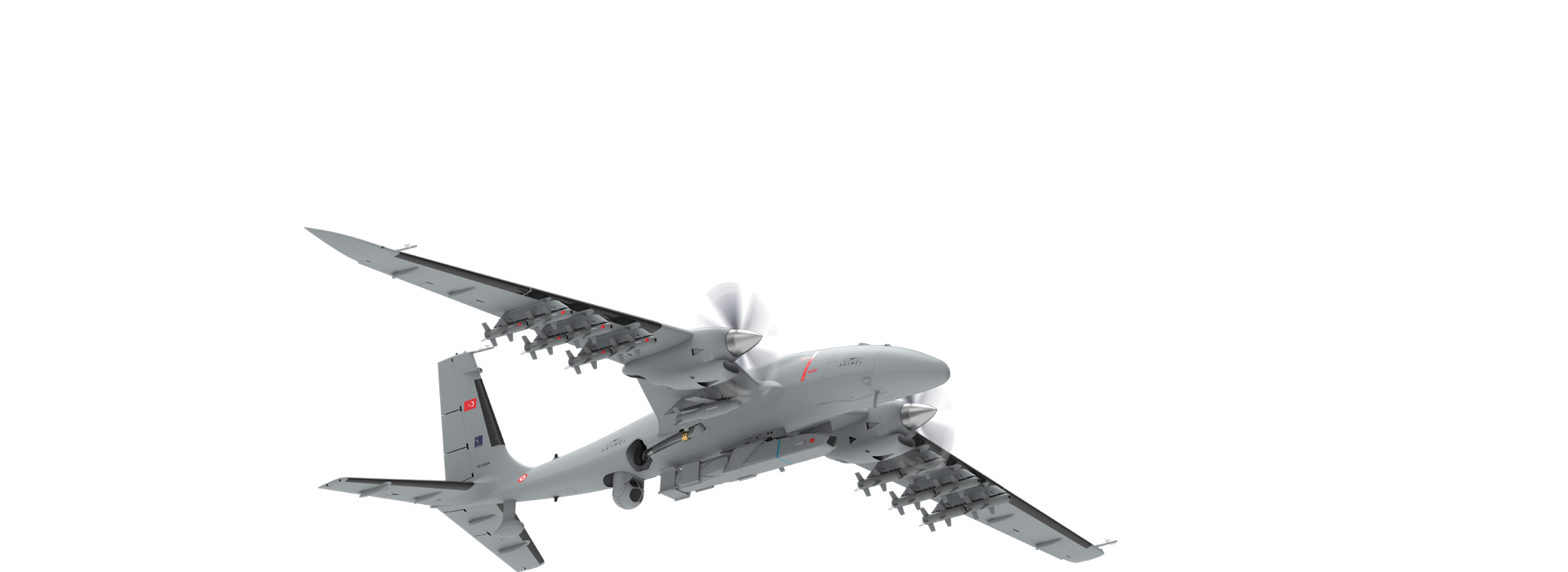
In July 2023, during a Gulf tour by President Recep Tayyip Erdogan, Baykar signed what its chief executive Haluk Bayraktar called the largest defence and aviation export contract in the history of the Turkish Republic. The AKINCI deal for the Royal Saudi Air Force and Navy has been reported at more than $3 billion, covering at least 60 aircraft according to one industry account, with training, logistics and technology transfer attached.
The terms matter as much as the number. Reported plans call for local assembly in Saudi Arabia from 2026 and a local production share as high as 70 percent. Saudi crews are already being trained. The first Saudi naval cohort finished the course at Baykar, which we covered in our report on the training.
Riyadh is also widening the shopping list. At IDEF in July 2025, Turkish firms signed technology agreements with a subsidiary of Saudi Arabian Military Industries. FNSS agreed to transfer technology for the PARS ALPHA 8×8 and its turrets, ASELSAN to localise turret production, and Nurol Makina to share know-how for a 4×4 vehicle. Otokar, BMC, FNSS and Nurol have all been reported as bidders in Saudi land forces tenders; Otokar’s export record shows how that business is built. Saudi interest in the KAAN fighter is described as exploratory, and no agreement has been announced.
Why Do Gulf States Choose Turkish Equipment?
Several reasons recur in analyst and industry accounts, and price is not first among them.
- Access. Washington’s suspension of an MQ-9B sale to the UAE in 2021 pushed buyers to look at Turkish armed drones, which faced no comparable approval hurdle.
- Industrial bargain. Gulf states want their own defence industries, such as EDGE in the UAE, SAMI in Saudi Arabia and Barzan in Qatar. Ankara offers technology transfer that Western suppliers often restrict.
- Combat reference. Turkish drones were used in Libya, Syria, Nagorno-Karabakh and Ukraine, which gives buyers an operational record to point to.
- Politics. The 2021 Al-Ula agreement ended the 2017 Gulf crisis and, along with the later normalisation of Turkish-Saudi and Turkish-Emirati ties, opened doors that were shut for several years.
Security cooperation has also become explicit. Türkiye, Saudi Arabia and Pakistan have given the so-called Mecca defence pact an institutional structure, a development we followed in our coverage of the Istanbul secretariat. That is a different kind of relationship from a simple customer and seller.
What Are the Limits of the Gulf Boom?
Delivery is the first. Qatar’s Altay tank contract, widely reported as a large order, had seen only a small number of tanks delivered by mid-2025, according to one European defence magazine, with the rest pending. Co-production plans like Saudi Arabia’s AKINCI line need a local workforce and supply chain that take years to build.
Export licensing is the second. Turkish systems that carry US or European components, from engines to sensors, can still be held up by third-country rules, a question that US export rules make particularly sensitive.
The third is competition. EDGE and Saudi Arabia’s SAMI are building their own capability, and the Gulf states still buy heavily from the United States, France, South Korea and others. Turkish sellers win where they offer something specific: armed drones fast, armoured vehicles at moderate cost, and a willingness to share production.
Contract details in this market are often disclosed by only one side or leaked in pieces. Where figures here are described as reported, they come from industry and press accounts rather than from a published contract.
What to Watch Next
Three markers will show whether the Gulf business is becoming a lasting industrial relationship. The first is the start of Saudi AKINCI assembly in the Kingdom, due in 2026 by public reporting. The second is whether the IDEF 2025 land-systems agreements turn into production contracts. The third is EDGE’s next step with Baykar and ASELSAN after the SAHA 2026 announcements, which would make the UAE a partner rather than only a customer.
Kuwait’s drone deliveries and any further Qatari orders will fill out the picture. The numbers to follow are SSB’s quarterly export releases, which break out regions only in broad terms, so company announcements will keep doing most of the talking.