Indonesia Leads a Turkish Defence Push Across Southeast Asia

For most of the past decade, Turkish defence exports meant the Middle East, Central Asia and, increasingly, Africa. Southeast Asia sat at the edge of the map: a few armoured vehicles here, a helicopter order there. That has changed quickly, and the change has one main address. Indonesia has put Türkiye’s most ambitious platforms on its shopping list, from a fifth-generation fighter to frigates and armed drones, while the Philippines and Malaysia have bought or tested Turkish products on a smaller scale.
What has Indonesia actually signed with Türkiye?
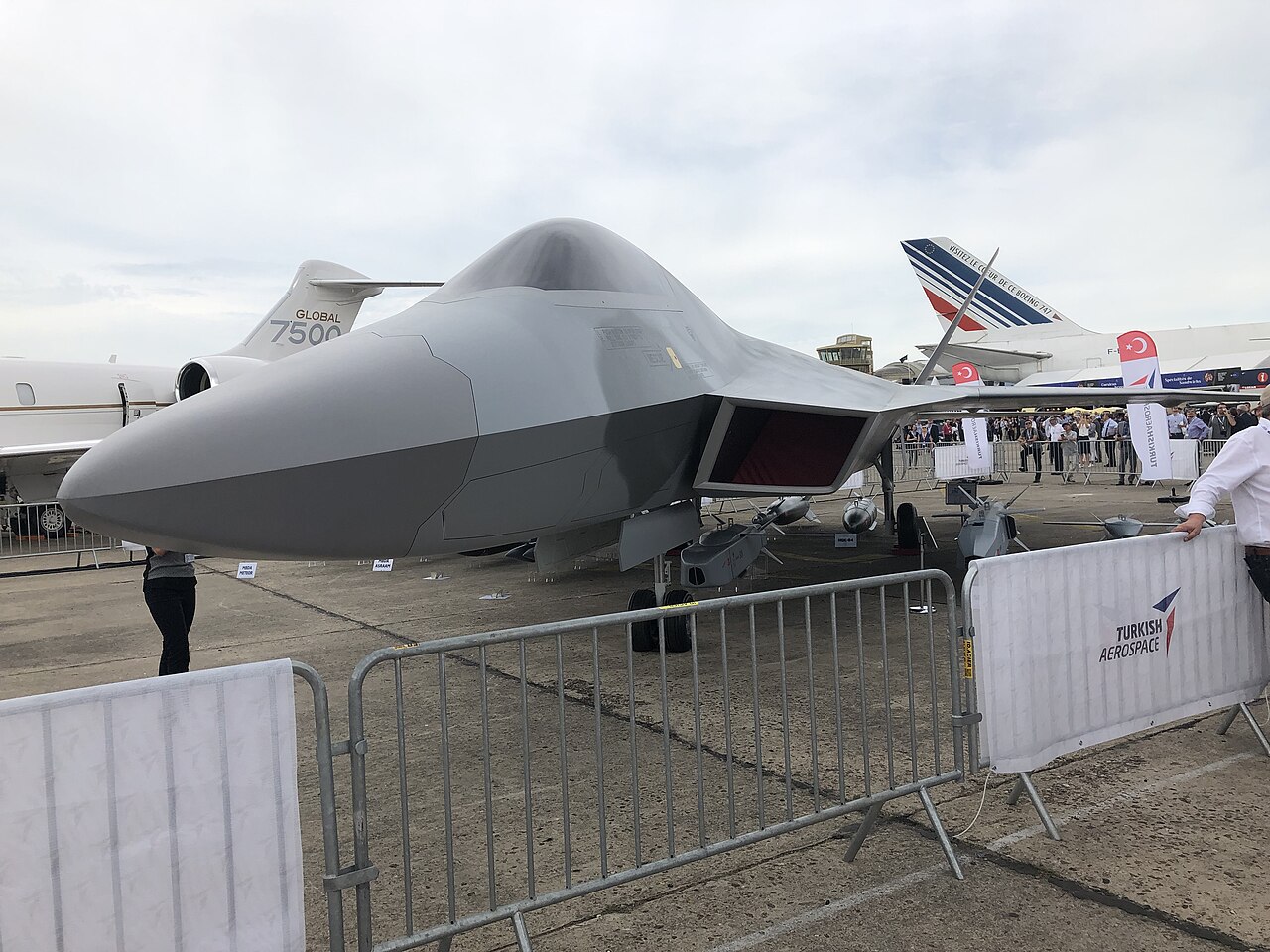
The headline deal is the KAAN fighter. At the IDEF fair in Istanbul in July 2025, Indonesia signed an implementation contract for 48 aircraft, following a government-to-government framework agreed in June 2025. Reporting by Defense News and others describes a roughly ten-year delivery schedule, technology transfer, and local infrastructure in Indonesia, with PT Dirgantara Indonesia among the partners. Indonesia is the first export customer for the jet, which is still in development. Our KAAN programme guide tracks the aircraft’s own schedule and engine timeline.
Two points deserve caution. The contract value was not published in the sources reviewed, and Janes noted that the contract was signed without a matching budget allocation on the Indonesian side. A signature is not a funded production line, and Jakarta has been diversifying its fighter purchases at the same time.
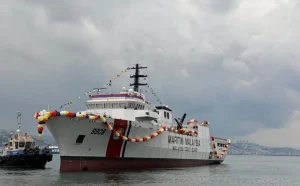
The same package included two frigates of the İstif class, the Turkish-built MİLGEM derivative that entered service with the Turkish Navy as TCG İstanbul in January 2024. It would be the first export of that design family to Indonesia. For background on the hull, see our MİLGEM I-class frigate guide. Reports also mention cooperation on fast attack craft and on integrating Turkish weapons into Indonesia’s existing Merah Putih-class frigates.
Which Turkish drones and missiles is Indonesia buying?
Unmanned systems arrived first. In 2023 Indonesia ordered 12 ANKA-S medium-altitude long-endurance drones from Turkish Aerospace in a deal reported at about $300 million. Six are built in Türkiye and six assembled locally by PTDI, and the first aircraft has already reached Indonesia. Other ANKA customers are covered in our ANKA operators overview.
Baykar followed. In early 2025 media reported an Indonesian order for 60 Bayraktar TB3 drones, and Baykar signed a joint-venture agreement with the state-owned Republikorp to produce the TB3 and the AKINCI in Indonesia. Delivery dates and final quantities come mostly from press reporting rather than company statements, so treat the numbers as reported.
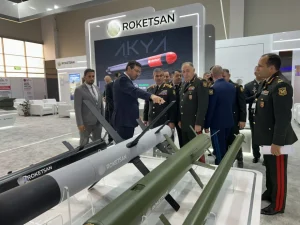
Roketsan products are on the list too. Indonesia is reported to have contracted 45 ATMACA anti-ship missiles in an initial batch (January 2024 reporting), and to have approved the Khan tactical ballistic missile as its first foreign buyer. Our piece on where ATMACA fits in the anti-ship missile market explains why that missile travels well.
On land, the relationship is older. The Kaplan MT medium tank, known locally as Harimau, was developed by FNSS and Pindad under a 2015 agreement, with the first batch delivered in 2022. It is the clearest example of what Jakarta wants from every Turkish deal: a local partner, local assembly, and a transfer of know-how.
How far has the Philippines gone?
Less far, but with a completed order. Manila signed in 2020 for six T129 ATAK attack helicopters from Turkish Aerospace, worth about $269 million according to Philippine reporting. The first pair arrived in 2022, and the final two were reported delivered in May 2024. The aircraft serve with the Philippine Air Force’s 15th Strike Wing for close air support and armed reconnaissance. The T129 ATAK story covers the helicopter’s Italian roots and export record.
The navy track went the other way. Turkish state-owned ASFAT offered a modified Ada-class corvette and an Istanbul-class light frigate around 2021, but the Philippine Department of National Defense picked South Korea’s HD Hyundai Heavy Industries for its new corvettes. The Philippines remains a buyer of Turkish helicopters, not yet of Turkish ships.
What about Malaysia and the rest of the region?
Malaysia is a mixed picture. Turkish Aerospace won a contract for three ANKA unmanned aircraft for the Royal Malaysian Air Force, and trade press has reported the deliveries as completed. The company then pushed its HÜRJET trainer for Malaysia’s light combat aircraft and lead-in trainer requirement, but the competition went to another bidder. Turkish Aerospace has since described Southeast Asia as a target market for the jet; see where HÜRJET fits in the trainer market.
Malaysia’s Turkish connection also runs through armoured vehicles. FNSS’s track record there is part of the company story told in our FNSS profile.
| Country | Main Turkish items | Status as reported |
|---|---|---|
| Indonesia | KAAN (48), İstif-class frigates (2) | Implementation contract signed July 2025; funding and delivery still to prove out |
| Indonesia | ANKA-S (12), TB3 (reported 60), ATMACA, Khan | ANKA-S delivering; other orders per media reports |
| Indonesia | Kaplan MT / Harimau (FNSS and Pindad) | First batch delivered 2022 |
| Philippines | T129 ATAK (6) | Order completed 2024 |
| Malaysia | ANKA (3), FNSS-linked vehicles | ANKA delivered per trade press; HÜRJET not selected |
Why are these buyers looking at Türkiye at all?
Three reasons recur. Price and speed matter: Turkish firms can often deliver in years, not decades, and they bring systems that have been used in real operations. Political flexibility matters too. Turkish contracts usually do not come with the end-use or re-export conditions that some Western suppliers attach, a theme we examine in how countries buy Turkish weapons.
The third reason is industrial. Southeast Asian governments, Indonesia above all, want local production and workforce training, and Turkish companies have learned to offer co-production and joint ventures as standard terms instead of as concessions.
The obstacles are just as clear. Budgets are finite, and Jakarta is spreading risk across several fighter suppliers. Engine and component supply chains for some Turkish platforms still depend on foreign partners, which can complicate export licences. Distance and support infrastructure are real costs for a supplier based thousands of kilometres away.
What to watch next is concrete: whether the KAAN contract receives funding and a delivery schedule, whether the Baykar-Republikorp plant opens on the announced terms, and whether the ANKA-S fleet performs well enough to bring in follow-on Indonesian or Malaysian orders.