SSB Starts Work on Drones That Drop Water on Forest Fires

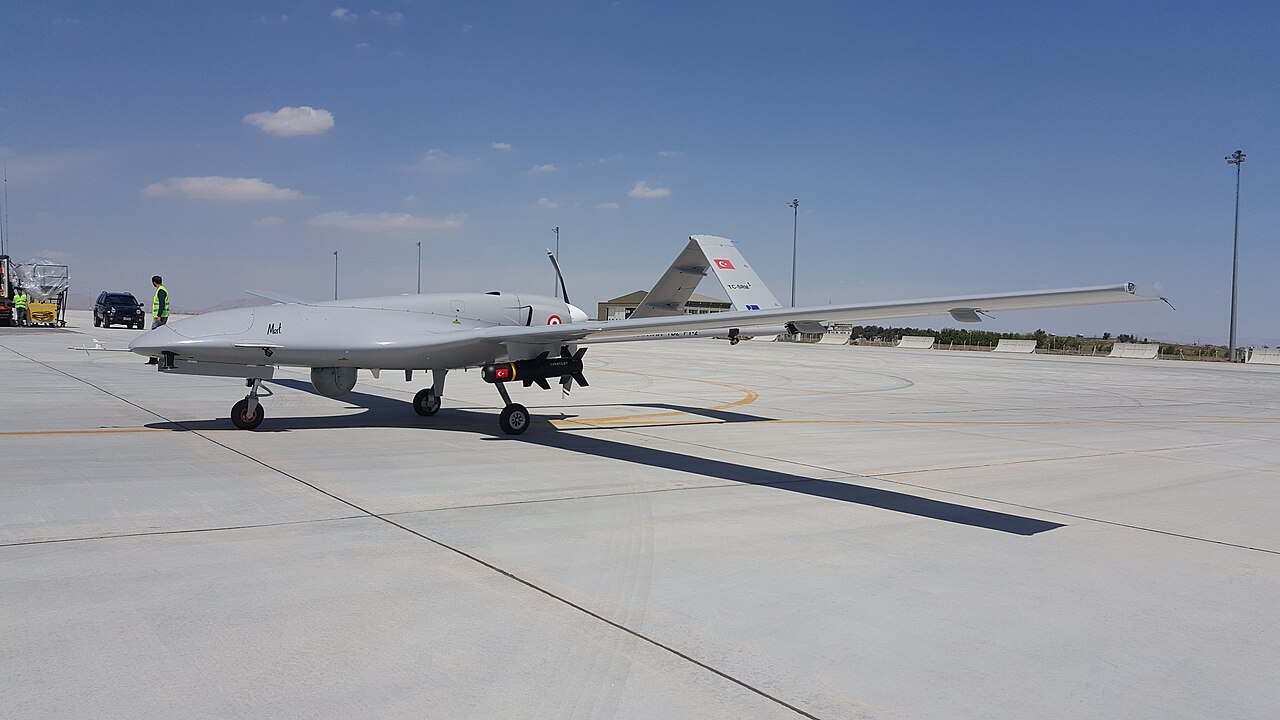
Türkiye’s defence industry has started work on unmanned aircraft that can drop water directly onto forest fires, rather than simply watching them burn from above, Agriculture and Forestry Minister İbrahim Yumaklı told reporters in Istanbul on November 6.
Yumaklı said the Presidency of Defence Industries (SSB) is leading the development effort, and he thanked Baykar for its technical support, pointing to the Bayraktar TB2 drones his ministry already flies to spot wildfires early. Those detection flights, he said, cut average response times from roughly 40–45 minutes down to about 10. The new project is meant to go a step further: instead of calling in a helicopter or aircraft once a fire is found, the drone itself would carry and release water on the blaze.
An Information Request Already on File
The announcement was not the opening move. SSB’s own announcements page shows that on October 15 it issued a request for information on a fire-suppression payload for integration onto unmanned aerial vehicles, and later extended the submission deadline for that document. That timeline suggests the agency has been quietly scoping the technology for several weeks before Yumaklı spoke publicly about it, and that no contract or selected design exists yet — the project is still at the requirements-gathering stage.
Yumaklı did not name a manufacturer for the new system, a timeline for prototypes, or a budget figure, and no official document reviewed for this article discloses any of those details. He was clear about the gap he wants the technology to fill: current firefighting drones elsewhere, including Chinese systems he referenced, are built mainly for flat, easily accessible terrain. Much of Türkiye’s forest estate burns in rugged, hard-to-reach hillside terrain where ground crews and even helicopters struggle to get water onto the head of a fire quickly. He said the capability “is not yet widely used around the world,” a claim that, if the programme succeeds, would also give Türkiye something to sell rather than only something to use at home.
Detection Fleet Already in Place
The ministry’s current wildfire air fleet, as Yumaklı has described it this year, runs to 28 fixed-wing aircraft, 119 helicopters and 14 UAVs, with a combined water-drop capacity he put at 462 tonnes. The 14 drones — a mix of Baykar’s Bayraktar TB2 and Turkish Aerospace’s ANKA, according to Turkish reporting — are tasked purely with surveillance: watching forest areas, feeding a network of roughly 776 lookout towers, and triggering a faster ground response once smoke or heat is confirmed. Yumaklı also referenced an AI-based decision-support tool that the ministry says can flag elevated fire risk in a given area up to a week in advance, letting crews pre-position before conditions turn dangerous.
Turning a reconnaissance drone into one that fights fires directly is not a simple payload swap. It means certifying a tank, pump and release mechanism on an airframe not designed to carry liquid loads, working out how low and slow the aircraft needs to fly to drop water accurately, and proving the system does not do more harm than good if it misses. SSB’s October information request is the first formal step toward answering those questions, rather than a sign that an aircraft is close to flying with a water tank attached.
Turkish drone makers have form in adapting existing airframes to new payloads rather than starting from a blank sheet. Turkish Aerospace’s AKSUNGUR recently became the first Turkish drone to air-drop a sonobuoy, a maritime-patrol role far removed from the airframe’s original design brief, and Baykar has flown the TB2 as a launch platform for Skydagger FPV kamikaze drones this week, another new mission bolted onto an already-proven aircraft. A water-suppression tank would be a more demanding addition than either, given the weight and the need for a reliable release mechanism, but it follows the same pattern of stretching existing platforms into new jobs instead of commissioning an entirely new aircraft.
A Crowded Field of Turkish Attempts
SSB is not the only Turkish body chasing this problem. Smaller domestic firms have shown their own firefighting-drone concepts at defence trade fairs in recent years, including fixed-wing designs pitched as able to scoop or carry water to a fire site. None of those efforts has been adopted into government service, and the specifications various outlets have published for them are inconsistent enough that they are not reproduced here. SSB’s entry into the field, backed by a formal information request and a cabinet minister’s public endorsement, is the clearest sign yet that Ankara wants a state-backed answer rather than leaving the technology to the market alone — and it comes as the agency’s overall contracting topped $15 billion for 2026, with officials eyeing $20 billion next year.
Forest fires are a recurring and costly problem for Türkiye, which lost large areas of Mediterranean and Aegean coastline forest to major blazes in recent summers, and the country is far from alone in that: Greece, Spain, Portugal, Algeria and parts of the United States face similar seasonal risk. A Turkish-developed, rough-terrain-capable firefighting drone, if it works, would plug directly into the defence industry’s existing export relationships across the Mediterranean, the Balkans and North Africa — markets where Baykar and other Turkish manufacturers already have a foothold through the TB2 and other platforms used for detection, and where Turkish defence and aerospace exports, up 61% in October alone, are already growing fastest.
For now, the project remains a declared intention backed by a procurement document, not a flying prototype. SSB has not said when it expects to move from information-gathering to a development contract.
Sources: İbrahim Yumaklı’s November 6 remarks in Istanbul, as reported by TodayPress TV and Milat Gazetesi; the Presidency of Defence Industries’ (SSB) published announcements list.