ASELSAN Shows KORKUT at BAMEX 2026, Eyes Nigeria Plant

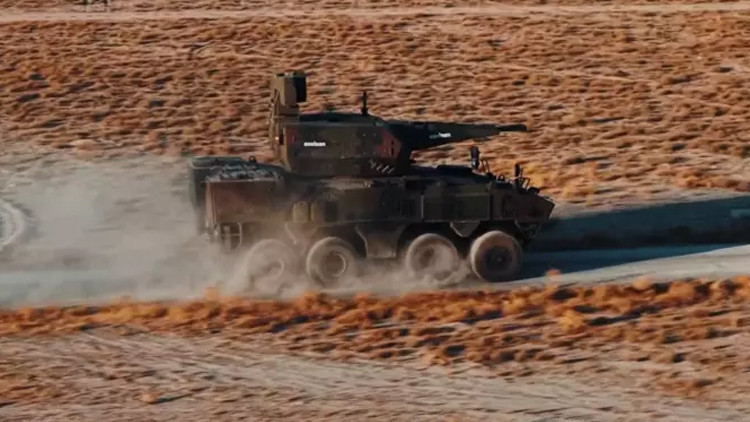
ASELSAN put its KORKUT self-propelled air defence system on display at BAMEX 2026 in Bamako this week, part of a Turkish industrial delegation that organisers say is larger than the one at last year’s inaugural edition. ASELSAN has not announced a customer on the continent for KORKUT itself; the stand was a demonstration, alongside a separate line from the company’s chief executive about a possible local manufacturing partnership in Nigeria.
The second edition of the Bamako International Defence and Security Exhibition opened on 9 November at the Bamako Exhibitions Park (FEBAK) and runs through 13 November, with live-fire demonstrations scheduled for 12–13 November at Koulikoro, northeast of the capital. Organisers put the Turkish presence at more than 20 companies, including Baykar, Roketsan, Skydagger, whose kamikaze drones have reached more than 30 countries, and Prontaron Defence, the Turkish firm that runs the show under the patronage of Mali’s presidency and defence ministry. Officials from Türkiye’s Ministry of National Defence and the Presidency of Defence Industries (SSB) are also attending, with a deputy defence minister expected at the fair.
What KORKUT Does
KORKUT is a short-range, gun-based air defence system built around twin 35mm Oerlikon KDC-02 cannons produced under licence in Türkiye by MKE. A battery consists of one command-and-control vehicle, carrying a 3D search radar with a stated detection range of roughly 70 kilometres, and three weapon-system vehicles, each with its own fire-control radar and electro-optical sensor. ASELSAN says the guns can switch between two ammunition types, including its ATOM 35mm airburst round, in under 15 seconds, with 200 rounds ready to fire and 200 more in reserve per vehicle.
The system exists in two chassis configurations. The original tracked version, mounted on the FNSS ACV-30, entered Turkish army service in 2016. A wheeled variant on the Otokar ARMA 8×8, generally referred to as KORKUT 140/35, was unveiled in 2024 and is the version ASELSAN has pushed hardest at recent export shows, including a live-fire demonstration in September for delegations from a dozen countries that reportedly engaged fixed-wing, delta-wing and kamikaze drone targets alongside a moving ground vehicle.
The Turkish Armed Forces remain KORKUT’s only confirmed operator, a status unchanged since Korkut’s export record was last reviewed in late October, when the system had reached nine countries including Ukraine — none of them in Africa. No African government has placed an order, and ASELSAN’s BAMEX stand functioned as a demonstration rather than a sales announcement — standard practice at a fair whose organisers have said its real test is what gets signed in the months afterward, not during the exhibition itself.
A Nigeria Production Line, Still at the Talking Stage
The more significant line out of Bamako concerns Nigeria rather than Mali. ASELSAN chief executive Ahmet Akyol said in September that the company is looking for a local manufacturing partner in Nigeria, a step beyond the straightforward export deals ASELSAN and other Turkish firms have signed across West Africa over the past year. Nothing has been finalised, and ASELSAN has not named a partner, a product scope or a timeline. But the statement puts KORKUT and ASELSAN’s wider counter-drone line — including the IHASAVAR handheld and backpack jammers shown on the same stand — in the conversation for technology transfer rather than a one-off sale, which is a different and slower negotiation than the export contracts ASELSAN has been closing elsewhere on the continent.
That distinction matters for how non-Turkish buyers should read Turkish industry’s African push generally. Ankara’s defence exporters have moved quickly from pure arms sales toward joint ventures and local assembly in several markets this year — HAVELSAN signed a cooperation memorandum with Nigeria’s state-owned DICON in early November, and STM led a Turkish pavilion at Lagos’s AFRIDEX show in late October — but a memorandum of understanding or an executive’s stated interest is not a contract, and Nigeria’s defence-procurement bureaucracy has historically taken years to convert interest into signed production deals.
Why It Matters Beyond Türkiye
Short-range gun-based air defence is a genuine gap in much of West Africa’s order of battle, where militaries are facing a rising number of improvised armed drones fielded by non-state groups — Islamic State West Africa Province’s first use of an armed drone against a Nigerian army position was reported in December 2024 — alongside more conventional air threats. Western systems in this category tend to be expensive and come with lengthy delivery queues; Chinese competitors are also active in the region. Turkish industry’s pitch rests on faster delivery, lower unit cost and, increasingly, an offer to build locally rather than simply sell hardware. Whether that pitch converts into contracts in Mali, Nigeria or elsewhere will be the real measure of BAMEX 2026 — not the stands that filled FEBAK this week.
ASELSAN’s order backlog passed $30 billion for the first time in October, giving the company the balance sheet to absorb a slow-moving negotiation in Nigeria while it keeps closing faster export deals elsewhere.
Sources: Military Africa on BAMEX 2026’s opening; Military Africa on ASELSAN’s KORKUT display; European Security and Defence on KORKUT specifications; ASELSAN public statements.