SİPER-2 Pulls Off First-Ever Mid-Flight Retargeting Test

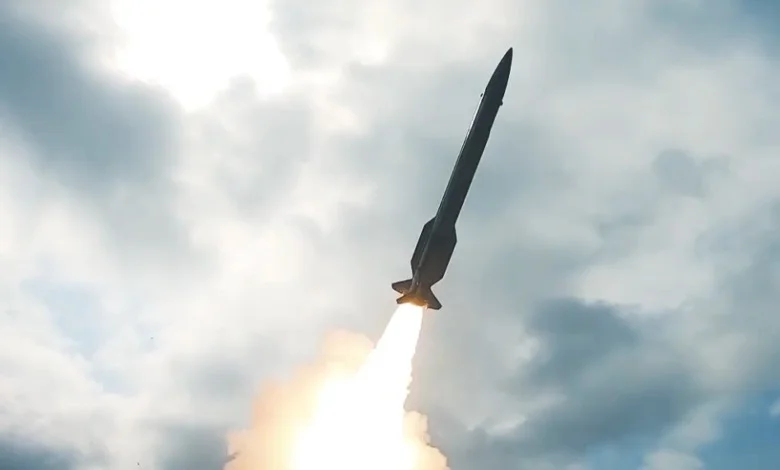
Türkiye’s SİPER-2 long-range air and missile defense interceptor has demonstrated mid-flight retargeting for the first time, switching to a newly designated sea-skimming target after it was already airborne and closing on its original target. The test was carried out on October 25 and announced the following day by the heads of the Presidency of Defence Industries (SSB), Roketsan and ASELSAN.
It is a capability few operational interceptor families outside the United States and a handful of European systems have publicly demonstrated, and it moves SİPER-2 a step closer to full service as the backbone of the long-range layer in Türkiye’s “Çelik Kubbe” (Steel Dome) air defense architecture.
What the Test Showed
According to statements from Roketsan and ASELSAN, the SİPER Ürün-2 (Product-2) interceptor was launched against an initial target. After the missile was already in flight, its engagement was switched to a second, newly designated target — a maneuver the two companies describe as an in-flight target-change capability demonstrated for the first time on the program.
ASELSAN, which supplies the fire-control radar, data link and the missile’s active seeker, said the test sequence covered “engagement on the first target and, after firing, switching the missile’s engagement to a second target,” exercising both the midcourse guidance update and the terminal-phase seeker handover. Roketsan, the missile’s prime contractor, published test footage and said the result increases “operational flexibility” for SİPER batteries in the field.
SSB President Haluk Görgün said the test “strengthens the long-range layer of Çelik Kubbe” and noted that roughly 1,000 subcontractor companies are now involved in the SİPER program. Industry and Technology Minister Mehmet Fatih Kacır described SİPER as “the long-range shield of Çelik Kubbe,” crediting the joint work of TÜBİTAK SAGE, ASELSAN and Roketsan.
Why a Sea-Skimming Target Was Chosen
The target profile for this test was a sea-skimming threat, simulating the kind of low-altitude cruise missile that is among the hardest target types for ground- and ship-based radars to detect and track early enough to engage. ASELSAN CEO Ahmet Akyol said the choice of target made the test directly relevant to SİPER-2D, the naval variant of the missile being developed for Türkiye’s surface combatants, including the future TF-2000 air defense destroyer.
Mid-flight retargeting matters most in exactly this kind of scenario. A battery or ship facing a raid of multiple incoming threats, or an adversary using decoys and electronic countermeasures to draw interceptors away from the real target, can redirect a missile already in the air to the higher-priority threat instead of expending a second interceptor on a fresh launch. For a system expected to defend against saturation attacks, that is a meaningful gain in both interceptor economy and reaction time.
What SİPER Is
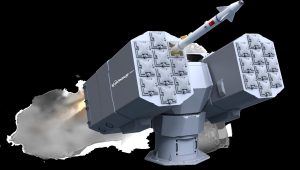
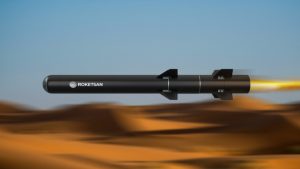
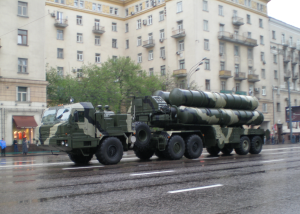
SİPER is Türkiye’s indigenous long-range regional air and missile defense system, developed under SSB coordination by Roketsan (airframe and propulsion), ASELSAN (radar, sensors, seeker electronics and command-and-control) and TÜBİTAK SAGE (missile design). The Ürün-2 variant uses the AGRAS 400/SA active RF seeker on a redesigned single-stage airframe, with a publicly stated intercept range beyond 150 km and an intercept altitude of roughly 30 km. In flight, the missile receives midcourse updates via data link from the ground-based fire-control radar before its own active seeker takes over for terminal homing — the same guidance chain exercised in the October 25 retargeting test.
The program has moved in clear steps. SİPER’s first test-firing took place at Sinop in August 2023. The Ürün-2 variant hit a maneuvering target beyond 150 km in a test in June 2026. SİPER Block-1 entered Turkish inventory in October 2024, and SSB has said the system reached full operational capability in June 2026. The retargeting test adds a new, more demanding engagement profile to that record rather than marking an entry-into-service milestone on its own.
The test comes five days after SİPER itself cleared a separate live-fire qualification test at Sinop, and in the same week ASELSAN signed a €523 million SSB contract for next-generation air and missile defense production — underlining how much of Türkiye’s current defense-industrial output is concentrated on building out the Çelik Kubbe layered air defense network.
Why It Matters Beyond Türkiye
In-flight retargeting is a feature associated with only the most mature interceptor families in service today, among them variants of the US Patriot and Standard Missile lines. Demonstrating it — even in a single test, against a single retargeting event — is a data point foreign air forces and navies evaluating SİPER will weigh alongside range and altitude figures when they assess whether the system is a credible alternative to Western or Russian-origin long-range air defense.
Türkiye has so far kept SİPER in domestic service while it works through the Block-1 to Block-3 development path, and neither SSB nor Roketsan has announced an export customer for the system. But Türkiye has openly marketed other elements of its layered air defense family — including Korkut and, separately, ASELSAN’s broader radar and counter-drone exports — and SİPER’s naval variant work points toward interest from navies shopping for area air-defense missiles to pair with the kind of combat management and launcher systems, such as MİDLAS, that Türkiye is already building into its own frigates.
Neither SSB nor the companies gave a date for SİPER-2’s next test or confirmed its full designation for inventory status. No quantities, unit costs or production-rate figures have been disclosed for the program.
Sources: Statements from the Presidency of Defence Industries (SSB), Roketsan and ASELSAN; Türkiye Today.