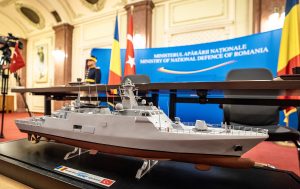
Eight Hulls, Several Yards and a First Export Order Test the İstif-Class Frigate

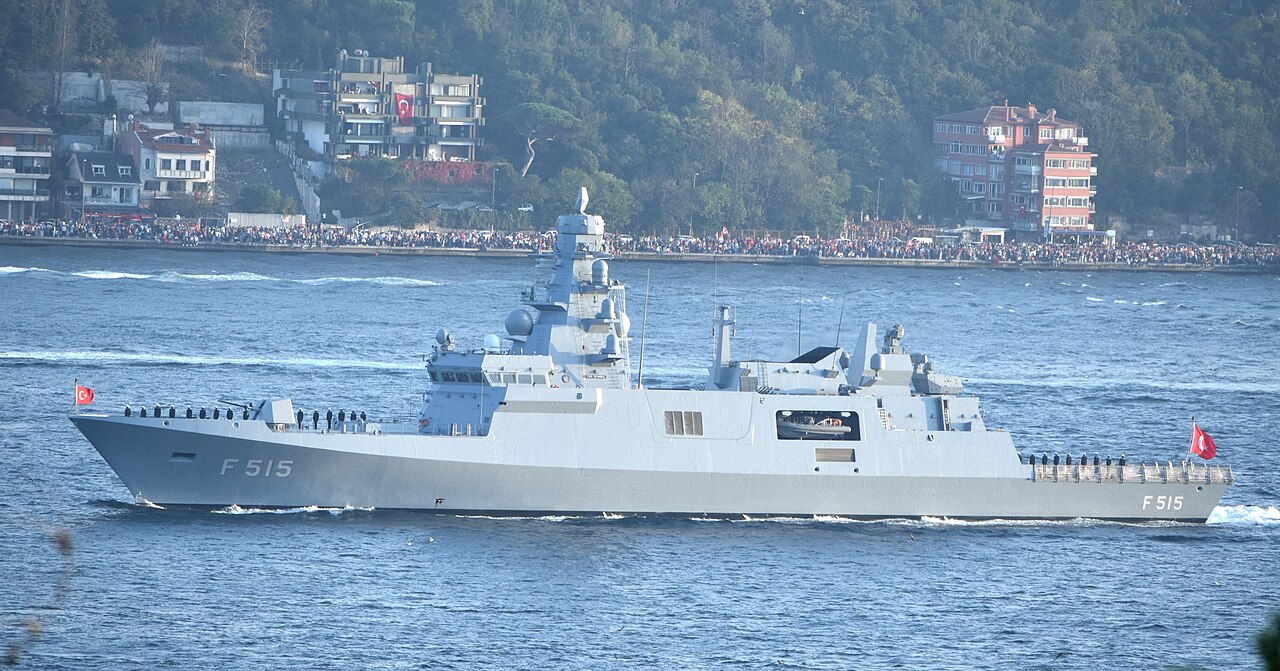
When TCG İstanbul slid down the slipway at the Istanbul Naval Shipyard in January 2021, it was presented as the next step in the MİLGEM story. Today the picture looks different. The İstif class, also written as the I-class or Istanbul class, is no longer a single lead ship. It is an eight-hull series being assembled across several yards at once, and it has already found a foreign customer.
This article looks at the programme as a whole: what the ships are, who is building them, where each hull stands, and why the Turkish Navy treats the class as a test of serial production rather than a one-off showpiece.
| Item | Detail |
|---|---|
| Class | İstif (Istanbul) class, also called the I-class frigate |
| Programme | MİLGEM family, enlarged development of the Ada-class corvette |
| Planned hulls | Eight for the Turkish Naval Forces |
| Design | STM, with Turkish shipyards building the hulls |
| Displacement | Roughly 3,000 to 3,100 tonnes |
| Dimensions | About 113.2 m long, 14.4 m beam, 4.05 m draft |
| Propulsion | CODAG, one GE LM2500 gas turbine and two MTU diesels |
| Speed and range | Over 29 knots; about 5,700 nautical miles at 14 knots |
| Crew | About 123 (reported) |
| Lead ship | TCG İstanbul (F-515), commissioned January 2024 |
What Is the İstif Class, and How Does It Differ From the Ada Class?
The İstif class grew out of the same national warship effort that produced the MİLGEM I-class frigate family. The earlier Ada-class corvettes proved that Turkish yards could design and build a modern anti-submarine ship. They were also small, with limited endurance and a modest missile load.
The İstif ships keep the same basic hull logic but grow it to roughly 3,000 tonnes and about 113 metres. The extra size buys three things the Ada class lacked. The first is more anti-ship firepower: sixteen ATMACA missiles, double the usual Ada fit. The second is a 16-cell MİDLAS vertical launching system, which lets the ship carry air-defence missiles. The third is endurance, with a reported range near 5,700 nautical miles at economical speed.
In short, the Ada class was an escort. The İstif class is a general-purpose frigate that can look after a task group.
What Weapons and Sensors Does It Carry?
The armament is a mix of Turkish-made systems. Open sources describe the following fit on the production ships.
- Anti-ship: sixteen Roketsan ATMACA missiles in canister launchers, with a stated range of around 250 km.
- Air defence: the 16-cell MİDLAS launcher, which can take HİSAR-D RF or SİPER Block 1 missiles, plus the ASELSAN GÖKDENİZ 35 mm close-in weapon as the last line of defence.
- Guns: a 76 mm main gun (an OTO Melara Super Rapid on the lead ship, a Turkish MKE-built variant on later hulls, as reported) and small remote weapon stations.
- Anti-submarine: twin 324 mm torpedo launchers and a hull-mounted sonar.
- Radar and combat system: an ASELSAN CENK-series AESA search radar, electro-optical and infrared sensors, and a HAVELSAN combat management system.
The missile options matter because they tie the ship to other Turkish programmes. The SİPER missile that can fill the vertical launcher belongs to the same family as the SİPER long-range air defence system fielded on land. A common missile family simplifies logistics if the navy and army ever draw on the same production lines.
The flight deck and hangar are sized for a naval helicopter such as the SH-60 and, according to published descriptions, for unmanned aircraft. That last point is part of why the class keeps appearing in discussions about drones operating from warship decks.
Who Is Building the Ships, and Where Does Each Hull Stand?
Here the programme departs from the Ada pattern. Instead of one state yard working through hull after hull, the work is split. The Istanbul Naval Shipyard built the lead ship. Private yards including Anadolu, Sedef and Sefine have taken later hulls. The design and integration side is led by STM, whose role is described in our profile of the company.
The table below reflects publicly reported status. Dates for ships not yet in service are subject to change, and some later milestones are cited by secondary sources only.
| Pennant | Name | Builder | Status (reported) |
|---|---|---|---|
| F-515 | TCG İstanbul | Istanbul Naval Shipyard | Launched January 2021, commissioned January 2024 |
| F-516 | TCG İzmir | Anadolu Shipyard | Launched; trials reported |
| F-517 | TCG İzmit | Sedef Shipyard | Launched January 2025; sea trials reported |
| F-518 | TCG İçel | Sefine Shipyard | Launched |
| F-519 | TCG Akdeniz | Anadolu Shipyard | Launched |
| F-520 | TCG Karadeniz | Sedef Shipyard | Reported launched in 2026 |
| F-521 | TCG Ege | Sefine Shipyard | Planned |
| F-522 | TCG Marmara | Anadolu Shipyard | Planned |
The most recent news concerns the third hull. Our report on TCG İzmit beginning sea trials covers that step in detail. What stands out across the roster is tempo: several hulls are in the water or on trials in the same period, which is what a serial programme is supposed to look like.
Why Is the Class Seen as a Serial Production Test?
One good ship proves a design. Eight ships delivered at a steady rhythm prove an industry. That is the real question hanging over the İstif class.
Turkish planners have argued for years that their shipbuilding base should be able to deliver surface combatants at a predictable pace without relying on imported sub-systems. The İstif programme is the largest attempt so far. It reportedly carries indigenous content above 75 percent, and the main sensors, combat management system and most weapons are domestic. Gas turbines and diesels still come from foreign suppliers, which is the obvious dependency the programme has not yet removed.
Splitting construction among several yards adds its own risks. Quality control, block fit-up and shared supply chains all get harder when more than one shipyard is cutting steel for the same design. The benefit is that a delay at one yard no longer holds the whole programme hostage.
Has Anyone Bought the Design Abroad?
Yes. In July 2025, during the IDEF exhibition in Istanbul, Indonesia signed for two I-class frigates with the Turkish shipbuilding group TAIS. Trade and defence outlets put the package at close to 1 billion US dollars, which would make it one of the largest Turkish naval export deals on record. Reports in early 2026 described Qatari financing involvement and the transfer of hulls from the Turkish build line, but those terms have been relayed by secondary sources and should be treated with caution until the parties confirm them.
Foreign orders help spread development cost across more hulls and give the yards a reason to keep their production lines busy. They also invite outside scrutiny. Separate reports say the US Navy has looked at the design in connection with a future warship requirement.
What Should Readers Watch Next?
Three things will show whether the class delivers on its promise.
First, the delivery dates of TCG İzmir and TCG İzmit. Sea trials take a long time, and the gap between launch and commissioning on the lead ship was three years. If the follow-on hulls close that gap, the serial-production argument gets stronger.
Second, live missile firings from the MİDLAS launcher on a production ship. Testing the vertical launcher with air-defence rounds from a commissioned hull is the step that turns a paper capability into an operational one.
Third, whether the Indonesian hulls come from the same line or are diverted from Turkish Navy slots. That choice will say a lot about how much spare capacity the yards really have.