TEI Spent Four Decades Making Parts for Foreign Engines, Then Began Designing Its Own

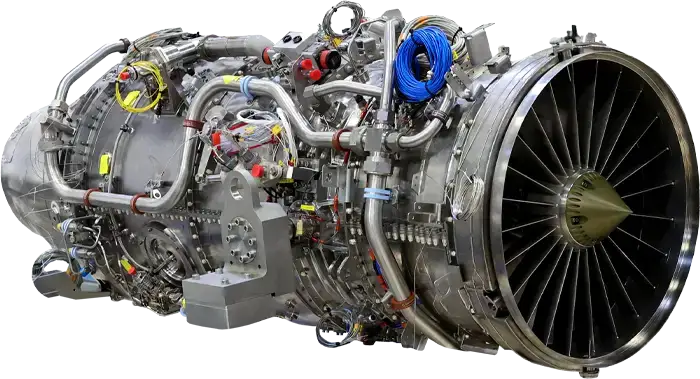
For most of its life, TEI made parts for engines that other companies designed. It turned out turbine components for General Electric, machined modules for Rolls-Royce and overhauled American fighter engines in a test cell big enough for a 100,000 lbf turbofan. Only in the past decade has the Eskişehir company started putting its own name on engines that fly. That shift, from a supplier working to foreign drawings to an engine designer with its own products, is the real story of TEI Turkish Engine Industries.
TEI is also where the limits of Turkish engine independence show up most clearly. It builds small and medium engines today. The big fighter engine is still a programme, not a product, and in August 2026 even that programme changed hands inside the Turkish industry. Here is what TEI makes, what it only builds under licence, and where the line sits.
| TEI at a glance | Details |
|---|---|
| Full name | TUSAŞ Engine Industries Inc. (TEI) |
| Headquarters | Eskişehir, Türkiye |
| Founded | 1985 |
| Shareholders | Turkish Aerospace (TUSAŞ), GE Aerospace, Turkish Armed Forces Foundation, Turkish Aeronautical Association |
| First engine and parts delivered | 1987 |
| Business lines | Parts and module manufacturing; engine design and product development; assembly, test and MRO |
| Own engine designs | TS1400, TF6000, TF10000, PD170, PD222, TJ90, TJ300, TP38, PG50 |
| Licensed engine | T700-TEI-701D |
| Website | tei.com.tr |
Who Owns TEI and What Does It Actually Do?
TEI was set up in 1985 as a joint venture between Turkish Aerospace, GE Aerospace, the Turkish Armed Forces Foundation and the Turkish Aeronautical Association. It delivered its first engine and parts in 1987. The company’s board is chaired by Mehmet Demiroğlu, and TEI says its strategic partnership with GE has now lasted 41 years. Even after the August 2026 restructuring described below, TEI says its partnership structure and its GE ties stay as they are.
Two very different businesses live under one roof, and they are easy to confuse.
The first is the established one. TEI says it has made more than 2,000 different parts since 1987 and supplies main engine makers across about 50 military and commercial engine programmes. The list includes components for the CFM LEAP, GEnx and GE9X, a power turbine module for Rolls-Royce and the bearing housing assembly used on F110 engines. It also produces blisks and spools, compressor components that, in TEI’s words, only a few companies make. This is industrial work of a high standard, but the design authority belongs to someone else.
The second business is the one that matters for sovereignty: designing engines. TEI began R&D in 1996 with a J85 ejector project alongside GE, signed an industrial cooperation agreement with ITP in 2003 for design and development work on the TP400-D6 engine that powers the Airbus A400M, and started its own turbojet and turboprop work for drones in 2004. The company says it spends about 10 percent of annual revenue on R&D.
Which Engines Does TEI Design Itself?
TEI sorts its products by power class. The clearest way to read the catalogue is from the smallest engine upward, because the closer an engine gets to a fighter, the further it is from entering service.
| Engine | Type | Key figure (TEI) | Platform or role |
|---|---|---|---|
| TEI-TJ90 | Small turbojet | About 90 lbf (390 N) thrust; 4.75 kg dry | Target drones; first flight on the Şimşek in June 2017 |
| TEI-TJ300 | Missile turbojet | Up to 1,400 N; 224 mm diameter | Medium-range anti-ship missile work with Roketsan |
| TEI-PD170 | Turbodiesel | 172 hp; 162 kg dry | ANKA, AKSUNGUR; also flown on the Bayraktar TB3 |
| TEI-PD222 | Turbodiesel | 222 hp; 167 kg dry | MALE-class unmanned aircraft |
| TEI-TS1400 | Turboshaft | 1,400 shp | T625 GÖKBEY helicopter |
| TEI-TF6000 | Turbofan | 6,000 lbf dry; bypass ratio 1.08 | Manned and unmanned aircraft, business jets, regional aircraft |
| TEI-TF10000 | Afterburning turbofan | 10,000 lbf with afterburner | Manned and unmanned platforms |
The table leaves out the TP38 turboprop (about 41.7 hp, developed from the TJ35 core) and the PG50 two-stroke petrol engine, both aimed at smaller unmanned aircraft. All figures come from TEI’s own product pages.
How Did the PD170 Turbodiesel Become the Workhorse?
The PD170 is where TEI’s design work first turned into volume. It was developed under the Secretariat of Defence Industries (SSB) for MALE-class drones, and TEI says it flew for the first time on an ANKA on 27 December 2018. After calibration and testing it reached mass production in 2019.
The engine is a 2.1-litre, four-cylinder common-rail diesel with two-stage turbocharging, running on JP-8, Jet A-1, JP-5 or ordinary EN 590 diesel. TEI quotes a service ceiling of 45,000 feet and a 3,600-hour engine life. The company also reports a 45-hour single sortie on an AKSUNGUR, its longest flight record, and says the engine has flown on the Bayraktar TB3 as well. The full authority digital engine control unit, the FADEC, runs TEI’s own software.
The PD222 is a stronger sibling, rated at 222 hp with 200 hp continuous, and TEI claims roughly 100 percent localisation of its parts. A Turkish drone such as the ANKA, which now has foreign operators, can be sold without asking a foreign engine maker for permission, and to an exporter that matters more than any thrust figure.
Is the TS1400 a Real Turkish Helicopter Engine?
The TS1400 is a 1,400 shp turboshaft meant for the T625 GÖKBEY utility helicopter. TEI says the turboshaft programme was launched on 8 March 2017 under the SSB’s engine and power transmission department, with the aim of cutting foreign dependency and building gas turbine design and test infrastructure inside the country. It lists 1,660 shp of 30-second one-engine-inoperative power, a power-to-weight ratio of 8.54 shp per kilogram and a 20,000 ft service ceiling.
The engine first flew on a GÖKBEY on 19 April 2023. TEI’s own page still describes it as a development project, so readers should not assume type certification is finished. The August 2026 restructuring leaves the TS1400 with TEI, together with the PD170, so that production, delivery and integration continue without interruption.
There is a second helicopter engine in the TEI story, and it is not a Turkish design. The T700-TEI-701D is a licence-built version of the GE T700 turboshaft. TEI says an agreement with Turkish Aerospace on the utility helicopter engine was signed in Ankara on 21 February 2014, and its turboshaft test cell handles these engines. Anyone following the T-70 helicopter programme should keep that engine apart from the TS1400.
How Far Along Are the Turbofans?
TEI describes the TF6000 as Türkiye’s first indigenous turbofan. It has a two-stage fan, a six-stage axial compressor, a single-stage high-pressure turbine and a single-stage low-pressure turbine, and is designed to support an afterburner. TEI says the project covers, for the first time in the country, design and manufacture of the fan module, a variable stator vane compressor, a mixer exhaust and an afterburner. Dimensions are listed at 860 by 1,150 by 2,250 mm.
The TF10000 keeps the same core and adds an afterburner for about 10,000 lbf. TEI says this project has a critical role on the path toward the engine for the KAAN fighter, and it presented the TF10000 at SAHA 2026 as the country’s most powerful national turbofan. TEI displays both engines as development products at trade shows and does not claim either is in service.
That brings up the gap. The TF10000 sits at 10,000 lbf. The F110-GE-129 that powers the prototypes of the KAAN fighter is in a much higher class, and the Turkish replacement, the TF35000, is a target of about 35,000 lbf. Going from 10,000 to 35,000 lbf is a long way for a company whose turbofan design work is this recent. Turkish Aerospace’s general manager has said testing of the indigenous KAAN engine would not start until around 2032, and our report on the KAAN engine delay covers what that means for the first production batches.
Why Did the TF35000 Leave TEI?
On 7 August 2026, TEI published a press announcement that reshaped the engine business. The TF35000 and a turboshaft programme called TS3000, both carried out inside TEI but with intellectual and industrial property rights owned by the SSB, will move to TEI TEKNOLOJİ. That is the new name of TRMOTOR, the engine company founded in 2017. The engineers working on both programmes at TEI are to continue at the new company.
The logic, as TEI presents it, is to put indigenous engine development, auxiliary power units, materials work and advanced R&D in one organisation. TEI itself is then to concentrate on production, delivery, product support, mature engine programmes and international collaboration. The announcement says there will be no change to TEI’s core business in parts and modules, service and product support.
Read it carefully. TEI remains the home of engines that are already built and flying, such as the TS1400 and the PD170, while the most ambitious combat-engine work moves to a sister company that did not exist before 2017. The announcement calls the handover seamless and says schedules will be kept. How the split affects the 2032 test date has not been stated publicly, and this report does not guess.
What About the Business That Pays the Bills?
TEI’s maintenance, repair and overhaul operation is the unglamorous part of the company, but it has brought in foreign customers. TEI says it has maintained TF33 engines of NATO’s AWACS fleet since 1999, and that NSPA and IAMCO named it best engine maintenance company in 2004, 2008 and 2011. It holds EASA Part 145 approval.
The facility runs a turbofan test cell with capacity up to 100,000 lbf and two turboshaft cells rated at 3,400 shp and 2,500 shp. Final tests of F110 engines for Turkish and Omani F-16s have been run there, and TEI carries out upgrades for Bahrain’s F110-GE-100 engines and overhaul of Saudi F110-GE-129C engines. The company also handles depot maintenance for the Makila 1A1 engines on the Turkish Armed Forces’ Cougar helicopters.
A newer line is naval. TEI says it signed a gas generator depot-level maintenance contract for LM2500 gas turbines with the US Navy in 2024, with a ceiling value of USD 45.6 million, and a power turbine contract in the second quarter of 2025 with a ceiling of USD 67.5 million. These are ceilings rather than paid amounts, but they show a customer with one of the world’s largest LM2500 fleets trusting TEI with ship propulsion.
This work matters to the engine-design story for a practical reason. It pays for people, test cells and certification habits. A company that can overhaul a US Navy power turbine has already earned the quality credentials a national engine designer needs.
Where Does TEI Stand Against Other Turkish Engine Makers?
TEI is not alone. Kale supplies engine hardware to Pratt & Whitney, TRMOTOR, now TEI TEKNOLOJİ, takes over the fighter engine programme, and BMC Power works on land powerpacks. Our overview of who builds Türkiye’s aircraft engines maps all of them.
TEI is also tied closely to its largest Turkish shareholder. Turkish Aerospace builds the GÖKBEY and ANKA airframes that TEI engines fly on, which helps integration but also means TEI’s Turkish engine work depends heavily on one customer family.
What to Watch at TEI Next
Four things will show whether TEI is moving from buyer to maker in earnest. The first is formal certification of the TS1400, since an engine that is not certified cannot be offered to customers with confidence. The second is the first operational use of the TF6000 or TF10000 on an aircraft. The third is how the TF35000 handover to TEI TEKNOLOJİ affects the schedule. The fourth is whether the PD222 follows the PD170 from test to regular series output.
Each of these can be checked against TEI’s own announcements and SSB statements. Until they happen, the accurate description is narrow but solid: TEI already builds engines for Turkish drones and helicopters, and it is still learning how to build the engine a fighter needs.