ROKETSAN Expands Joint Production and Tech Transfer With Saudi Arabia

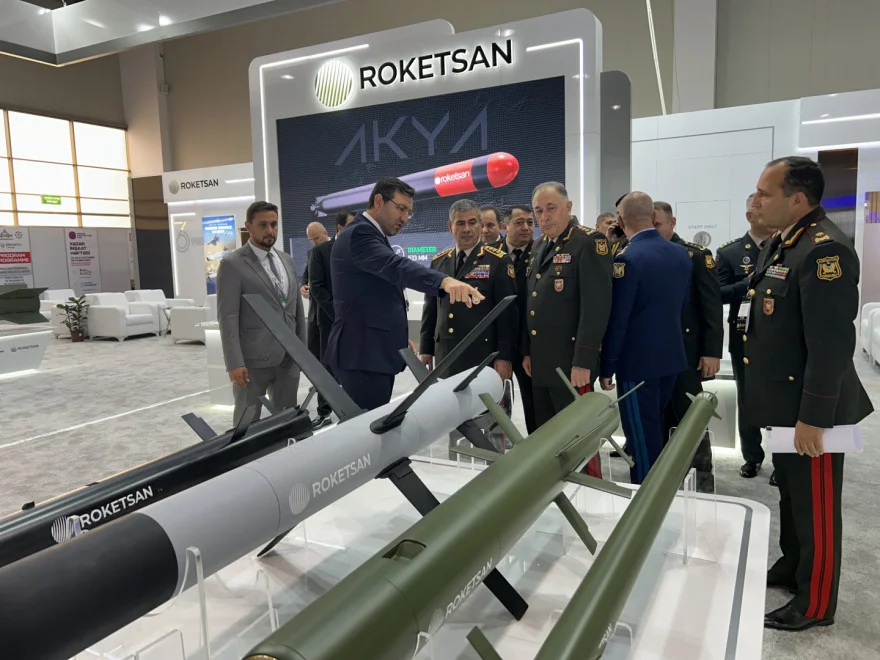
ROKETSAN general manager Murat İkinci said on November 12 that the company’s industrial cooperation with Saudi Arabia’s state-owned defence manufacturers will move beyond buying and selling finished missiles into joint production, technology transfer and a longer-term industrial partnership. İkinci made the remarks at the Türkiye-Saudi Arabia Defense Industry Days, an event bringing together Turkish and Saudi defence firms, according to SSBülten, the Turkish Presidency of Defence Industries’ own news desk.
The statement is an expansion of cooperation already under way rather than the announcement of a new contract. ROKETSAN and Saudi Arabian Military Industries (SAMI) signed two joint-production agreements in February at the World Defense Show in Riyadh — one for cruise missiles, the other with SAMI’s land-systems arm for anti-tank guided missiles that also covers sales into the Saudi market. Neither company has disclosed which specific cruise-missile or anti-tank munition types will actually be built under those February deals, and ROKETSAN did not name new products or revise that scope on November 12.
Four Priority Areas for Joint Development
According to İkinci, the companies have identified four priority areas for joint research and development going forward: autonomous systems, integrated air and missile defence, rocket and missile propulsion technologies, and space systems. ROKETSAN said it brought more than 15 Turkish supply-chain companies to the Riyadh show, and the stated goal now is to extend cooperation with Saudi partners — named as NCMS (the National Company for Mechanical Systems) and SAMI — down into small and medium-sized enterprises on both sides, rather than keeping the relationship confined to the two flagship companies.
NCMS has separately signed a memorandum of understanding with ROKETSAN and ASELSAN aimed at localising production of ammunition and drone optical sensors inside Saudi Arabia, a deal reported earlier this year. The November 12 statement did not add new detail to that MoU, but it places it inside the same broader framework İkinci described: moving Turkish firms from being suppliers to Saudi Arabia toward being co-investors and technology partners inside the kingdom.
Riding on the Mecca Pact
ROKETSAN’s language ties the industrial push to the political framework Türkiye and Saudi Arabia built earlier this year. Türkiye’s parliament ratified the Mecca Defence Pact with Saudi Arabia and Pakistan after committee approval in late October, giving the two countries’ defence relationship a formal security-cooperation umbrella. SSBülten’s account of İkinci’s remarks explicitly frames the Riyadh talks as turning that political will into “concrete projects through mutual investment” — company language for using the pact to justify co-production deals that go beyond simple arms sales.
Saudi Arabia has leaned on Turkish suppliers for several years as it tries to meet the localisation targets in its Vision 2030 economic plan, which requires a rising share of defence spending to stay inside the kingdom rather than go to foreign suppliers. Gulf capitals including Saudi Arabia have increasingly asked to build Turkish-designed systems locally rather than simply import them, a shift already visible in deals such as Vestel Savunma’s KARAYEL drone, which moved from Turkish army trials onto a Saudi production line, and in the training Baykar has already provided to Saudi naval crews learning to operate the AKINCI drone.
Why It Matters for ROKETSAN’s Export Strategy
ROKETSAN is Türkiye’s primary missile manufacturer, and co-producing systems on Saudi soil would mark a step beyond its existing pattern of direct exports and the TAYFUN, ATMACA and HİSAR family sales that have driven its order book. Joint production inside a buyer country is attractive to ROKETSAN because it can unlock larger defence budgets that Gulf governments prefer to spend domestically, and because it builds a longer-term customer relationship that survives any single contract. It is also a hedge against the export licensing restrictions that apply to some ROKETSAN products depending on range and seeker technology, since locally assembled or co-produced systems sometimes face a different approval path than a straight export sale.
What was not disclosed on November 12 is as notable as what was: no contract value, no production timeline, no confirmed product list, and no numbers on how many SMEs from either country would be brought into the arrangement. ROKETSAN and SAMI’s February deals also remain short on public specifics nearly nine months on, a pattern consistent with how Gulf defence contracts are often announced in broad strategic terms well before the underlying technical and commercial details are finalised.