Brazil and Chile Give Turkish Defence Firms Their Best Opening in Latin America

For years, Latin America was the part of the world map where Turkish defence companies had the fewest flags to point to. That is changing, though not through the drone sales that defined Türkiye’s export rise elsewhere. The openings so far are a naval software contract in Chile, a binding industrial pact with Brazil, and a string of small component deals that could grow into something larger.
This piece sorts what is signed from what is hoped for. The distinction matters, because much of the commentary on Turkish defence in Latin America blurs the two.
What Has Turkish Industry Actually Signed in the Region?
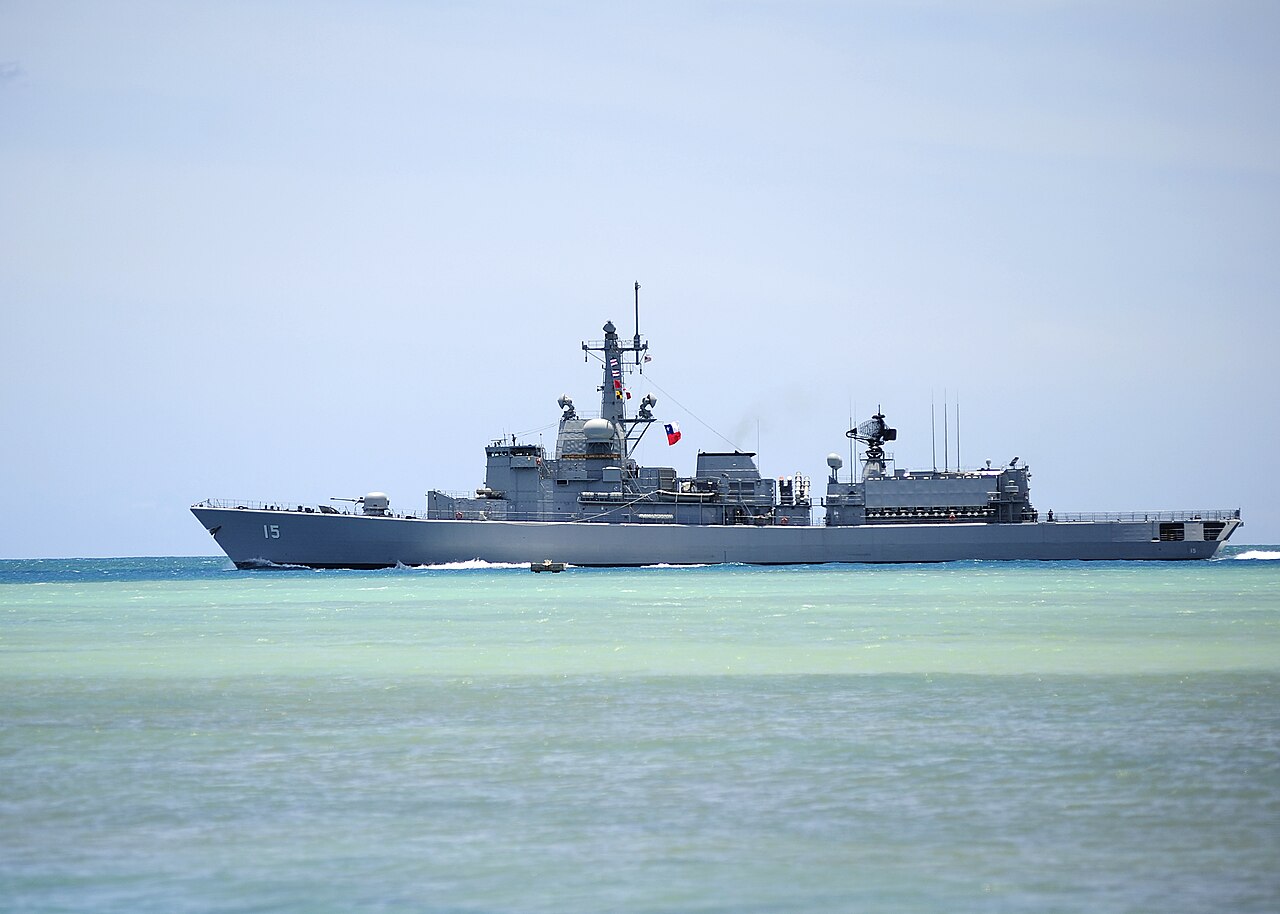
The firm commitments are modest in number. The clearest is the one from HAVELSAN: on 27 March 2025 the company signed an agreement with the Chilean Navy to fit its ADVENT combat management system to two frigates, according to Naval News and Armada International. The ships are the Almirante Blanco Encalada and Almirante Riveros, former Dutch Karel Doorman-class (M-class) frigates that Chile bought in 2005 and 2007. The work is scheduled to run four years. No contract value was disclosed.
ADVENT is built around threat evaluation, decision support, target detection and the control of a ship’s weapons and sensors, on a network-centric design developed with the Turkish Naval Forces Command. For the Chilean Navy the attraction is a modern command layer that has to work with the frigates’ existing systems and weapons, which is how the agreement is framed. The ships are old hulls getting new software, not new ships.
HAVELSAN described Chile as the ninth country to adopt ADVENT. The system first went to sea on the Turkish corvette TCG Kınalıada. Our own look at ADVENT’s customer list covers the wider export record.
A second thread runs through ASELSAN. The company opened an office in Santiago during the FIDAE air and space fair in April 2024, and chief executive Ahmet Akyol said it would serve as the centre for its activities in Latin America, according to Daily Sabah. Turkish commentary also credits ASELSAN with modernising Chile’s Leopard 2A4 tanks, completed in 2023, and with border surveillance systems for Uruguay. Both claims come from an opinion column rather than a company release, so treat them as reported.
| Country | Turkish actor | What is reported | Status |
|---|---|---|---|
| Chile | HAVELSAN | ADVENT combat management system for two M-class frigates | Agreement signed 27 March 2025, four-year schedule |
| Chile | ASELSAN | Regional office in Santiago | Opened April 2024 |
| Brazil | Kale Jet Motorları | KTJ-3200 turbojet for the MANSUP-ER anti-ship missile | Contract reported April 2025 |
| Brazil | TUSAŞ, Embraer, Akaer | Memorandum on possible industrial cooperation | Signed at LAAD, April 2025 |
| Brazil | Government to government | Defence Industry Cooperation Agreement | Brazil approved September 2025, Türkiye June 2026 |
Why Is Brazil the Real Test?
Brazil has the largest defence budget in the region, put at roughly $25 billion in one recent assessment, and an industrial base of its own. That shapes what Ankara can sell. A country with Embraer, Akaer and a domestic missile programme does not want to be a customer for finished boxes. It wants co-production, engines, subsystems and access to export markets.
The legal groundwork is now in place. The framework agreement was signed on 25 March 2022 in Brasília and Ankara. Brazil’s Congress approved it on 10 September 2025 through Legislative Decree No. 195. Türkiye’s parliament passed Law No. 7586 on 23 June 2026, and President Erdoğan’s approval was reported in the Official Gazette in mid-September 2026. The text covers development, production, procurement and maintenance of defence goods and services, with room for joint ventures and technology transfer. We tracked the ratification steps in our report on the pact entering into force.
The industrial links predate the treaty. Kale Jet Motorları was reported to be supplying its KTJ-3200 turbojet for the extended-range MANSUP anti-ship missile, a rare case of Turkish propulsion in a Brazilian weapon, according to Janes. Canik was reported to have supplied M2 QCB heavy machine guns for Brazilian armoured vehicles. Akaer Engenharia has worked with Turkish Aerospace on the HÜRJET advanced trainer and on an electronic warfare platform known as HAVA SOJ.
At LAAD 2025 in Rio de Janeiro, Turkish Aerospace signed a memorandum with Embraer and Akaer to explore industrial cooperation. Janes counted 24 Turkish exhibitors at the show, among them ASELSAN, FNSS, STM, MKE, Otokar, Baykar, HAVELSAN and ASFAT. The Turkish Aerospace profile sets out what the company brings to such partnerships.
Janes listed the Brazilian modernisation projects that Turkish firms are watching: advanced training aircraft, combat helicopters, offshore patrol vessels, unmanned aircraft and counter-drone systems. Otokar has been reported competing in Brazilian Army tenders with its Tulpar vehicle. The pattern is a wide field of bids and a small number of signed deals, and Turkish companies have not yet won a major platform contract in Brazil.
The traffic is not one-way. Reports from April 2026 said talks had widened to possible joint production of Turkish Aerospace’s ANKA and AKSUNGUR drones, while Embraer pursues a sale of its C-390 transport aircraft to Türkiye. Neither has been confirmed as a contract. A call between Presidents Lula and Erdoğan on 24 August 2026 also produced plans for a vice-presidential strategic council and a visit to Türkiye by Brazilian ministers, according to Rio Times.
Where Do Drones Fit?
Drones are the product most associated with Turkish exports, yet Latin America is where that story is thinnest. Baykar’s TB2, AKINCI and KIZILELMA were displayed at LAAD 2025, but we found no confirmed Latin American order for any of them. One report says Colombia expressed interest in the Bayraktar TB series during defence ministry talks in 2025. That is interest, not a contract.
The reasons the platform sells elsewhere are laid out in why countries buy Turkish drones: price, fast delivery and few political strings. Those arguments land differently in a region where several armed forces already operate Israeli, American or European types and where budgets are tight. Counter-drone systems may get a hearing sooner than strike aircraft, given the attacks by cheap explosive drones that Colombian forces have reported. Figures for those attacks vary by source and we have not verified them.
What Is Holding Turkish Firms Back?
Three obstacles recur in the commentary and in what the companies themselves say.
Distance and support. A Turkish-built system in Chile or Brazil needs spares, training and software updates from a country on the other side of the Atlantic. HAVELSAN’s Chilean contract avoids part of this problem because a combat management system is largely software and local integration work. Hardware sales face a steeper climb.
Financing. Many Latin American buyers cannot pay the way Gulf customers do. Credit lines and offset arrangements have helped Ankara elsewhere, as our explainer on how countries buy Turkish weapons describes, but we found no reported Turkish financing package for the region yet.
Incumbents. The United States, Europe and Israel already supply the region’s main platforms. The Chilean frigates that will carry ADVENT are Dutch-built, and the contract works precisely because it upgrades the brain of an existing ship rather than replacing it.
What Should Readers Watch Next?
The Brazilian ministerial visit to Türkiye is the nearest checkpoint, since it would show whether the 2026 treaty produces named projects. After that, the useful signals are concrete: a Brazilian Army decision on armoured vehicles where Otokar’s Tulpar has been competing, any production arrangement involving Turkish Aerospace and Embraer, and whether a second Latin American navy follows Chile on ADVENT.
Türkiye’s export growth, which reached about $10 billion in 2025 according to Turkish officials cited by Daily Sabah, did not depend on this region. Latin America is an upside bet rather than a pillar, and the evidence so far supports a measured reading. The pitch is being heard. Orders for finished platforms have not yet followed.