Why Baku Has Become Ankara’s Closest Defence Partner

Few defence relationships in the region run as deep as the one between Ankara and Baku. It rests on treaty language, shared combat experience, a steady flow of Turkish hardware and, increasingly, factories on Azerbaijani soil. The Turkey Azerbaijan defence cooperation story of 2026 is less about what Azerbaijan buys and more about what it now builds.
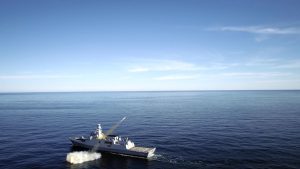
The latest marker came on 6 September, when President Ilham Aliyev and First Vice-President Mehriban Aliyeva visited the Azerbaijani Navy and watched production of armed unmanned boats at a joint facility. Weeks later, Türkiye arrived at Baku’s ADEX show with its largest delegation yet. Both events fit a pattern that has been building for three decades.
What Legal Framework Sits Behind the Partnership?
The relationship is not improvised. Analysts tracing it usually point to four documents: a 1992 military training cooperation agreement, a 1996 agreement on military education and technical cooperation, the 2010 Agreement on Strategic Partnership and Mutual Assistance, and the Shusha Declaration on allied relations, signed on 15 June 2021.
The Shusha Declaration is the one that changed the tone. It commits both sides to mutual military assistance if either faces an attack or threat from a third state, and it explicitly links defence-industrial work to that alliance. It was signed in the town Azerbaijan retook in the 2020 war, which was no accident.
| Milestone | Year | What it covers |
|---|---|---|
| Military training cooperation agreement | 1992 | Training and officer exchange |
| Military education and technical cooperation | 1996 | Education, technical support |
| Strategic Partnership and Mutual Assistance | 2010 | Mutual assistance framework |
| Shusha Declaration | 2021 | Allied relations, mutual military assistance |
| MIRAS and DEARSAN naval drone production | 2026 | Joint production of SALVO and KAYRA in Azerbaijan |
How Did the 2020 Karabakh War Change Turkish Defence Sales to Azerbaijan?
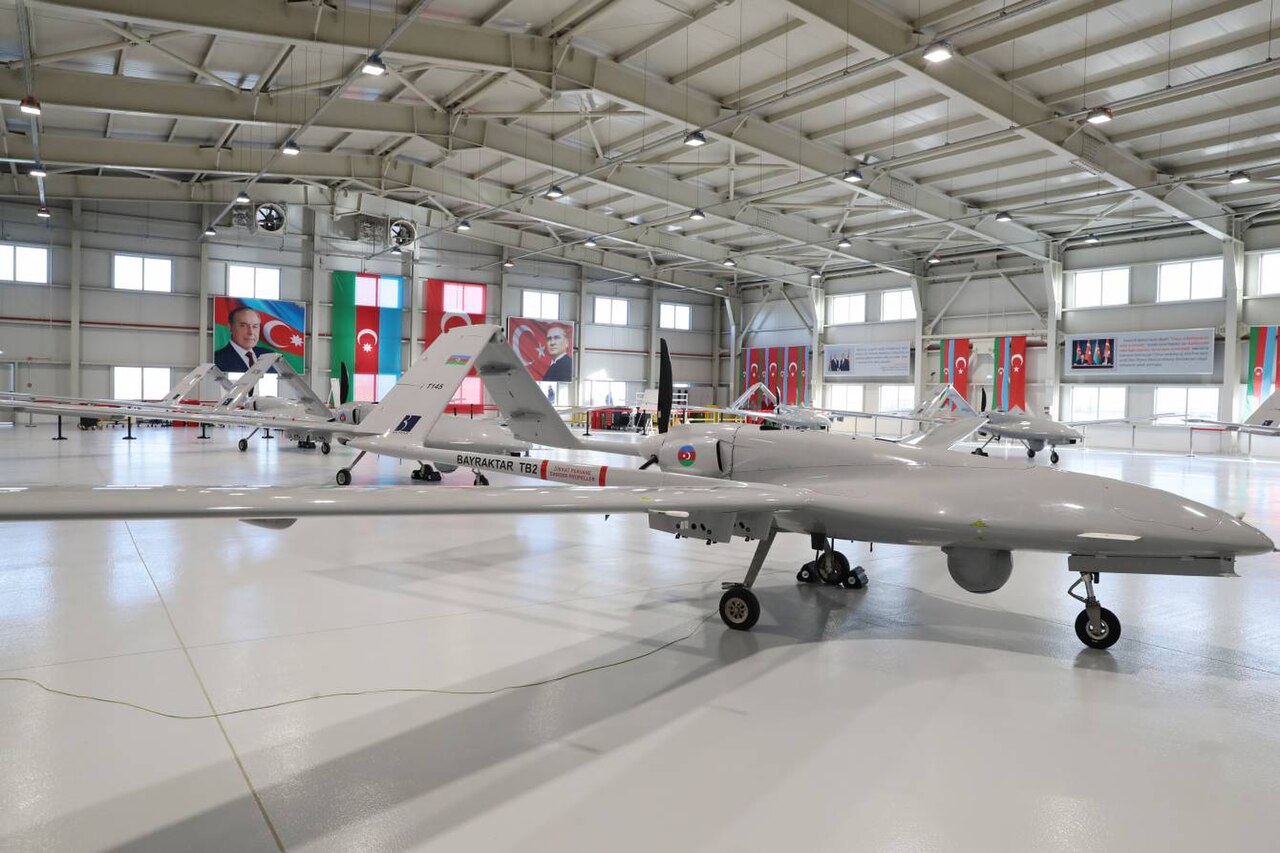
The autumn 2020 war turned a close political friendship into a showcase for Turkish equipment. Azerbaijan made extensive use of Bayraktar TB2 drones, and images of those strikes travelled far beyond the Caucasus. For Turkish exporters, few demonstrations have been as persuasive. The drone that Azerbaijan flew in combat went on to find buyers across Africa, Asia and Europe, a story covered in our look at the Bayraktar TB2 programme, its operators and exports.
Baku acknowledged the contribution openly. On 15 June 2021, the same day as the Shusha Declaration, Aliyev honoured Baykar’s chairman Haluk Bayraktar with the Garabagh Order, according to reports at the time. Baykar and Azerbaijan’s Defence Ministry have also signed a goodwill protocol on joint work in unmanned aerial systems, as reported by Turkish media, though public detail on what has been produced under it is thin.
It would be wrong to credit Türkiye alone. Azerbaijan’s weapons imports have historically leaned heavily on Russia and Israel, and SIPRI’s published figures have long shown those two as the main suppliers. Turkish equipment has been a growing share and a politically significant one, but Baku deliberately keeps several suppliers. That diversification is part of its bargaining position.
What Are SALVO and KAYRA, and Why Do They Matter?
The naval drone project is the clearest sign of where the partnership is heading. MIRAS, the Military-Industrial Company under Azerbaijan’s Defence Ministry, and the Turkish shipyard DEARSAN operate a joint facility that builds two unmanned surface vessels. Our earlier report on the start of SALVO and KAYRA co-production covers the announcement in detail.
The two boats have different jobs. SALVO is an armed unmanned surface vessel with a composite hull of roughly 15 metres, a top speed reported at about 60 knots and a range of around 300 nautical miles. Reported armament is a Roketsan Çirit 70 mm laser-guided missile and a 12.7 mm machine gun. KAYRA is a one-way attack boat, reported at about 7 metres, 50 knots and 200 nautical miles, with a built-in warhead for ramming attacks.
Specifications here come from media accounts of the demonstration, not from an official datasheet. Neither government has published production quantities or a delivery schedule.
The Caspian context explains the interest. It is a closed sea with limited room to manoeuvre, where cheap unmanned boats can cover patrol, reconnaissance and escort tasks without risking crews. Regional analysts have noted that drone proliferation around the Caspian is speeding up. For Azerbaijan, building the boats at home adds maintenance capacity and some technology transfer on top of the hardware itself.
Is Azerbaijan Still Just a Customer?
Not any more, at least in the naval segment. The shift from importing to assembling locally is the pattern Türkiye has pursued with other partners, and it is one reason Ankara is now placing Turkish defence factories abroad as a deliberate export strategy. Local production softens the political cost of buying foreign arms, and it gives the buyer a stake in the supply chain.
The air domain remains more opaque. Images reported in mid-2026 appeared to show Baykar’s SİVRİSİNEK loitering munition in service in Nakhchivan. Neither government has confirmed it, and the photographs have not been independently verified. We covered the claim and its limits in our piece on the SİVRİSİNEK sighting in Azerbaijan, and it is best treated as a lead, not a delivery record.
What Did ADEX 2026 Show About the Relationship?
ADEX, Baku’s biennial defence show, is where the partnership is most visible. The sixth edition runs from 30 September to 2 October 2026 at the Baku Expo Center. Organisers report more than 270 companies from 29 countries and around 45 military delegations from 33 nations, and the venue opened a fifth pavilion for the first time.
Türkiye is the largest foreign presence. More than 50 Turkish companies are taking part, with ROKETSAN as general sponsor and ASELSAN, Baykar, TUSAŞ, HAVELSAN, STM and TİSAŞ among the exhibitors. Our report on Türkiye’s largest-ever ADEX delegation lists the lineup.
A big stand does not equal a big contract. ADEX announcements are frequently memoranda or intentions, and Azerbaijani procurement is often confirmed late, if at all. The more reliable signals are production lines, training programmes and follow-on support arrangements.
How Does the Turkish Model Differ From Other Suppliers?
Turkish companies tend to offer a mix that Azerbaijan’s other suppliers do not: combat-proven systems, fast delivery, flexible financing and a willingness to localise. The general pattern is laid out in our explainer on how countries buy Turkish weapons, where contracts, credit and offset arrangements often matter as much as the platform.
Azerbaijan adds something most customers cannot: political alignment that goes beyond the transaction. Ankara has little to gain from treating Baku like an ordinary export market, and the treaty language reflects that. The benefit runs both ways. Turkish firms get a committed partner and a Caspian foothold, and Azerbaijan gets access to a broad industrial base without relying on a single foreign source.
How Do Neighbours Read the Partnership?
Not everyone sees it as a purely commercial story. Regional analysts have tied the military relationship to the wider diplomacy of the South Caucasus, including the negotiations between Baku and Yerevan. Some describe the Ankara-Baku axis as a bloc that neighbouring capitals must factor into their own planning.
Those are interpretations, and they vary by author. What can be stated plainly is that the defence ties are formalised, publicly celebrated by both governments, and now visible in industrial form, which makes them harder to reverse than a one-off arms contract.
What to watch next is concrete. If the SALVO and KAYRA line reaches steady output, it will show that Turkish designs can be built and maintained in Azerbaijan at scale. Any confirmed follow-on, whether air, land or naval, would indicate that localisation is becoming the model and not a one-off. Until then, the partnership is best judged by what rolls out of the factory, not what is displayed on the exhibition floor.