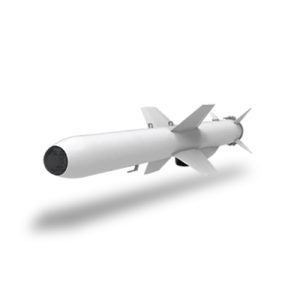
New SİPER Battery Delivered to the Turkish Armed Forces


A new battery of SİPER, Turkey’s long-range air and missile defence system, has been delivered to the Turkish Armed Forces. Developed with contributions from numerous domestic companies, led by ROKETSAN and ASELSAN, the system is positioned as an element strengthening the upper layer of the country’s air defence architecture.
A layered air defence architecture
Modern air defence is built not on a single system but on complementary layers. Gun-based systems and solutions such as KORKUT operate at very short range, the HİSAR family covers low and medium altitude, and SİPER serves the upper layer. Through this structure Turkey has become one of a small number of countries able to produce every layer domestically, from low to high altitude.
Why the battery count is critical
In air defence, capability is measured less by a system’s range than by the number of batteries that can be deployed. Since each battery can protect a defined area, the number of batteries required rises quickly as the number of critical facilities and cities to be covered grows. The new battery’s entry into the inventory aims to widen deployment options across different regions.
Why the programme came about
Turkey’s search for a domestic solution in long-range air defence accelerated alongside constraints encountered in procurement. Delivery, integration and end-use permission problems experienced with systems obtained abroad turned localisation of the upper-layer capability into a strategic issue. SİPER took shape as a programme conducted jointly by ROKETSAN, ASELSAN and TÜBİTAK SAGE to answer that need.
The industrial picture
In air defence, ASELSAN is ranked third in international comparisons, behind RTX and Lockheed Martin. In 2026 a bulk delivery of 47 systems was carried out in air defence. That scale indicates serial production capacity has been established, beyond individual deliveries.
Entry into service
For long-range systems, a battery entering the inventory means the radar, launcher vehicle, command and control element and support vehicles are delivered together. Personnel training, firing tests and integration into the existing air defence network are stages that continue after delivery. The delivery date and the date of full operational capability therefore often do not coincide.
The system’s limits
In long-range air defence what matters is not only missile range but radar detection distance, the number of targets that can be tracked simultaneously, and the command-and-control network’s ability to manage different layers together. In ballistic missile defence, early warning data and engagement timing are critical. Verifiable performance data shared publicly on these topics remains limited.
Assessment
SİPER moving into serial deliveries shows that a concrete capability has been established in an area long dependent on foreign supply. The system’s real value, however, will emerge less from individual battery performance than from all layers operating together under a single command-and-control network. In programmes where testing and serial production run in parallel, operational validation continues after deliveries as well.